
Classic car restoration
Restoring and caring for exclusive classic cars is complex and requires professional work and the appropriate technology, both inside and out. Whether preparatory cleaning, preparation measures, or maintenance cleaning via dry ice blasting on the inside and outside – there are some tips and tricks that make the work easier.
Preparation is key to uncover damage
There are many aspects to consider in vehicle preparation and cleaning in the interior of a classic care, where you often need to deal with sensitive materials. Each area has its own cleaning and preparation methods that enable professional, efficient work.
Carefully and fully cleaning surfaces
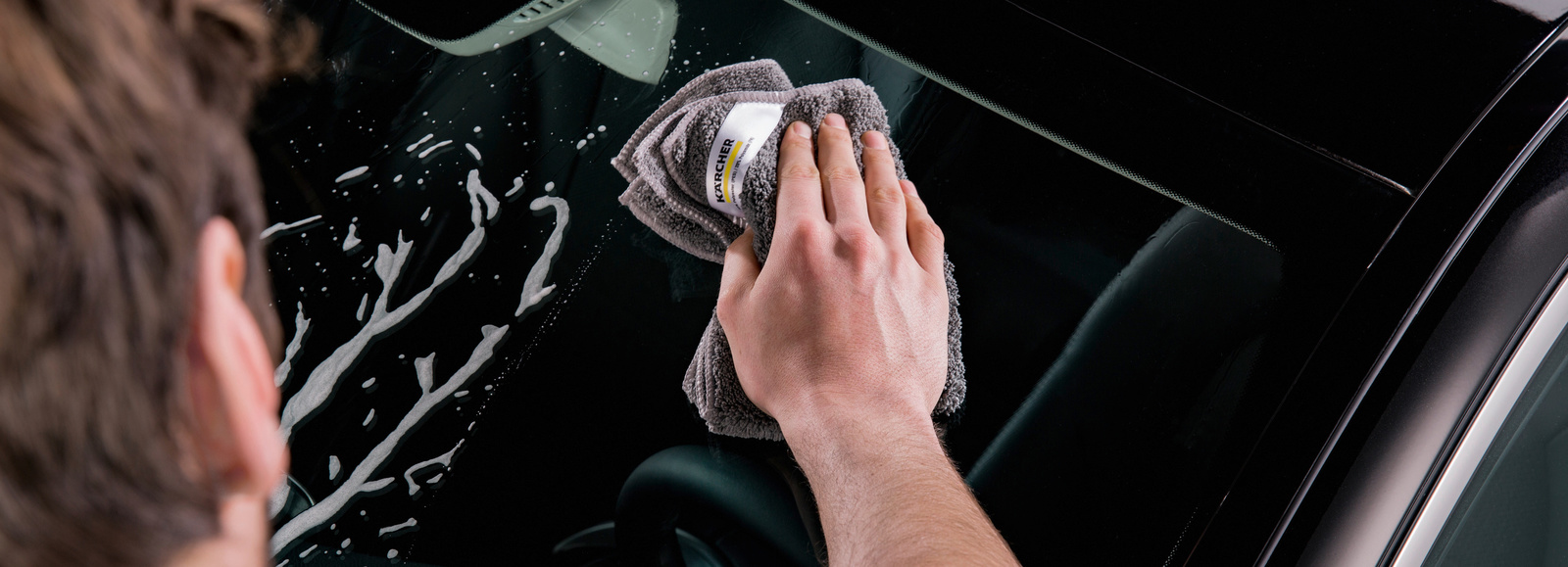
It is best to use gentle methods such as dust-binding wiping with microfibre cloths and/or gloves and working with light pressure to carry out the initial cleaning. Textile surfaces are easily cleaned of loose and adhesive dirt using a vacuum cleaner and turbo nozzle. Leather or imitation leather seats must be vacuumed carefully to avoid streaks or scratches, a suction brush is well suited for sensitive materials.
Tip: Expose damage by cleaning
Thorough cleaning of the interior may reveal damage, small scratches or holes that need to be repaired.
Preserving instead of renewing using spray extraction for seat upholstery
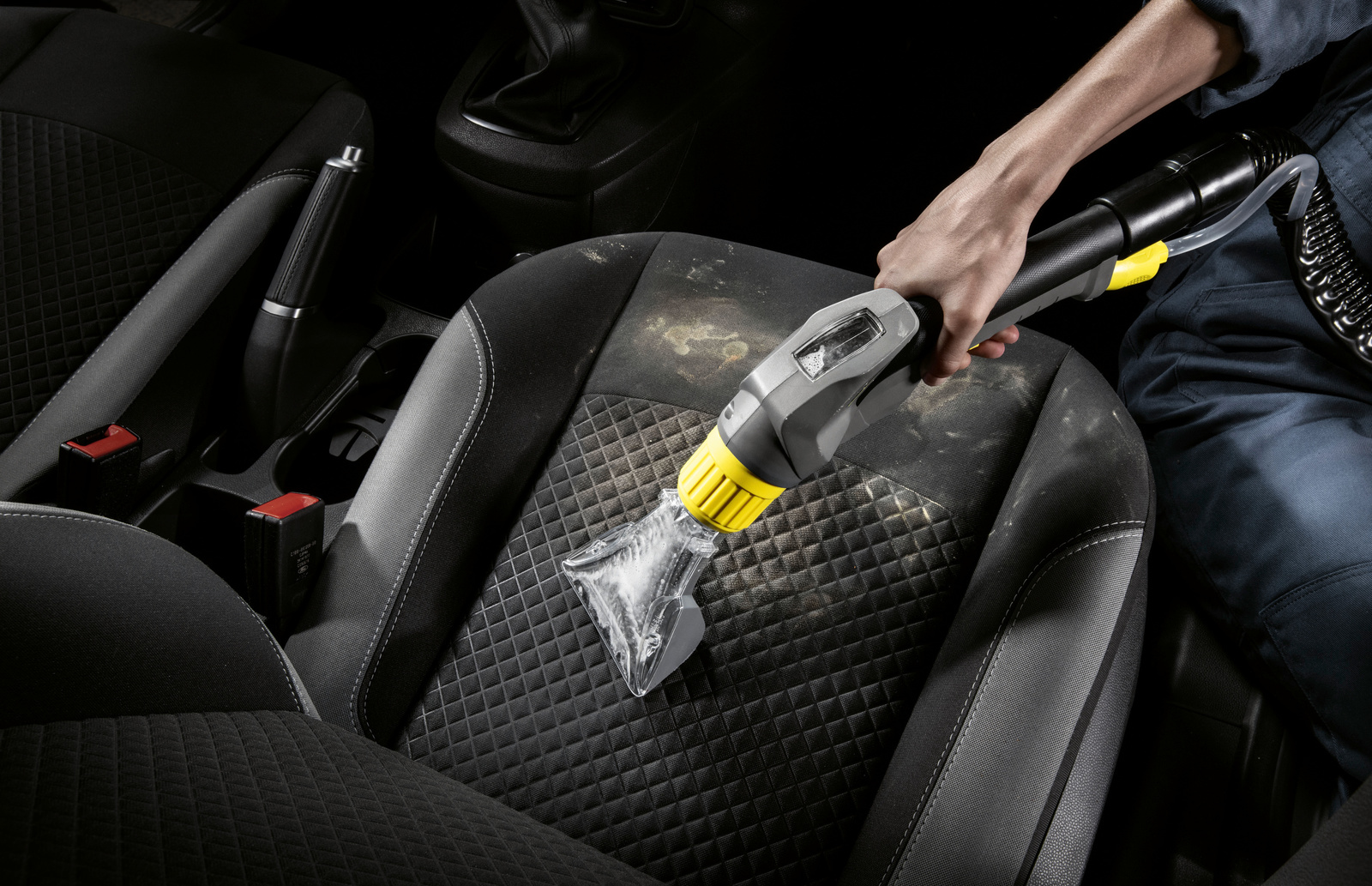
If a light, even haze has formed on seat upholstery over time, refresh the fabric with a damp microfibre cloth. If the stains have been stuck in the material for a long time and cannot be removed, the spray extraction device is a very good solution. It sprays on water mixed with detergent and then sucks it from the upholstery again.
Older upholstery or upholstery that has not been cleaned for a long time usually has to be vacuumed several times, as the process pulls the dirt a few centimetres closer to the surface with each operation. This type of restoration and reconditioning creates the opportunity to thoroughly clean and preserve seat covers so that they do not need to be renewed.
Tip: Choose the right cleaning agent
When choosing a cleaning agent, make sure that it is surfactant-free, has a good effect and does not leave any residue. The cleaning agents used in spray extraction are usually also fragrance-free. A textile freshener can provide the appropriate feel-good atmosphere afterwards.
Tip: Battery-powered devices make work easier
Battery-operated spray extraction devices are available in our stores. They are cordless and compact and help to make classic car restoration much easier.
Classic car preparation and cleaning
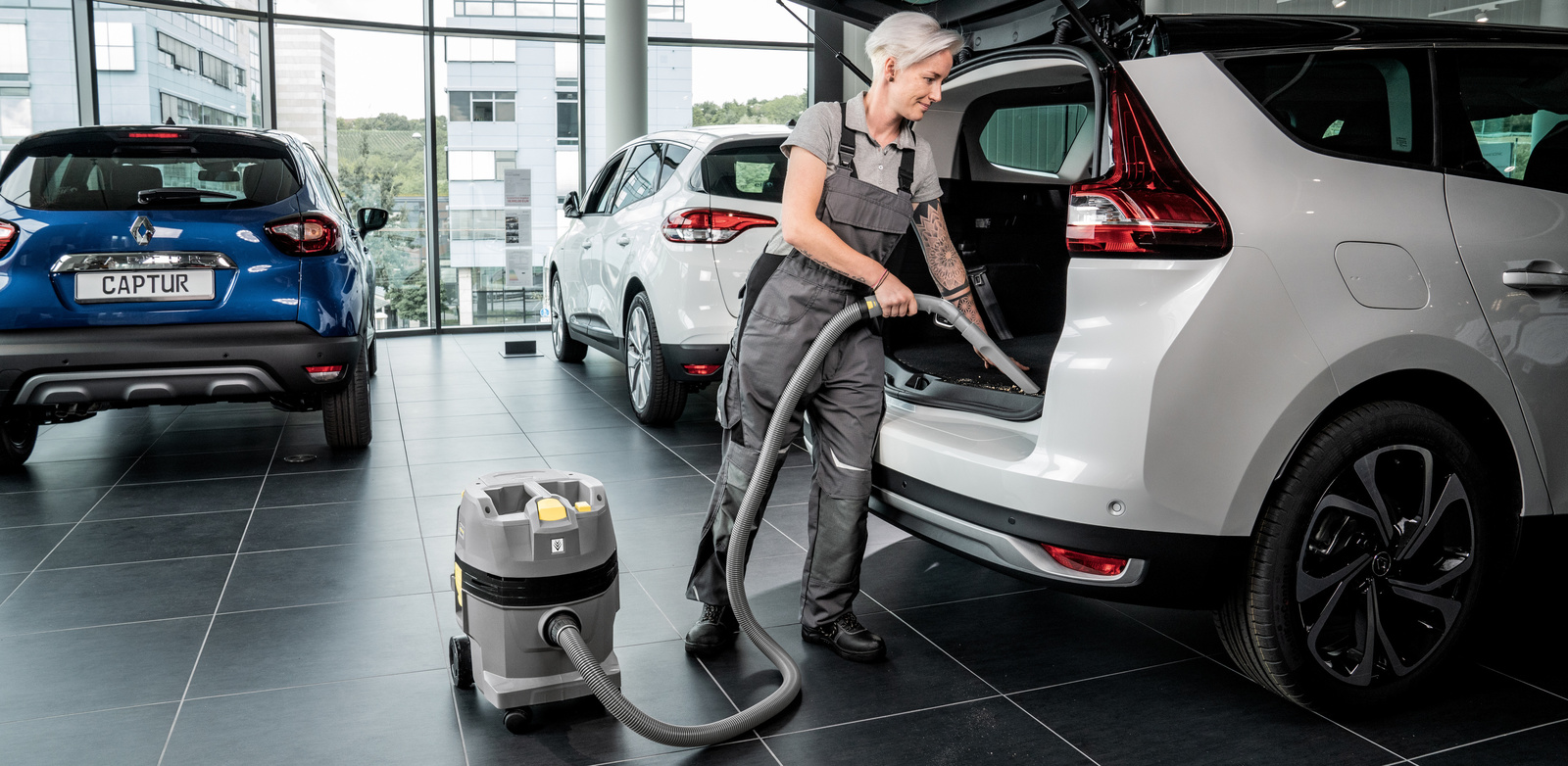
Continuous cleaning and care increases the service life and the value retention. This applies to all vehicles, whether it is classic vehicle preparation, car cleaning in car dealerships, rental cars and company fleets, or the care of exclusive classic cars and sports cars. The right technology and the right way of working are the most efficient and sustainable way to achieve your goals.
Dry ice blasting for gentle and efficient classic car restoration
Dry ice blasting is a very gentle, efficient process for removing stubborn dirt deposits such as oils, varnishes, greases, tar, adhesives or silicone and rubber residues from various substrates. This makes it suitable for a wide range of applications in the restoration of exclusive classic cars with sensitive and sometimes complex surfaces.
How dry ice blasting works
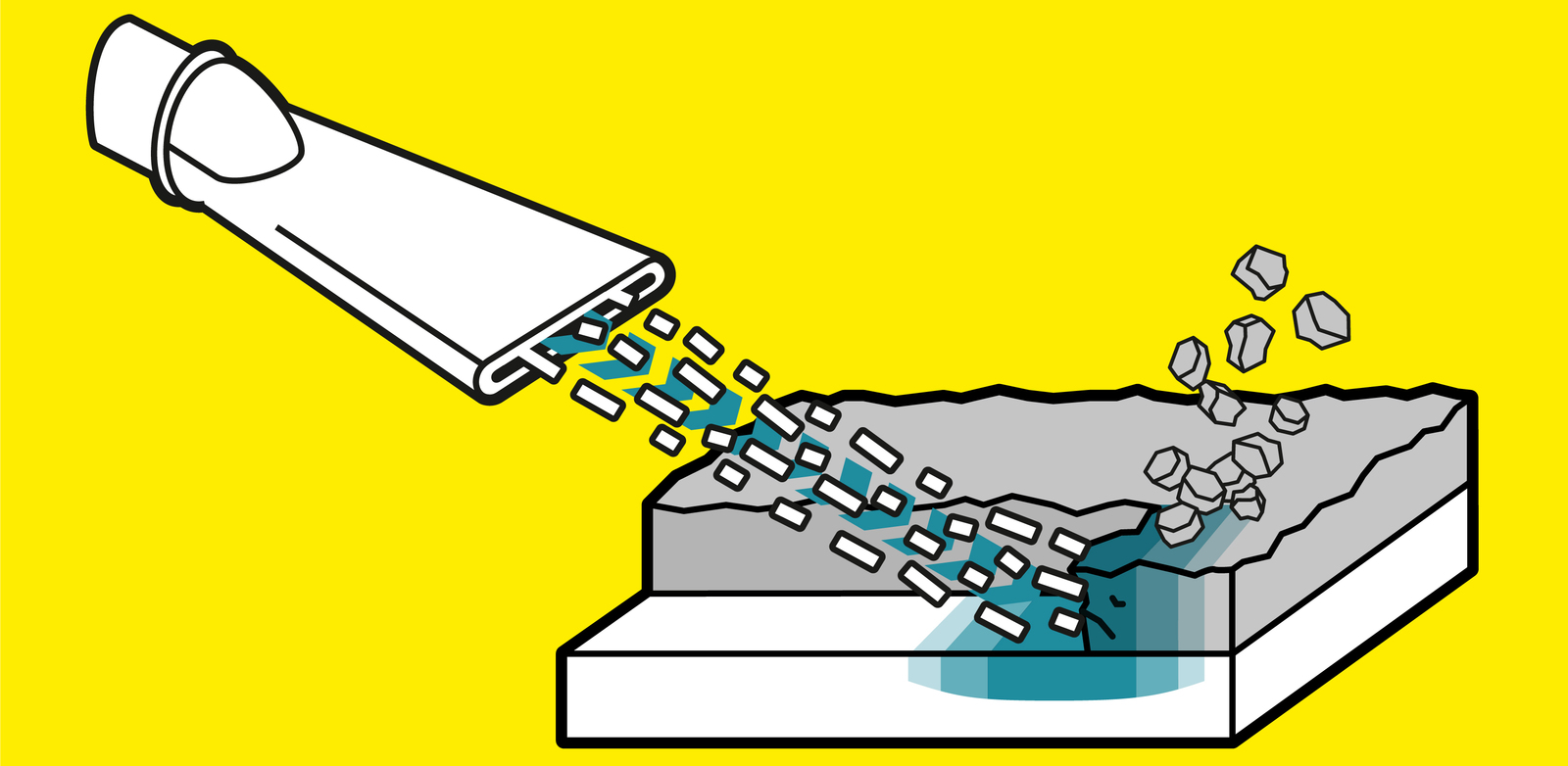
The trick is in the particle blasting process. CO2 granulate is used as the blasting medium. Unlike most other blasting media, which do not change their solid aggregate state during the work process, the frozen CO2 sublimates into CO2 gas immediately after hitting the surface. This means that no blasting agent residues remain and cleaning is very gentle on the material.
Dry ice to help support a classic car restoration
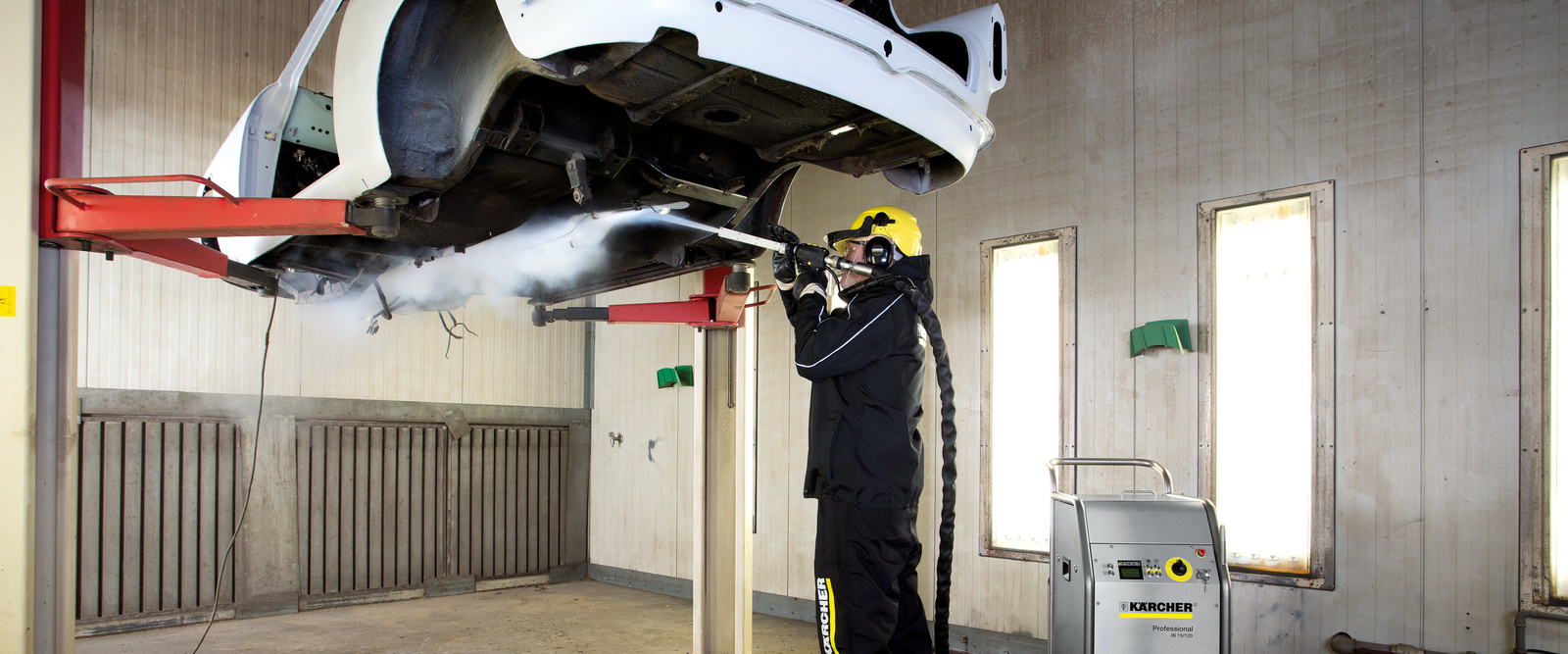
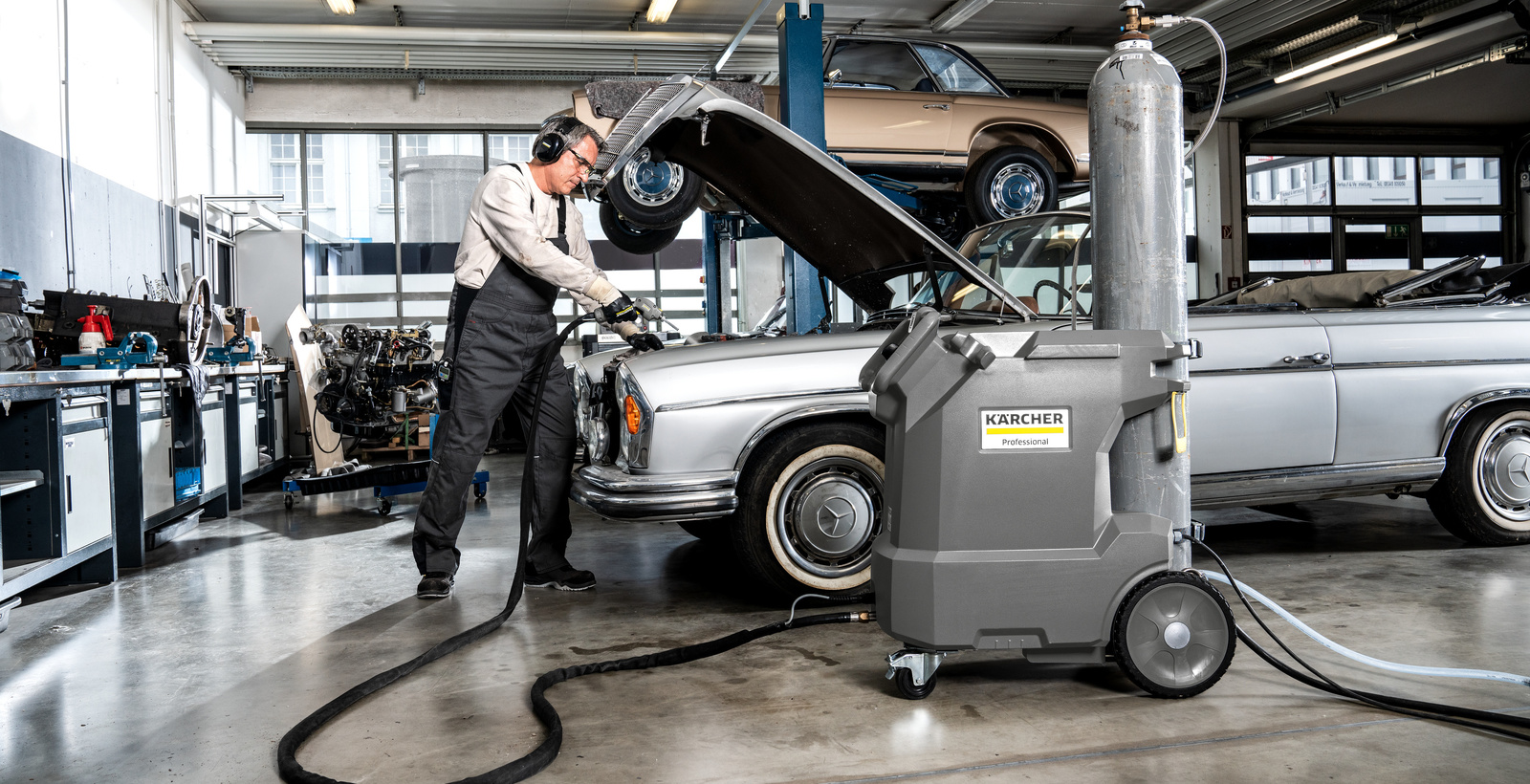
Before the actual work begins, you need to clean the work area. From the engine compartment to the intake tract to the exhaust gas recirculation valve – a dry ice blaster ensures cleanliness everywhere without damaging surfaces. If, for example, you need to remove sealing residues from transmission components before a technical inspection, dry ice blasting is a great way to do it. It is also suitable for cleaning cavities before cavity sealing, for cleaning contact surfaces and electrical components, or for cooling down wheel or axle bearings before pressing. Dry ice blasters are even a very good solution for deburring newly manufactured turned and milled parts or for finishing components from 3D printing.
Tip: Remove underbody protection first:
If the body is affected by corrosion, you need to first remove the protective underbody paint before the body can be disassembled and rebuilt. Dry ice blasting is a very efficient technique for removing this bitumen-like substance.
Dry ice for cleaning and treating classic cars
The dry ice blaster assists in cleaning exterior rubber seals and folds, removing stickers or adhesive residues or removing run-off marks from rubber folds under the mirror and at the bottom of vehicle doors. The process is also very suitable for cleaning particularly sensitive, expensive rims.
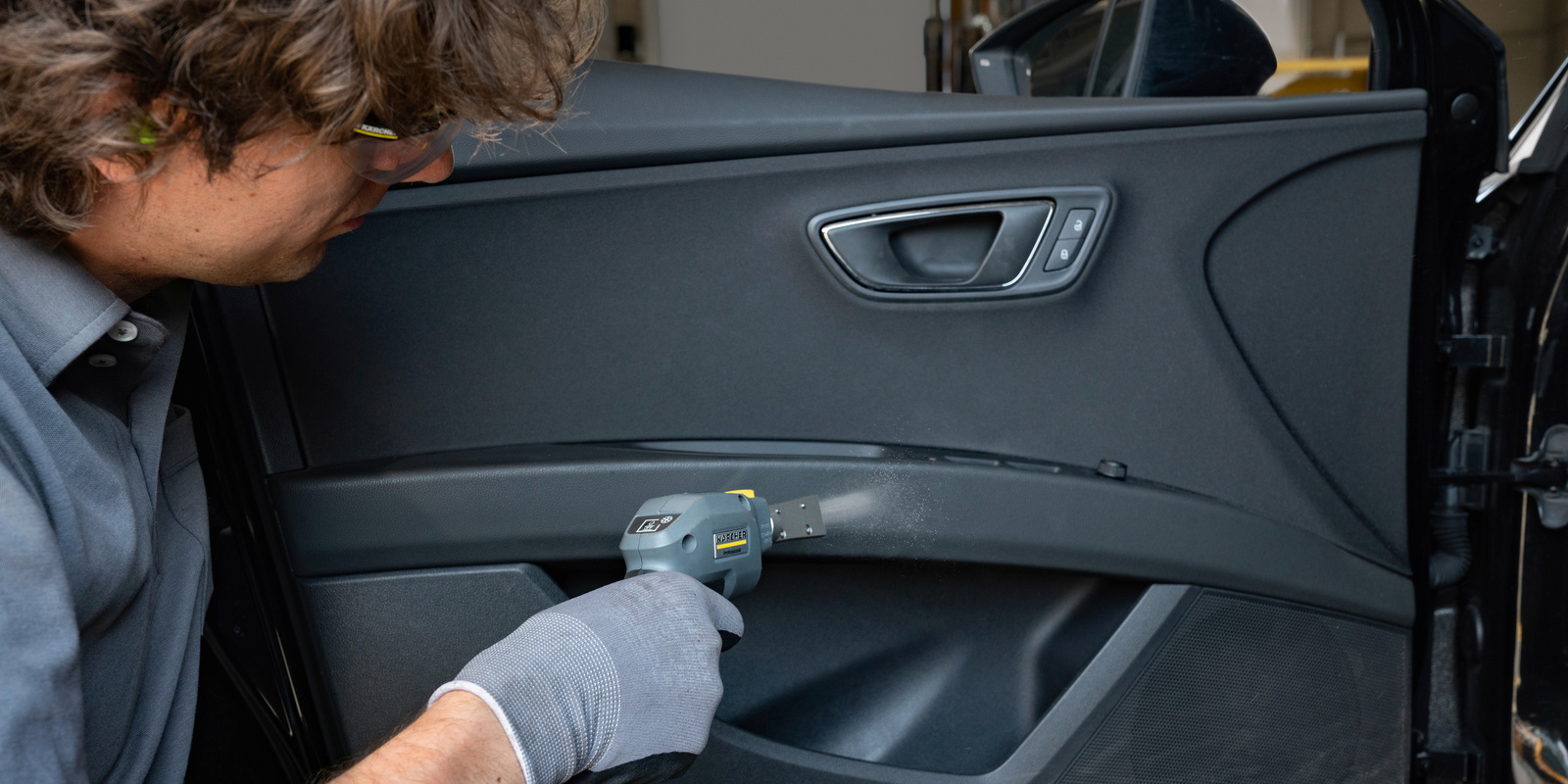
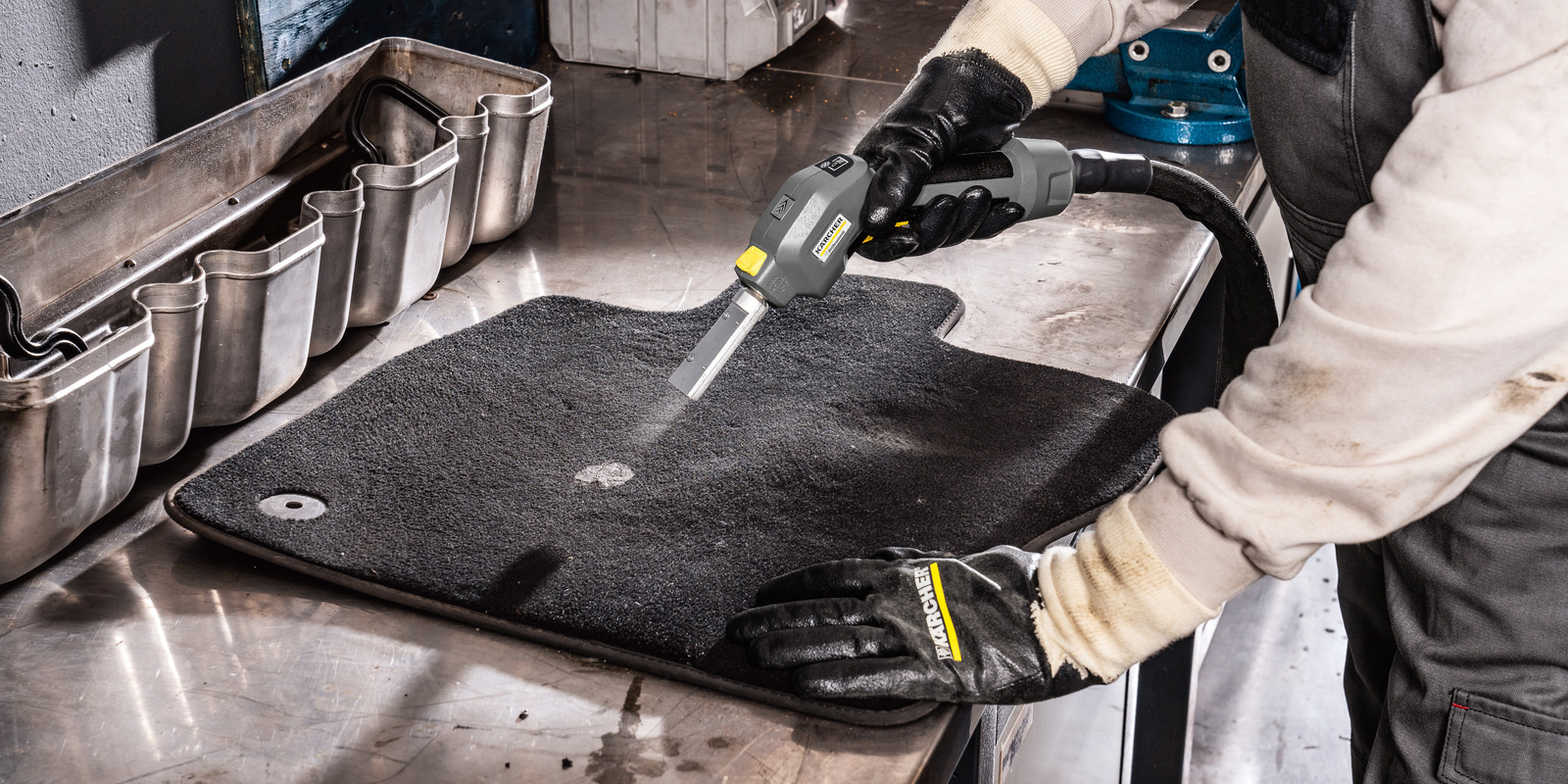
Dry ice blasting is also recommended for interior cleaning; fittings, buttons, seat upholstery, box covers, air vents, carpets or headliners can be cleaned gently, efficiently and without moisture. It is only necessary to use a small amount of abrasive at low pressure and, if necessary, use a scrambler to crush the 3 mm dry ice pellets to a snow-like state.
NOTE: Smart & spot repair for classic car restoration
Not every case of damage requires a costly repair. Smart repair encompasses a range of techniques with which minor damage to and in the vehicle can be repaired quickly and cheaply. Smart stands for small middle area repair technologies. Work should always be limited to the damaged area, without dismantling any components. This means that paintless dent removal (PDR) eliminates the need for time-consuming filling, sanding, or repainting. In addition, it preserves the original paintwork which is why there is no loss in the value of the vehicle.
If superficial, minor paint damage needs to be repaired, it is best to use the spot repair method. Deep paint scratches can be filled, sanded, painted, and polished. The aim of spot painting is to ensure that colour transitions are not visible after the repair. Well-maintained paintwork can significantly increase the value of a classic car.
Suitable products for your area of application
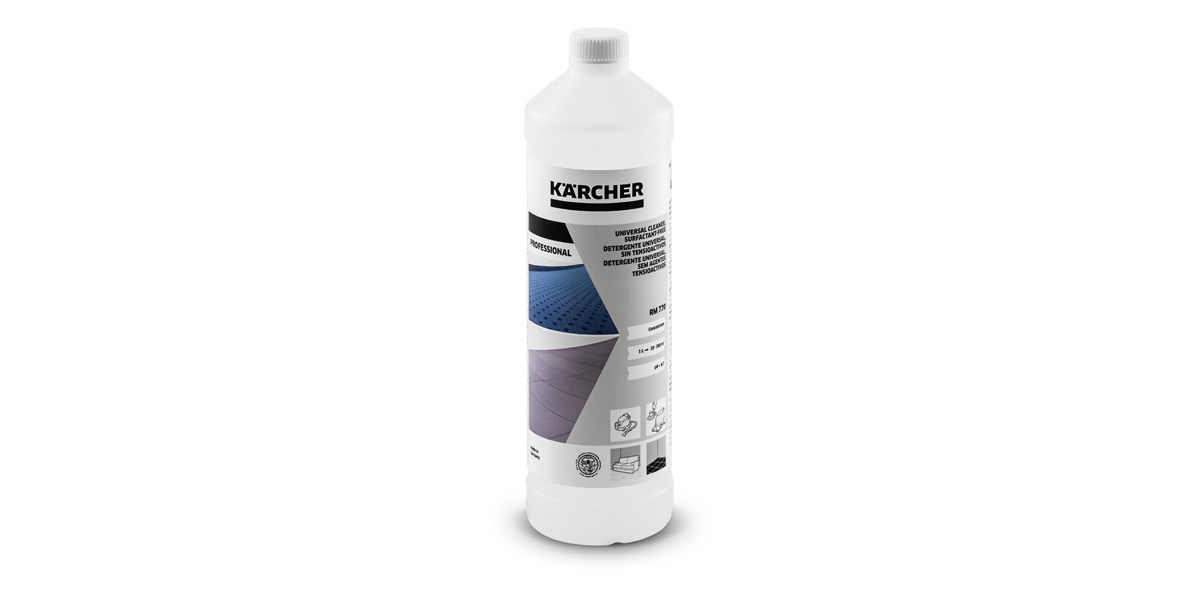
Universal Cleaner RM 770, surfactant-free
Dry vacuum cleaners
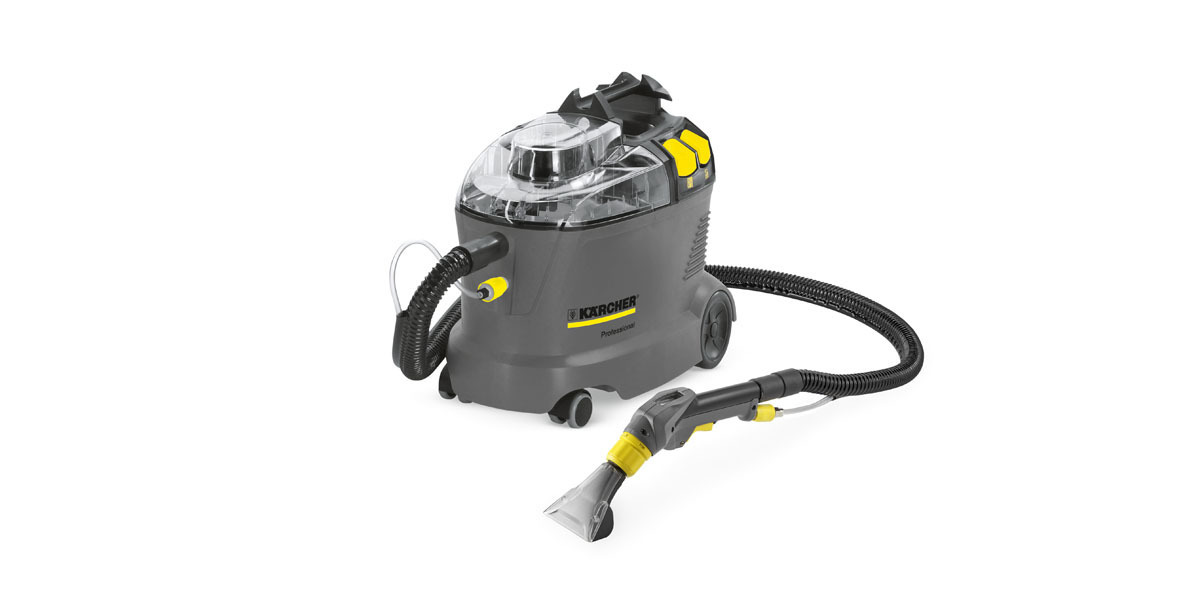
Spray extraction cleaner
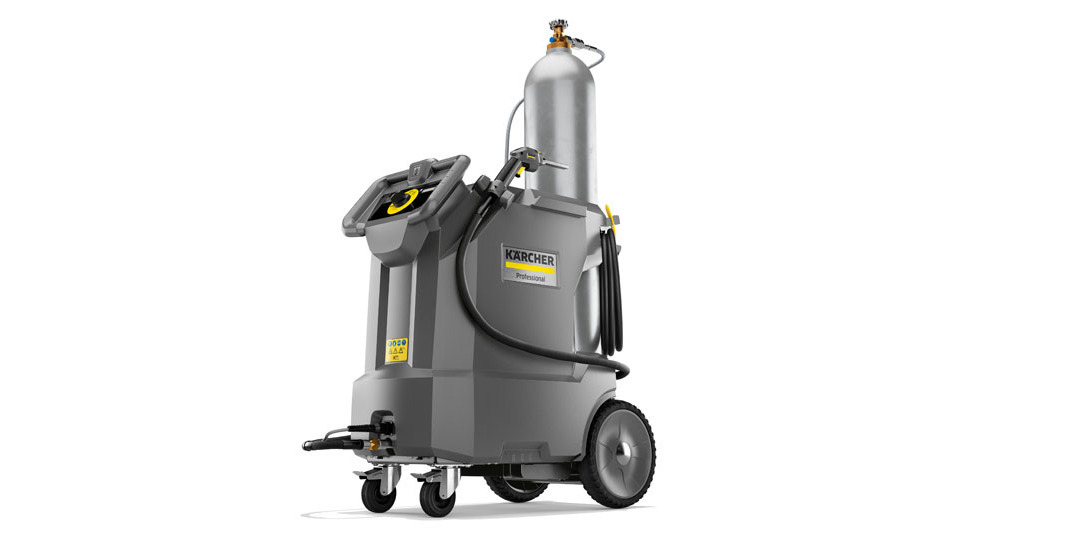
Dry ice blaster
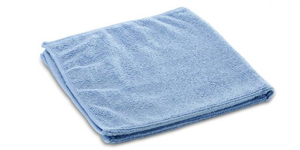
Microfibre cloth