BIKE CLEANING: TIPS FOR HOME AND TRAVEL
Riding a bike is fun, environmentally friendly and good for your health. If you want to enjoy your mountain bike, city bike or e-bike for as long as possible, you should maintain and wash your bike regularly. With the right device and the right accessories, it's quick and easy - whether in front of the garage, in the garden or on the road.
Bike cleaning at home
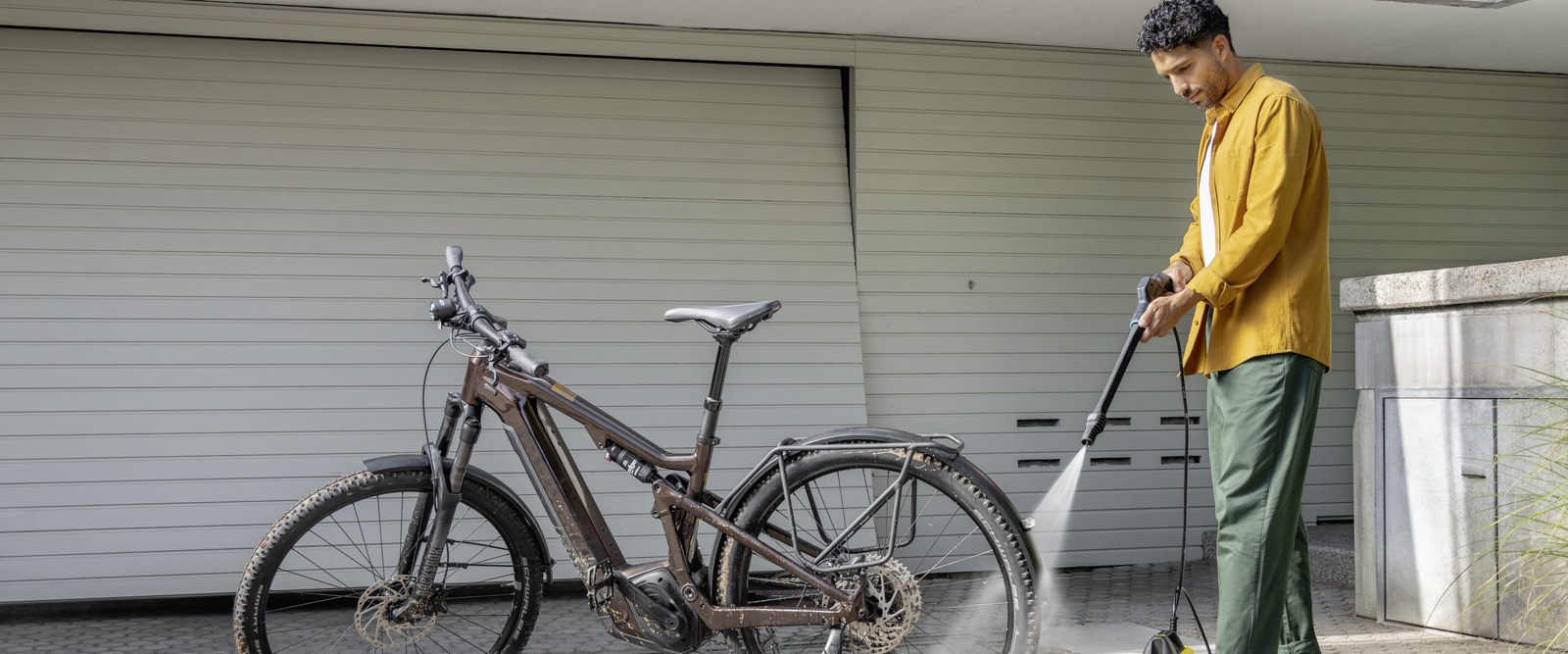
After each ride through forests, meadows, dirt roads or dusty streets, cleaning the bike is a good idea. You should remove coarse dirt and dust from the frame, the chain and sensitive components such as the gearshift and bearings. This is because dirt acts as abrasive particles on moving parts and rapidly accelerates their wear. This way, rust develops over time, which settles on the components and reduces their functionality. Anyone who rides a bike in the winter should clean and maintain it regularly, as road salt can damage the paint on the bike's frame as well as other parts of the bike. A freshly cleaned bike therefore not only provides more riding pleasure, but also maintains its functionality and value. By the way, this also applies to bicycle trailers, which can be cleaned at the same time.
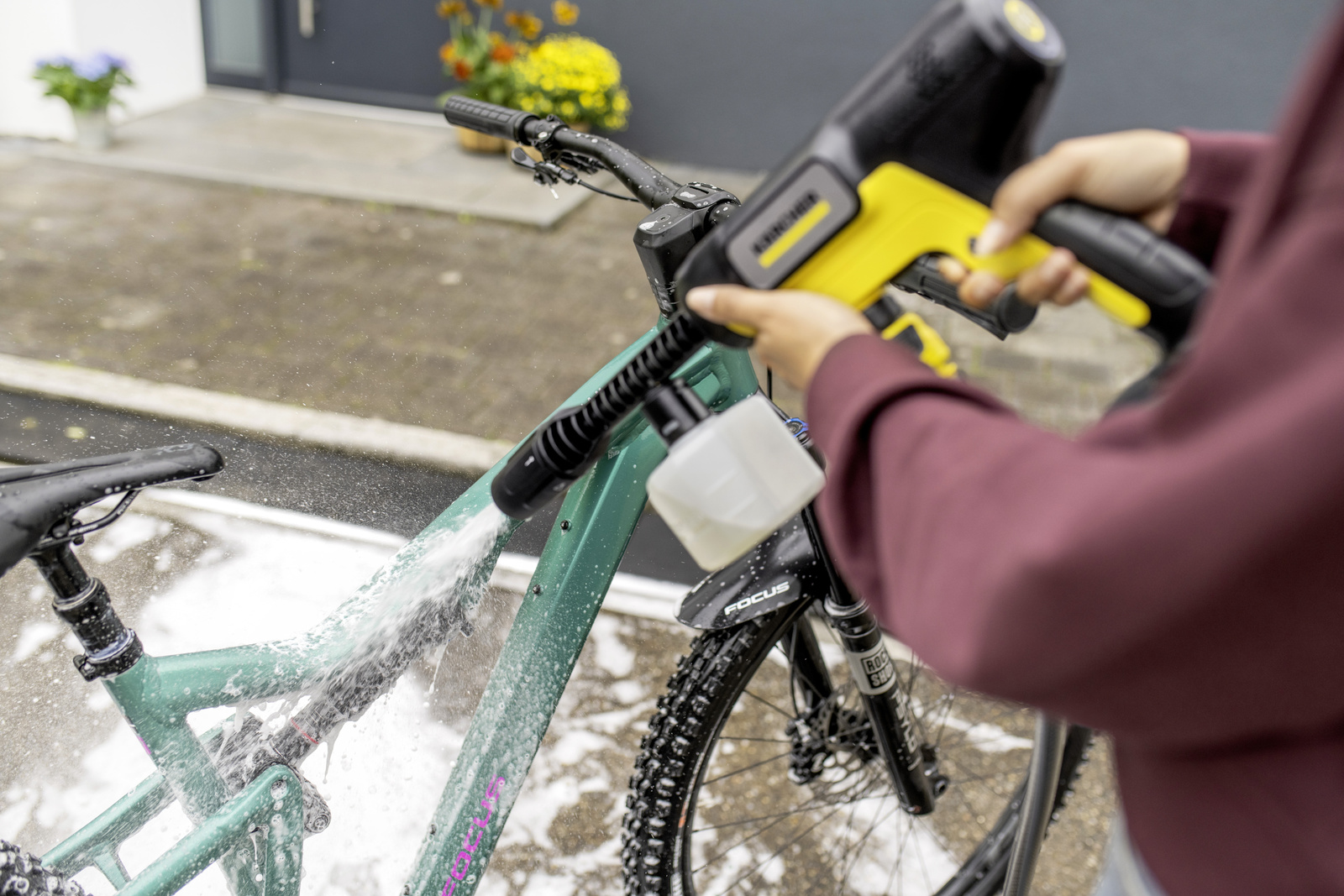
If you want to clean and maintain your bike at home, you only need a few items:
- a bike stand or wall
- a cleaning device of your choice
- a suitable cleaning agent
- a soft brush
- a soft cloth (e.g., microfiber)
- oil for the chain and bearings
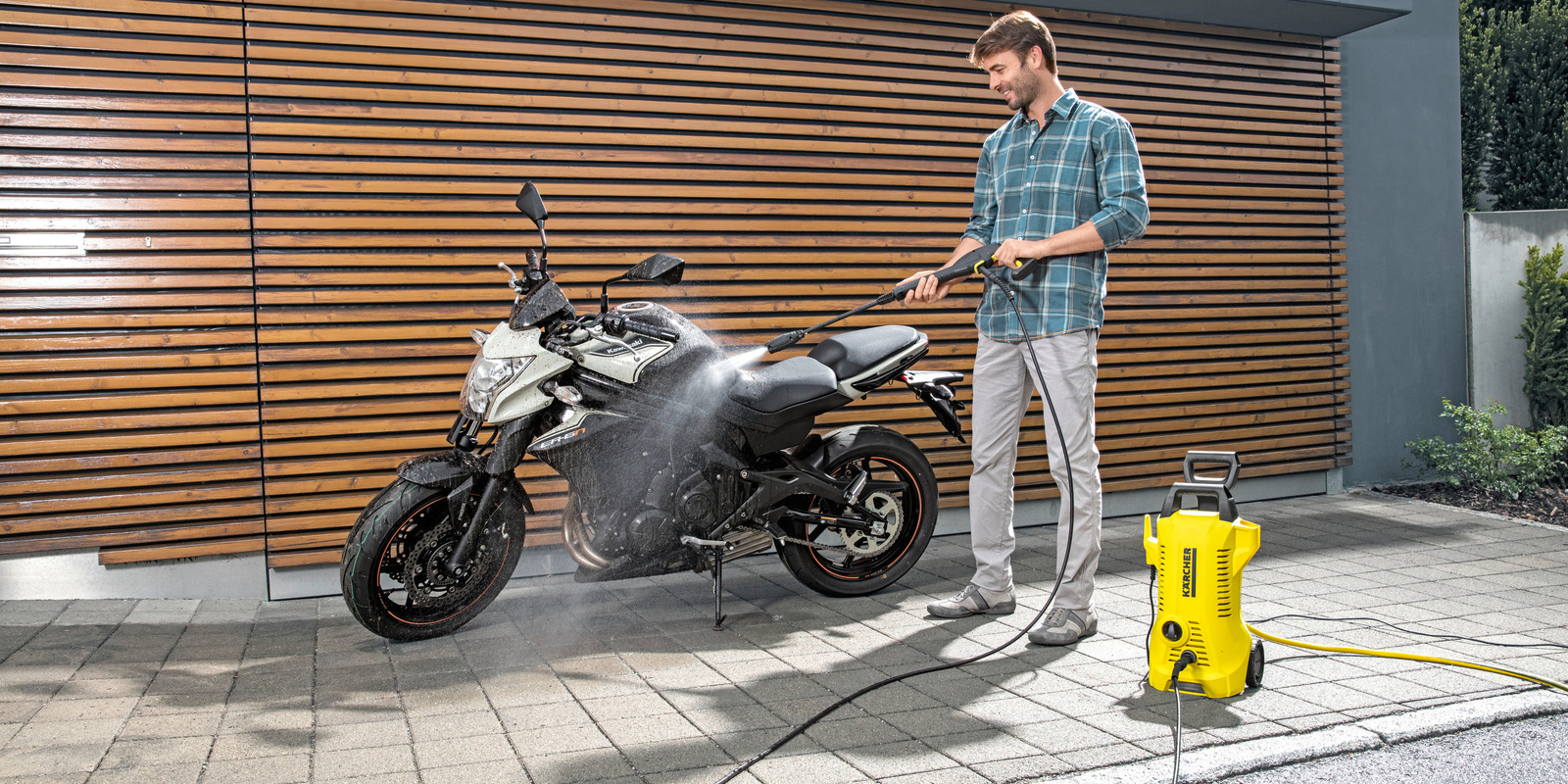
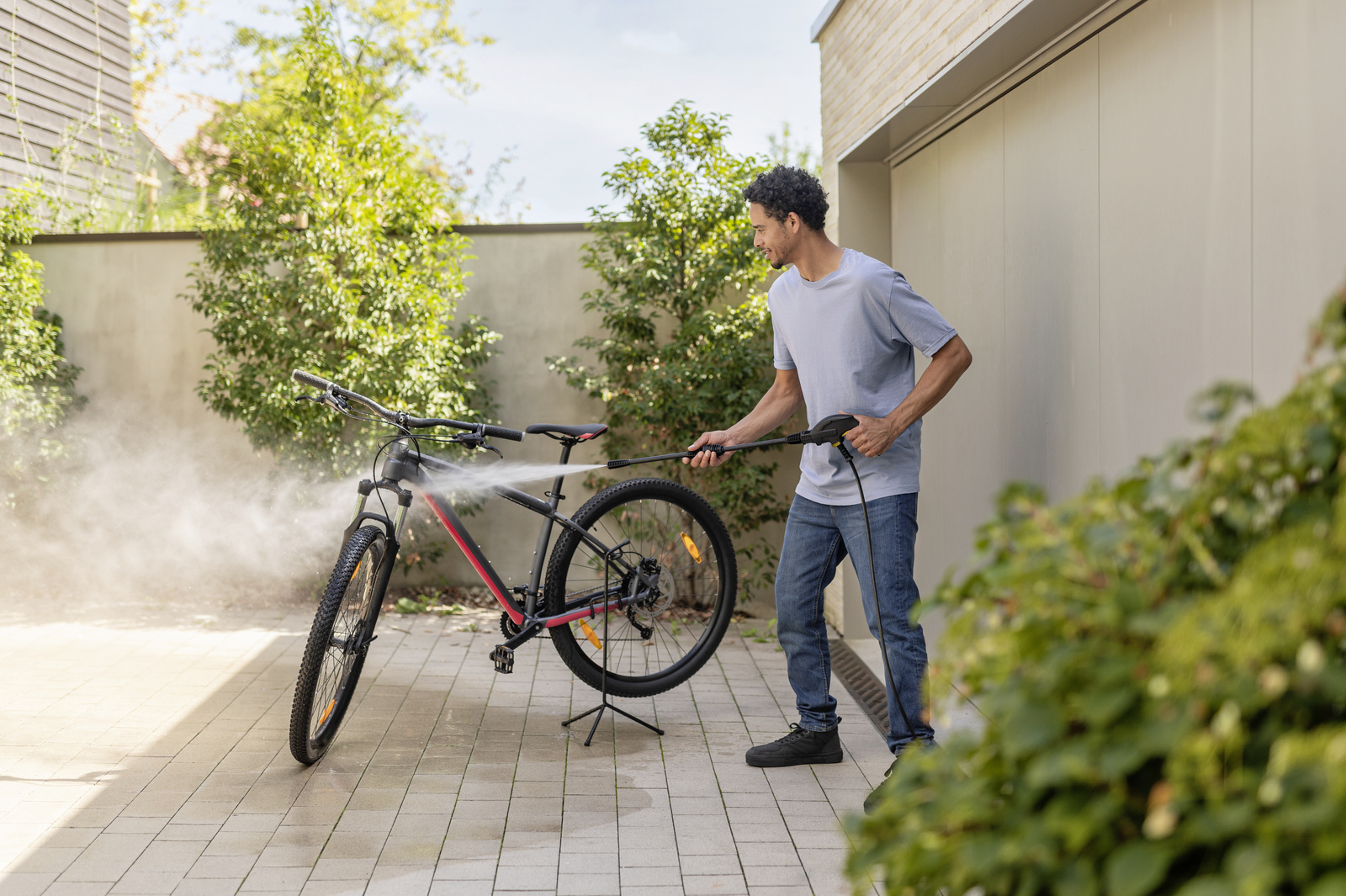
A pressure washer or a medium- or low-pressure cleaner are suitable devices to clean a bike. While the pressure washer usually needs to be connected to electricity and water, the handheld cleaner is battery-powered and therefore only needs a water connection. That’s why it is suitable to use for quick bike cleaning in the garden and wherever there is no power connection nearby. With high and medium pressure, even stubborn dirt can be removed quickly and easily. Battery-powered pressure cleaners are particularly compact and mobile, making them ideal for quick cleaning in between.
Tip
Where there is no water connection available, Kärcher pressure washers K 4 to K 7 as well as the Handheld Cleaner can alternatively draw water from a drum or canister. All that is required is a suitable suction hose or a handheld suction hose. Mobile outdoor cleaners come with a built-in water tank, making it easy to carry all the water you need with you.
When cleaning a bicycle with a pressure washer, it is important to maintain a distance of at least 30 cm from sensitive components. Any closer and the strong jet of water could push seals, allowing water to enter and flushing out the lubricating grease. Worst case scenario, moisture may get trapped, which could result in long-term damage due to rust. If you want to be on the safe side, you can opt for a mobile battery-powered pressure cleaner. As these clean gently at medium or low pressure, there is no risk of damage to your bicycle.
Bicycle cleaning on the go
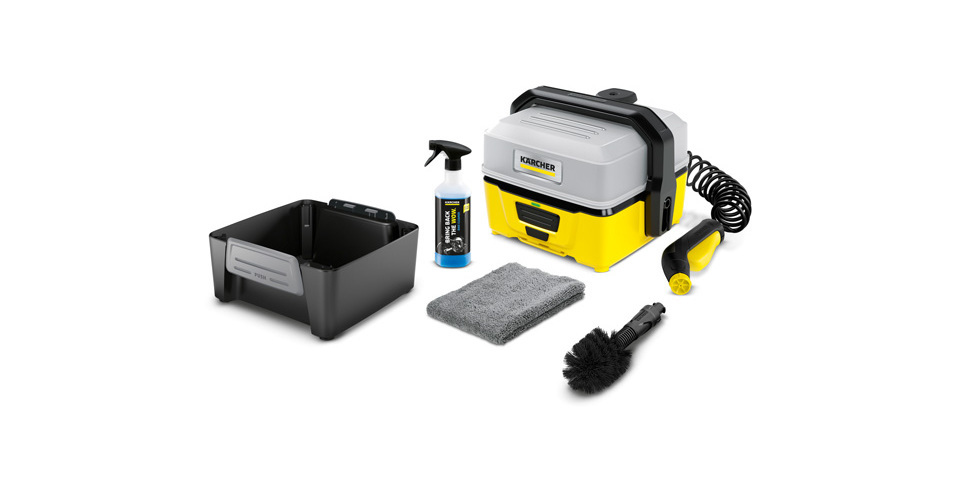
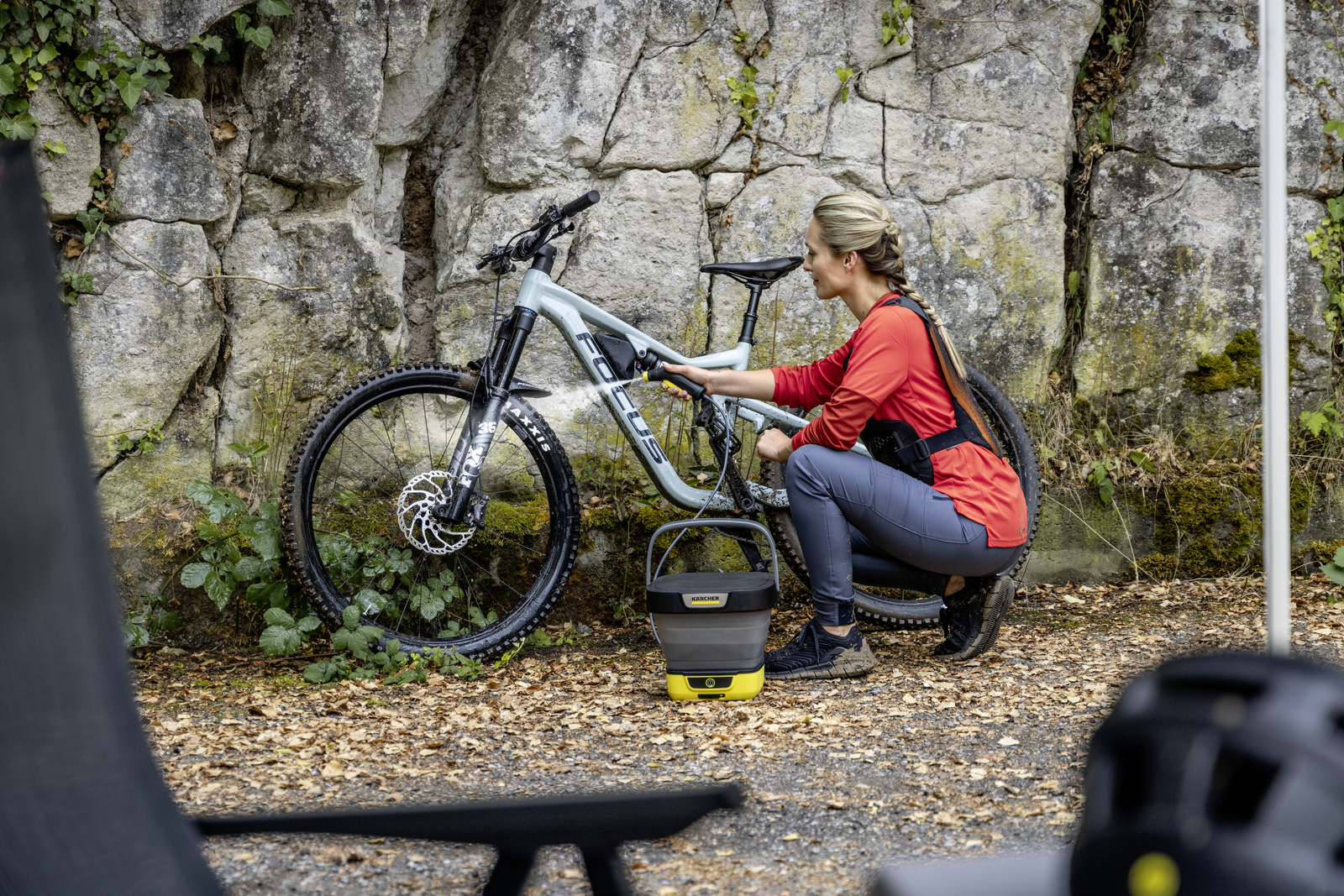
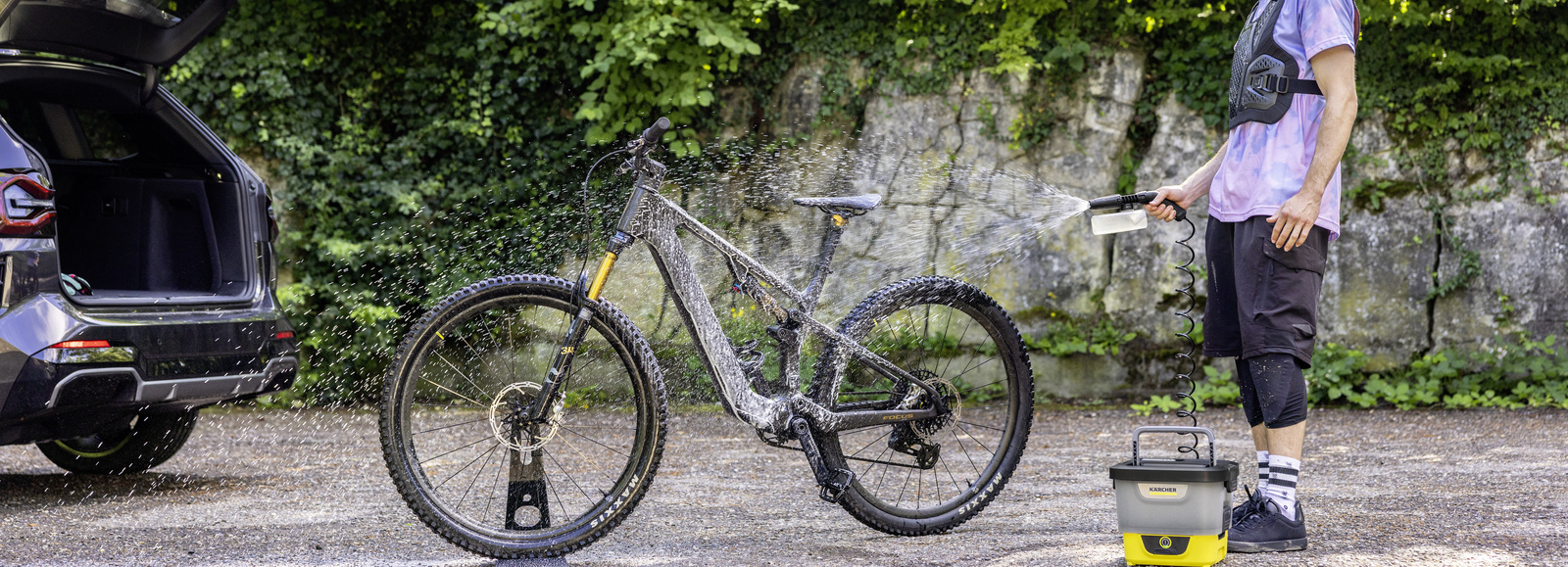
To clean the mountain bike from dust and dirt when out and about, for example, so that the boot of the car or the bike rack does not get dirty, a Mobile Outdoor Cleaner or battery-powered pressure washer is an excellent option. Thanks to their compact dimensions, they can be transported and stored in a space-saving manner.
Some pressure washers have a tank that can be easily filled with clean water. These can also be easily charged on the go, e.g. in the car or using a power bank. Special bicycle sets contain selected accessories for bicycle care, such as a brush with soft bristles that removes even stubborn dirt from hard-to-reach areas without scratching the paintwork. With the help of a suitable suction hose, the battery-powered pressure washers can also be connected to alternative water sources such as wells or water canisters.
E-Bike cleaning
E-bikes with batteries and electric drives are particularly susceptible to damage from dirt and moisture. Therefore, quick and thorough cleaning is essential. Do not use cloths or sponges, as these can trap fine dirt particles that leave streaks and scratches on the paintwork or chrome parts. This cannot happen when using a low- or medium-pressure cleaner. The reduced water pressure is perfectly adequate for most types of dirt on e-bikes, compared to a high-pressure cleaner. If you have a high-pressure cleaner, you can also use it, provided you maintain a minimum distance of 20–30 cm from the surface. Many current devices also allow the water pressure to be reduced for gently cleaning sensitive surfaces. As with cars or motorbikes, the jet should never be directed at bearings, shock absorbers or, in the case of e-bikes, electrical connections.
The procedure for cleaning an e-bike is largely the same, whether you are using a mobile, low-, medium- or high-pressure cleaner:
1. Secure and prepare the e-bike: a mounting stand in which it can be clamped is practical.
2. Remove the battery and display.
3. Protect open electrical contacts from moisture with special covers. Alternatively, use plastic film secured with rubber bands or cable ties.
4. Apply cleaning agent with a spray bottle or a foam nozzle.
5. A brush attachment for the spray gun improves the mechanical cleaning effect on stubborn dirt. Pay particular attention to mechanical parts such as hinges.
6. Rinse.
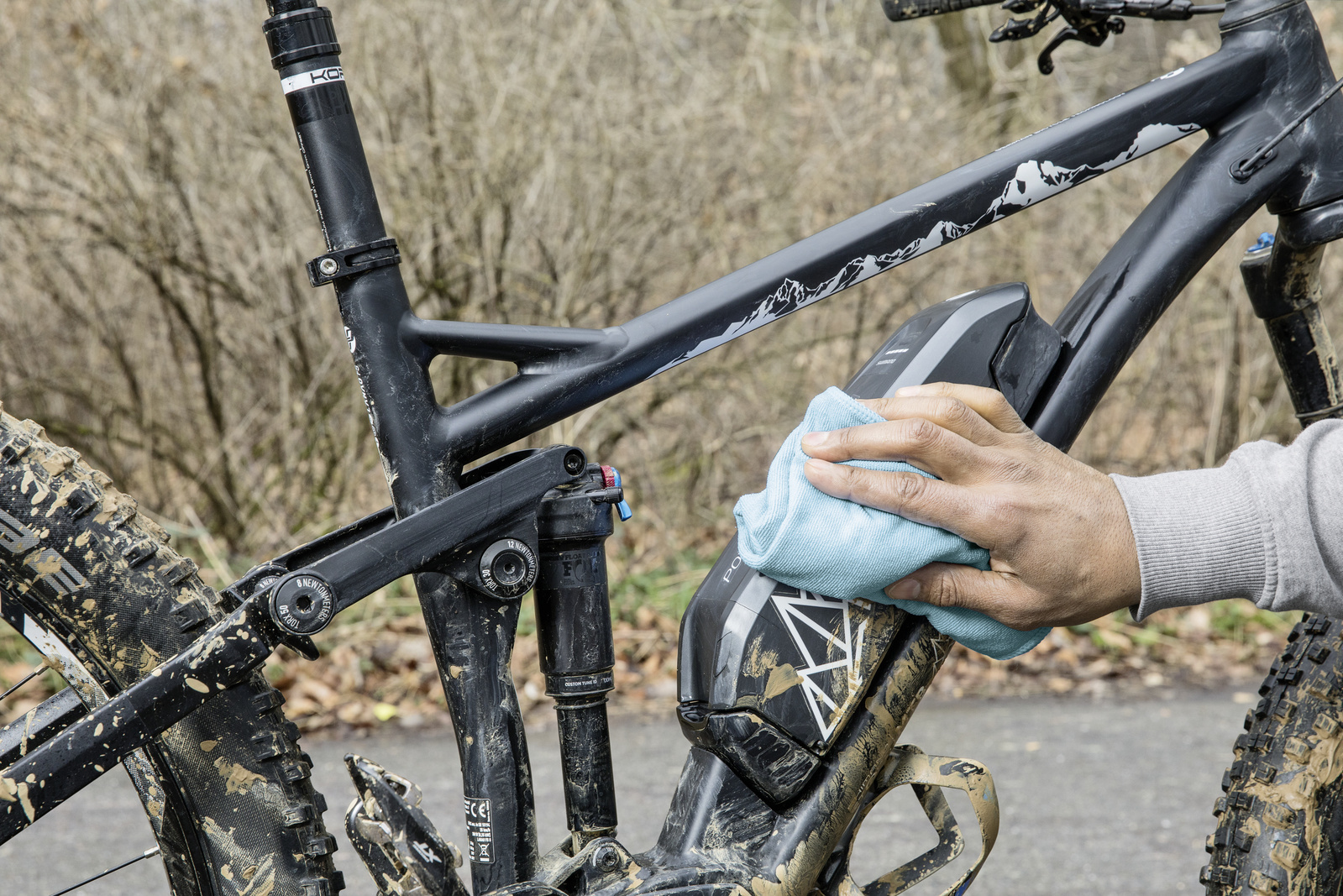
7. Don't forget: Dry the e-bike carefully with a microfibre cloth to prevent corrosion and unsightly water stains. Sensitive parts such as the electronics can be treated with special care sprays to displace moisture and maintain functionality. Only wipe the battery with a damp cloth before reinserting it.
8. Then oil the bicycle chain and gears. The contact points must be completely dry, otherwise there is a risk of a short circuit.
Important: Check that everything is working properly before your next ride. This includes the drive system with electronics, display and lights, the gears and also the brakes.
Step-by-step guide to a clean bike
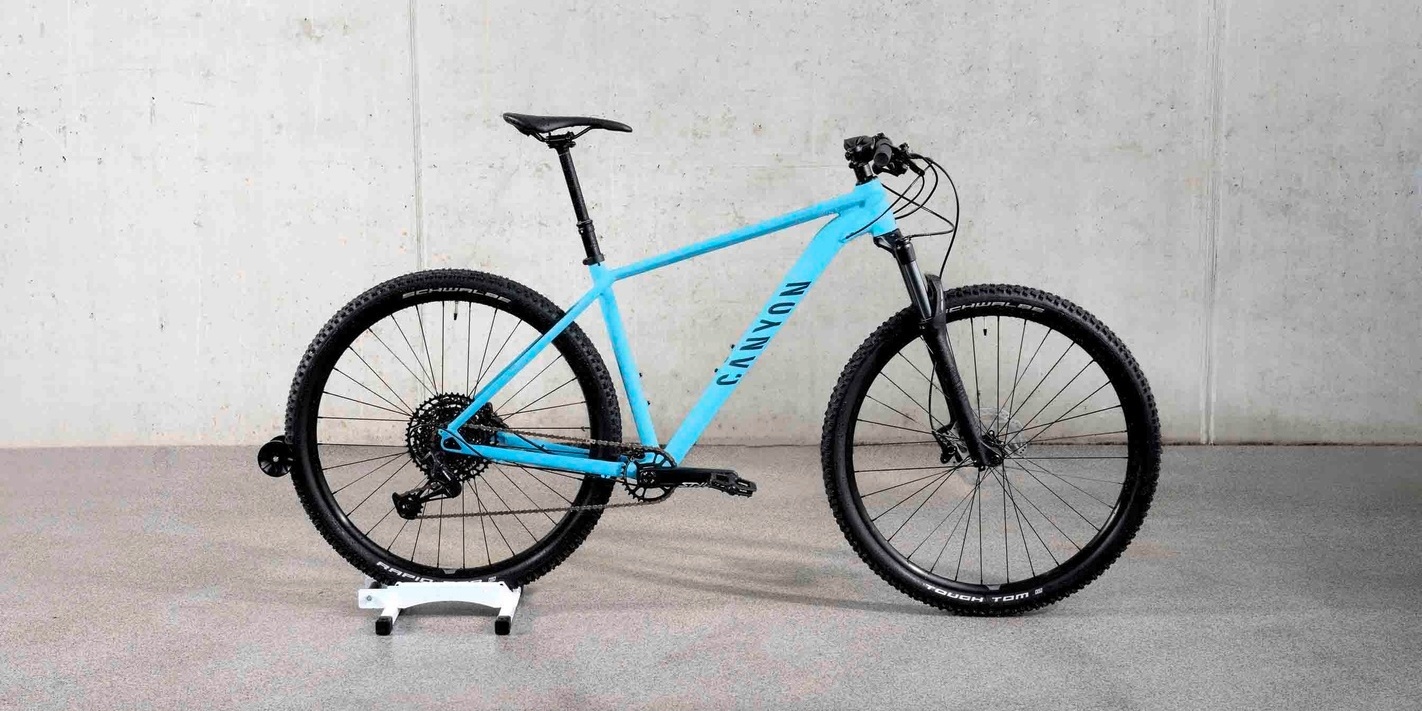
1. Situate the bike and prepare equipment
Whoever wants to clean their bike should first securely place it on a bike stand or lean it against a wall or large tree. For cleaning on the road: remove the tank of the Mobile Outdoor Cleaner, remove the spray gun, reattach the tank and switch on the device. For cleaning at home: connect the pressure washer or medium-pressure cleaner to the water supply and, if necessary, electricity and switch on the device. For bike cleaning, the flat spray nozzle should be used with all devices.
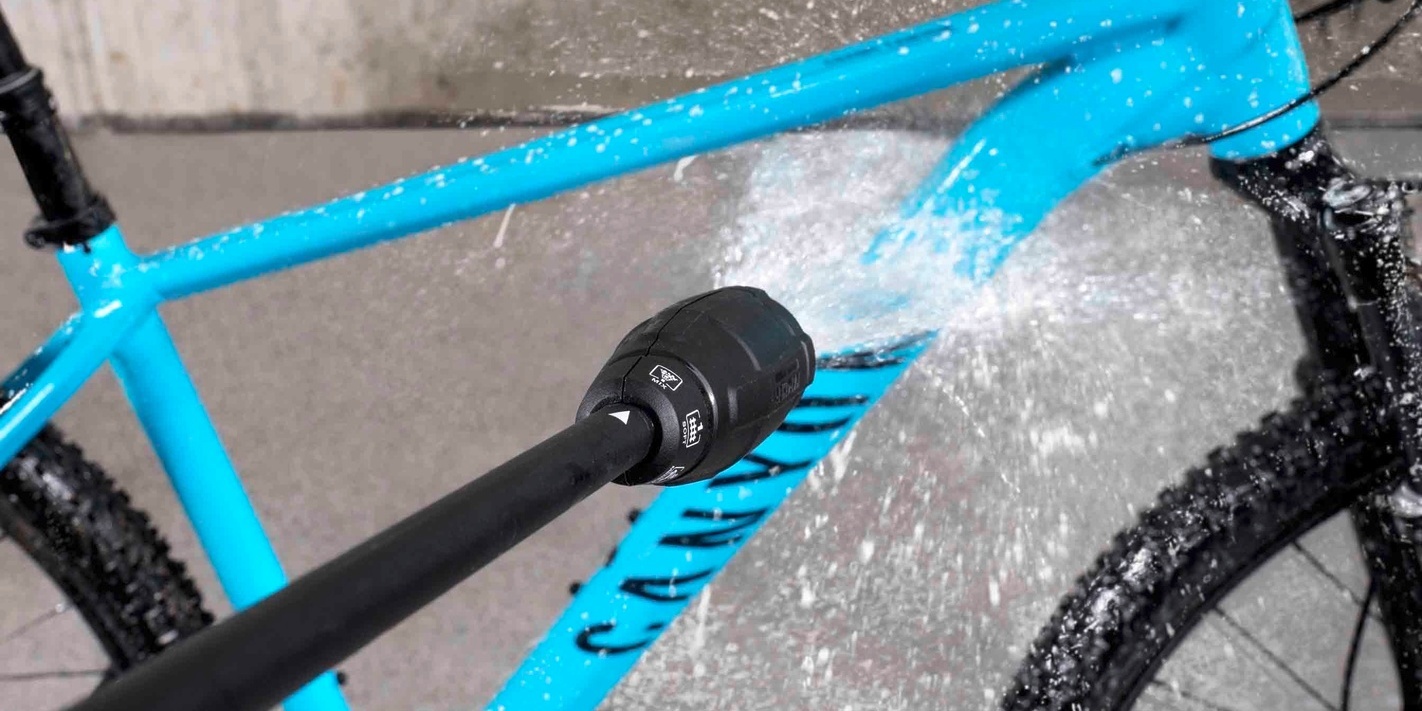
2. Spray bike with water
Now spray the bike evenly with the water jet. Do not direct the water jet directly at bearings, shock absorbers or electrical connections, e.g. on e-bikes. When cleaning with high pressure, only clean with low setting and ensure sufficient distance to tires, chain, bearings and small parts (approx. 30 cm when cleaning with high pressure).
Tip
It is best to clean from the bottom up. That way it's easier to see where the bike has already been clean.
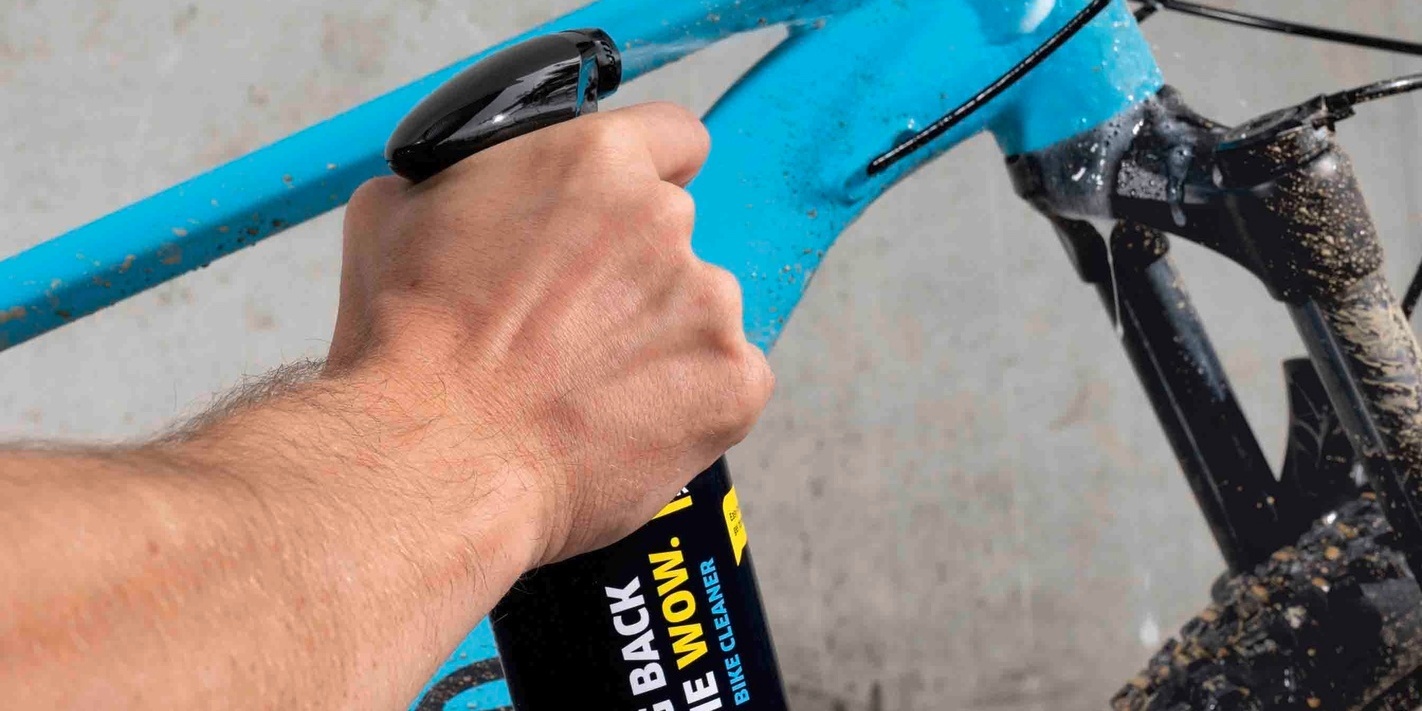
3. Apply cleaning product
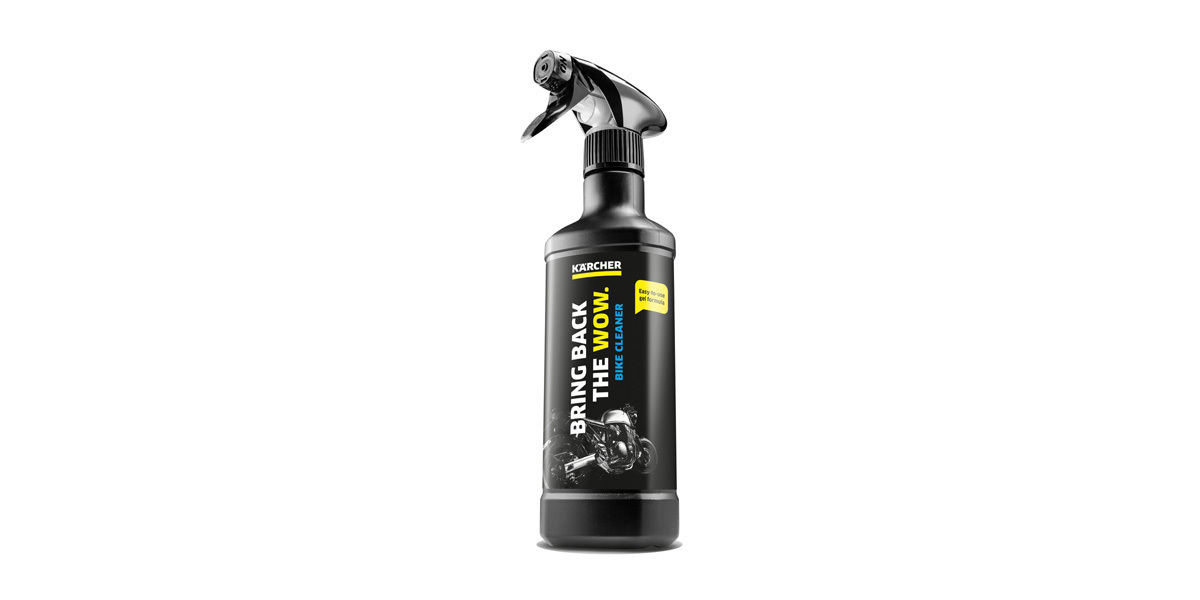
For stubborn stains, it makes sense to use a cleaning product. A universal cleaner or, even better, a special bike cleaner is a good idea. Apply evenly (e.g. with a foam nozzle) to heavily soiled areas before cleaning, let sit for 3-5 minutes, then rinse with clean water. The bike should ideally be dry when the cleaner is used, for better results.
Important note: to protect the environment, cleaning products should only be used on sealed ground (e.g. asphalt) close to drains.
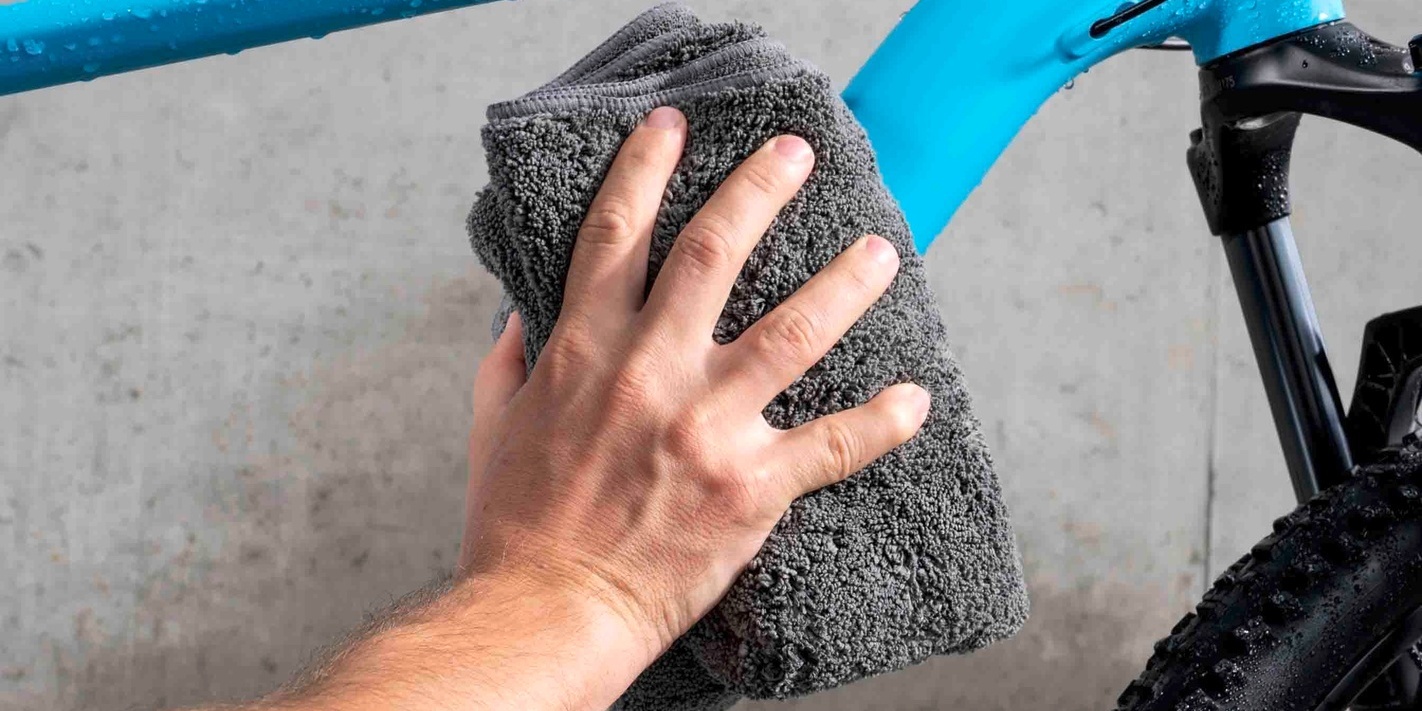
4. Remove deposits
If a deposits are still left on the frame, they can be quickly removed with a brush or sponge. Then rub the frame dry in the cleaned areas with a soft cloth (e.g. microfibre). To save water when cleaning with the Mobile Outdoor Cleaner, briefly moisten the universal brush and scrub the bike with it. Then spray off the loose dirt and dry bike with a soft cloth.
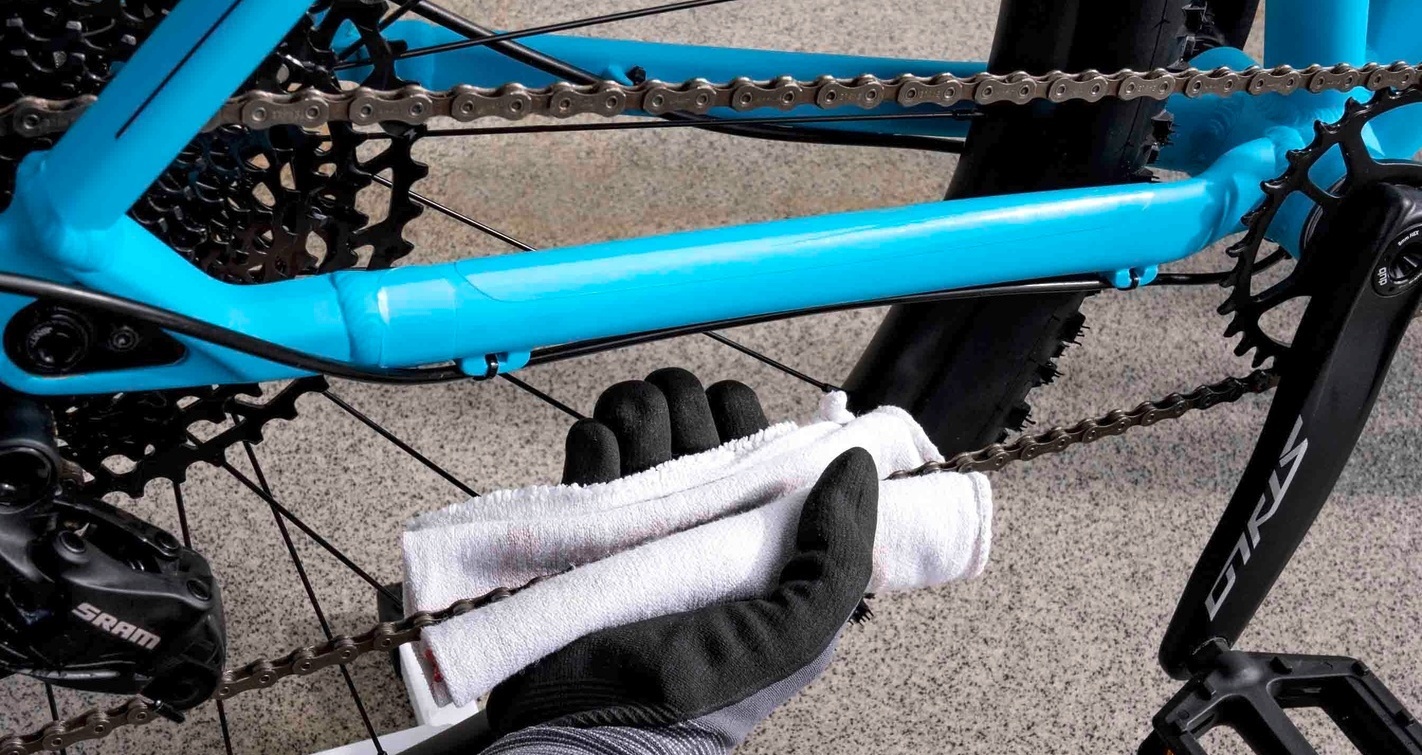
Tip: clean chain thoroughly
The chain is usually a little more difficult to clean than the rest of the bike, because oil, dirt and dust mix over time to form a sticky film. Before cleaning, a piece of cardboard or an old rag should be placed under the wheels. Then, using a rough brush, first remove the coarse dirt, then spray on the two-wheel cleaner or a special chain cleaner and let it soak in. To loosen the dirt, this trick helps: enclose the chain with a cloth or rag and run it along the chain several times. The dirt particles are loosened and absorbed directly by the cloth.
Comparison: devices for bicycle cleaning
Suitable models
Pressure washer
OC 3 Foldable, OC 4
Medium pressure washer
OC 6-18, OC 7-18 Handheld, OC Handheld Compact
Pressure washer
K 2 - K 7
Pressure range
Pressure washer
~ 5 - 7 bar
Medium pressure washer
15 - max. 24 bar
Pressure washer
110 - max. 180 bar
Self-sufficient cleaning possible
Pressure washer
yes (with water tank)
Medium pressure washer
yes (with suction hose or water tank)
Pressure washer
yes (with suction hose)
Field of application
Pressure washer
on the road/at home
Medium pressure washer
on the road/at home
Pressure washer
At home
Set-up time
Pressure washer
Low, as only the water tank needs to be filled
Medium pressure washer
low, as only the water tank needs to be filled or the suction/water hose connected
Pressure washer
Medium to high, as a water connection and electricity are required
Degree of dirt
Pressure washer
Gentle and effective cleaning at low pressure for light to medium soiling
Medium pressure washer
Effective cleaning at medium pressure for moderate and more stubborn dirt
Pressure washer
Effective cleaning with a pressure washer for medium and more stubborn dirt
Suitability for bicycle cleaning
Pressure washer
For quick cleaning on the go.
Very gentle cleaning thanks to low pressure
Medium pressure washer
For thorough cleaning on the go or at home.
The medium pressure is sufficient for cleaning bicycles and gentle at the same time
Pressure washer
For thorough cleaning at home.
Keep away from sensitive components to avoid damage (at least 30 cm distance). The pressure should be set to minimum. Optional: eco!Booster
Care after bike cleaning
When it comes to bike’s, care after thorough cleaning also matters. The first step is to always dry the bike thoroughly, because water can quickly cause rust. In addition, care products can be distributed better on a dry wheels.
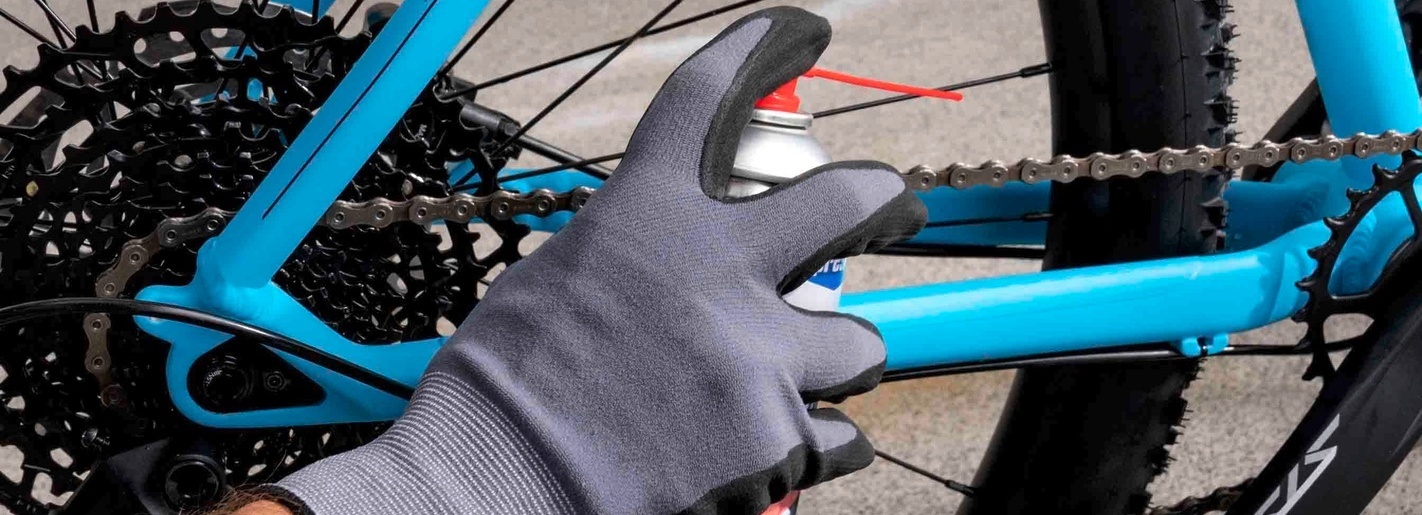
When the bicycle chain has been cleaned, it should first be dried off with a cloth and then oiled. It is practical to have a bike stand at this stage to keep the bike in position. Ensure that oil does not get onto the brake pads or brake plate during this process, as this impairs the braking effect. Afterwards remove excess oil from the chain with a rag.
Generally, all moving parts such as cables, brake joints, brake and shift levers should be oiled regularly. In the case of suspension forks, the immersion tubes should be regularly cleaned and also oiled.
Last but not least, it is advisable to also check the tire pressure at regular intervals, especially if you want to ride your bike again after a long time. The side of the tires usually indicate how much pressure may be inflated, minimum and maximum. The more pressure, the easier the tire rolls.