Professional Cement Screed Cleaning
Cement screed, the durable, poured, concrete-based top layer of a floor, is the most commonly used type of screed. This floor covering requires special attention when it comes to cleaning and care because it not only has to withstand a considerable amount of strain, but it also needs to meet occupational safety standards at the same time. For deep, maintenance, and intermediate cleaning, it's therefore essential to select the right equipment.
Special Properties of Cement Screed
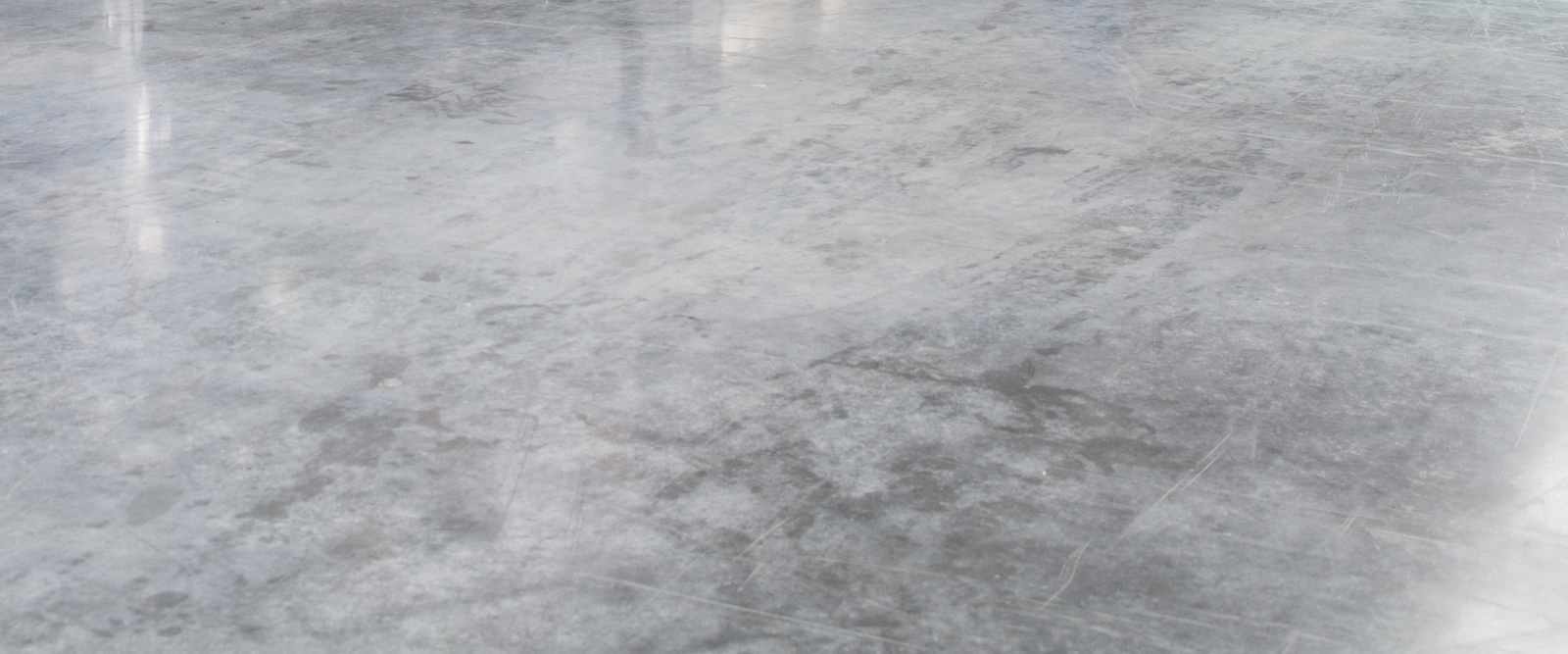
Cement screed is the most commonly used type of screed and consists of sand or gravel, plus cement and water. The only type of screed produced in the industrial sector is "hard-aggregate floor screed," which can withstand extremely high traffic due to its thickness and strength class.
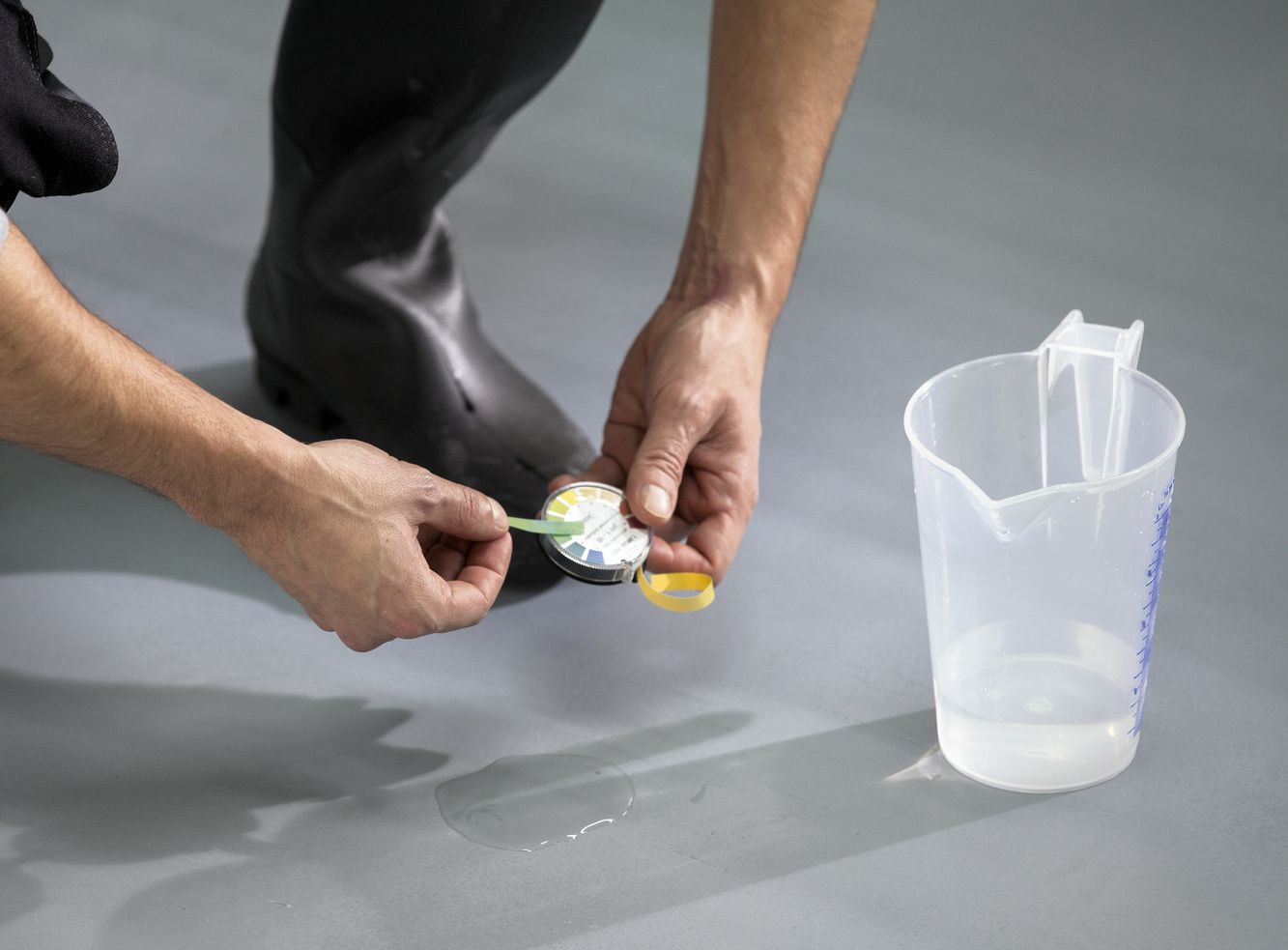
What makes cement screed unique is that when it is exposed to acids, it is given a structure similar to that of exposed aggregate concrete; that is, the concrete becomes rougher and harder to clean. In the case of high-gloss floor coverings, cleaning with strong alkalis (pH value higher than 10) can also result in a matte surface finish.
In addition, in the absence of surface treatment measures, such as impregnation, sealing, or coating, cement screed tends to lead to dust formation. Also, dirt and moisture can penetrate more quickly. If the cement screed is not treated, care should be taken during cleaning to ensure that the moisture applied is sucked up again. In this instance, cleaning should only be carried out using the one-step method.
Cleaning Preparation (Initial Cleaning/Final Cleaning on Construction Sites)
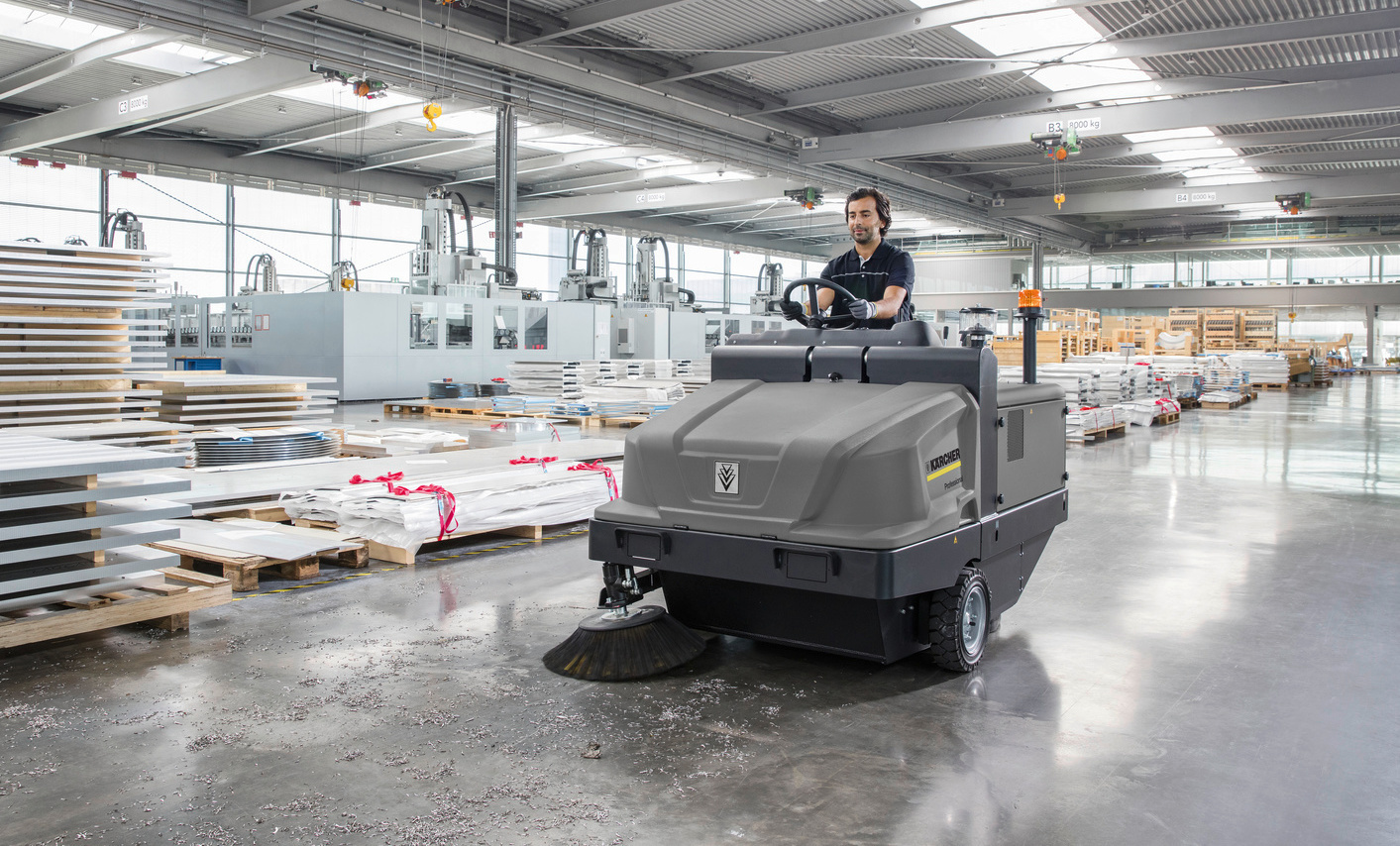
Prior to wet cleaning, coarse dirt can be sucked up using a vacuum sweeper, as required and depending on the type and amount. Stubborn dirt left after the construction phase, such as varnishes and paints, mortar, dispersion paint, tar, and adhesives, is carefully removed using a spatula or blade.
Remove Residues of:
- Mortar using a green hand pad.
- Dispersion paint by applying undiluted deep cleaner for approximately five minutes and carefully working it using a green hand pad. Then rinse the area thoroughly afterward. Please note: Not for use on self-gloss emulsions or polymer coatings.
- Varnish/paint/adhesives by carefully working the area with a universal stain remover. Add the solvent to a cloth and work the paint, varnish, or adhesive residues using a soaked cloth. However, never use a dilution on self-gloss emulsions, for example, a polymer dispersion, because it will damage the coating.
Maintenance Cleaning: Removing Light Soiling
Maintenance cleaning is carried out using the one-step method. To remove light soiling, the floor scrubber is fitted with red scrubbing brushes or pads. The floor scrubber works with a reduced contact pressure and lower roller brush speed. A suitable cleaning agent would be a maintenance and intermediate cleaner for industrial use diluted to between 0.5 and 3 percent, depending on the amount and type of dirt. We also recommend equipping the machine with the automatic cleaning agent dosing function. Post-wiping or rinsing is not required; the floor can be walked on again immediately.
If the cleaning job does not require wet cleaning, a vacuum sweeper can also be used for maintenance cleaning.
Deep Cleaning: Removing Very Stubborn Dirt
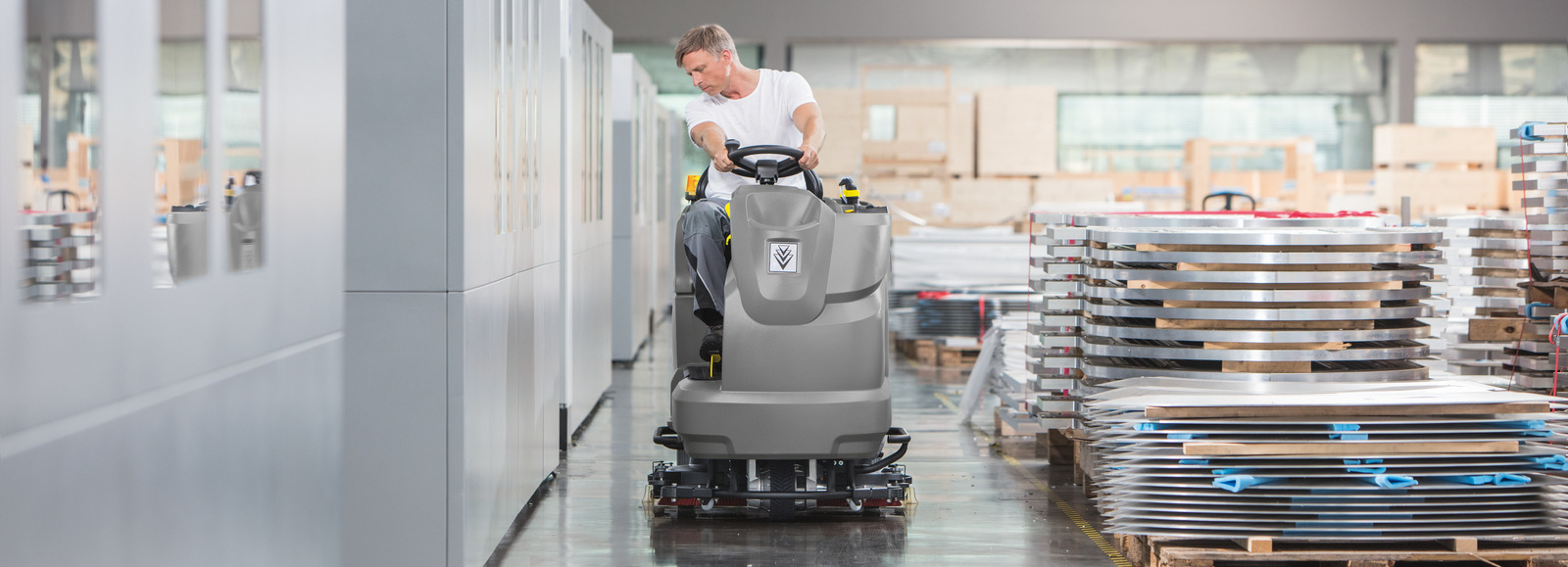
Dirt—such as oil, grease, and tire wear—which cannot be removed during maintenance cleaning is eliminated by performing deep cleaning at regular intervals. This requires powerful floor scrubbers with a roller scrubbing head. If the floor covering allows, cleaning is carried out using a two-step method at full contact pressure with green scrubbing brushes or pads. The procedure should always be performed step by step to avoid the floor getting too wet or the cleaning solution drying out again quickly.
If protective films need to be removed in addition to oil and grease, we recommend using an all-purpose deep cleaner or an intensive deep cleaner as the cleaning agent. The cleaning agent is diluted to 50 percent for removing protective films.
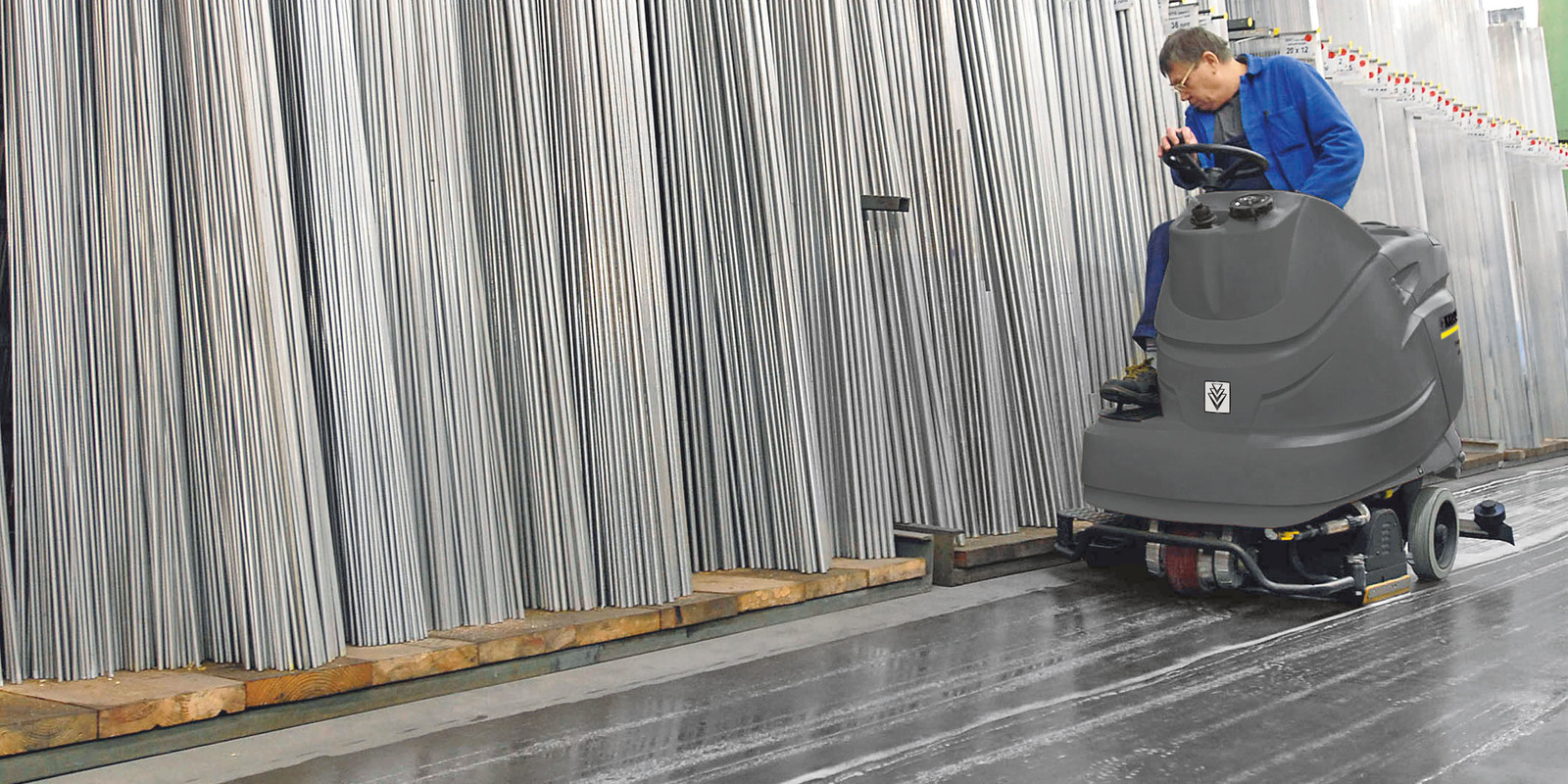
Step 1: Use a floor scrubber to cover the area that needs cleaning with a cleaning agent and then scrub it two or three times until all the dirt has come loose.
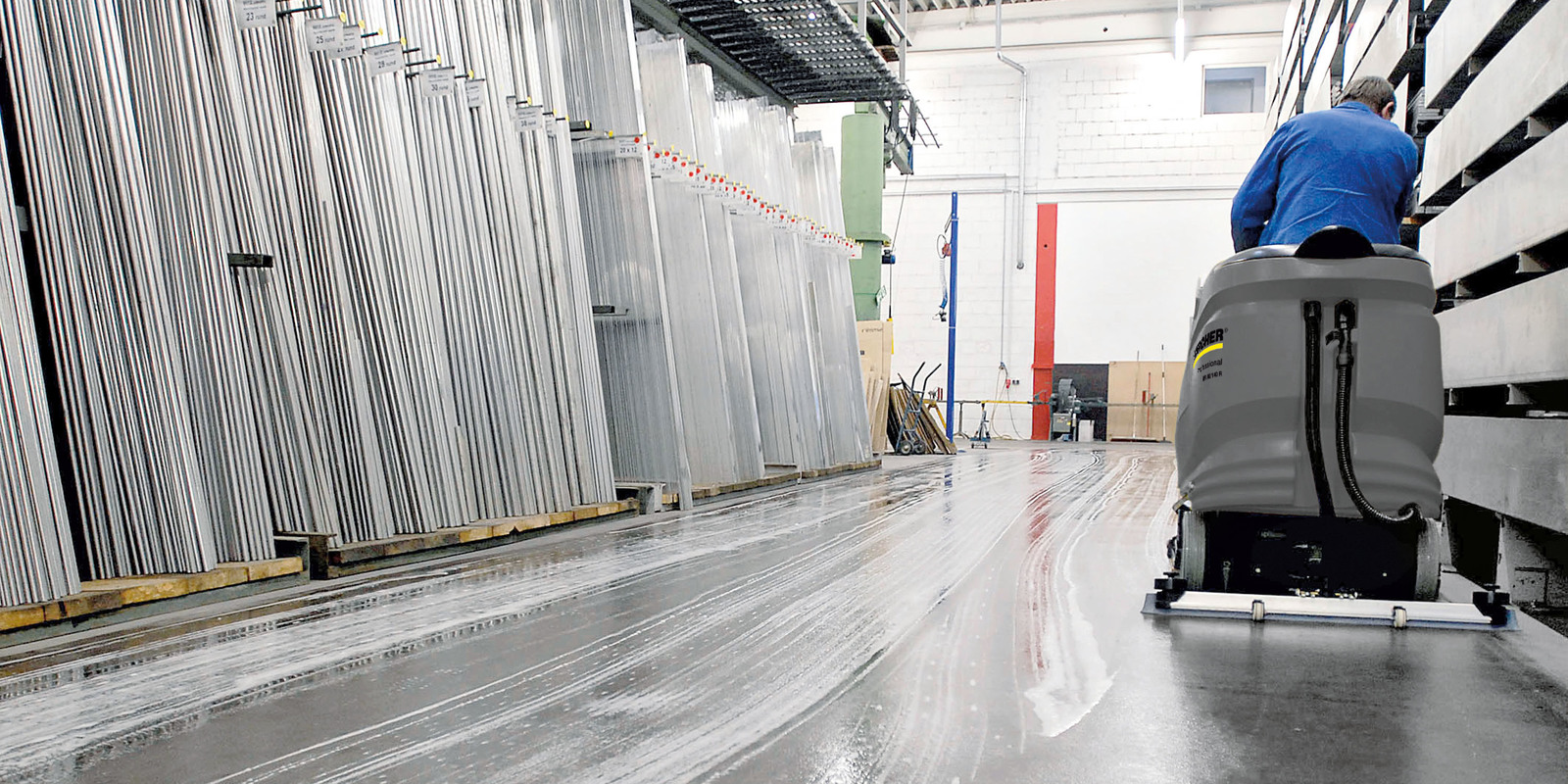
Step 2: Remove the dirty water using the squeegee and the vacuum function on the machine. Then cover the entire area with clean water again and proceed using the one-step method: cover with water, scrub, and vacuum.
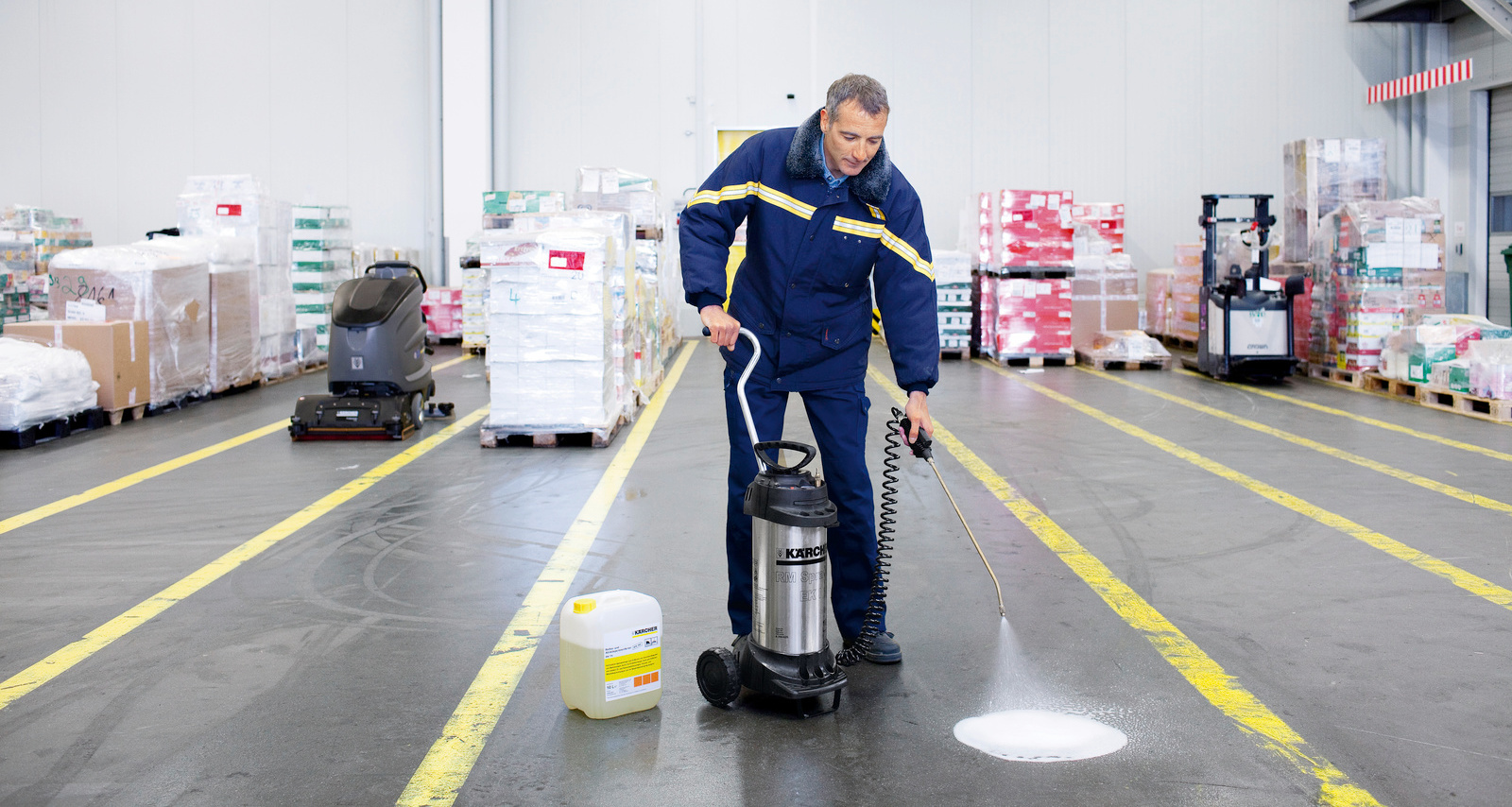
Removing Skid Marks and Tire Tracks
To remove the skid marks left by forklift trucks or abrasions from tires, use a cleaning agent that is NTA-free and has been specifically developed for this purpose. Apply it undiluted to the dirty areas using a cleaning agent sprayer or spray bottle and leave it to work for a few minutes. Then work the area using a floor scrubber without adding cleaning solution. The roller scrubbing head should be fitted with green roller pads or roller brushes depending on the structure of the surface (smooth or textured, respectively). The next step is to remove the dirty water and then rinse with clean water (one-step method).
Please note: Do not use this method on polymer-based or wax coatings, as the cleaning agent may remove them.
The Right Choice: Floor Scrubbers with Roller Scrubbing Head
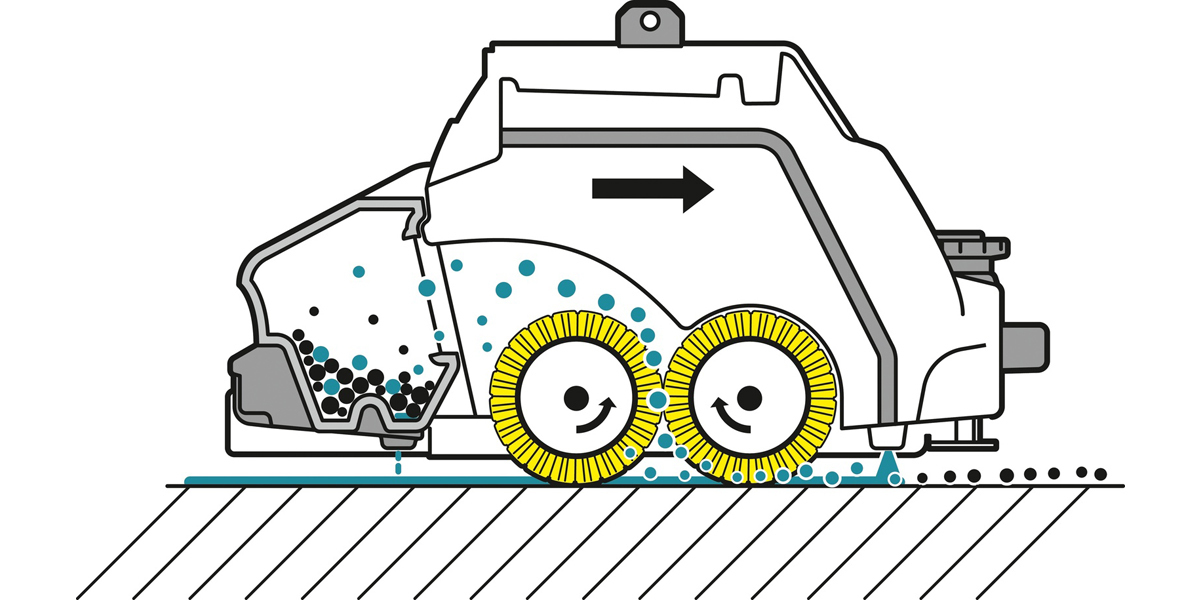
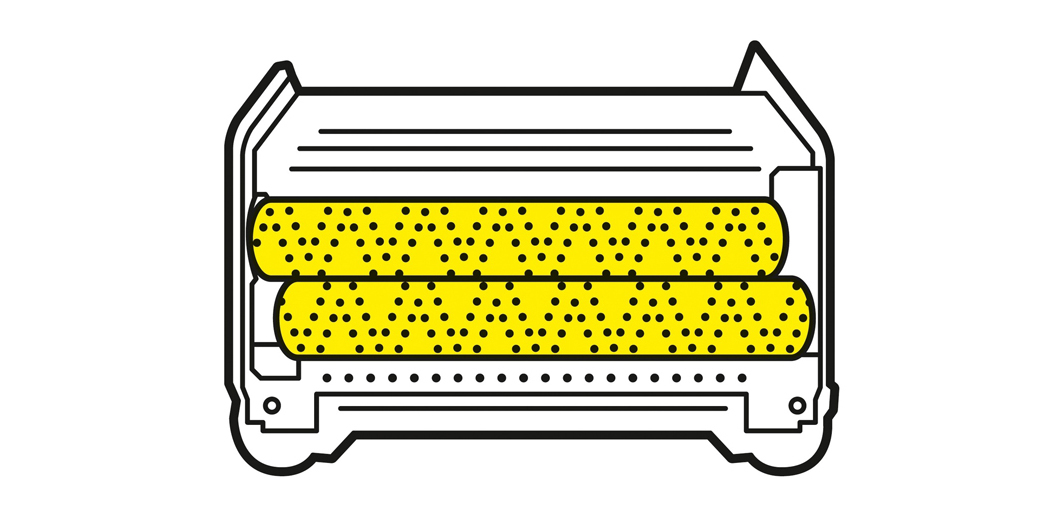
For stubborn dirt and heavy soiling, we recommend using a floor scrubber with a roller scrubbing head for wet cleaning. Smooth surfaces are cleaned using roller pads, while rough and textured surfaces are scrubbed using roller brushes. The high cleaning efficiency is due to the following:
- Brushes/pads running in opposite directions
- High and uniform contact pressure (up to 3.7 psi (260 g/cm2)) across the entire working width
- Extremely high speed (max. 1,100 RPM)
- Excellent floor contact
These properties make it possible to remove the dirt safely from the floor. The high speed also generates a self-cleaning effect, meaning that the cleaning efficiency remains consistently high. Sweeping the floor in advance is often unnecessary for light, loose dirt as the roller brushes move in opposite directions to sweep the coarse dirt into the integrated sweeper drawer.