Viewing Daytime Cleaning as an Opportunity
Building service contractors are struggling with a massive shortage of skilled labor, compounded by time and cost pressures. Switching from after-hours cleaning to daytime cleaning may present a highly beneficial solution. The more attractive working hours of daytime cleaning increase staff motivation and make it easier to recruit new employees. When cleaning staff are present during the day, customers benefit because the quality of cleaning is improved. However, employees should receive professional training to ensure this switch goes smoothly. Digital technologies and robotics provide further support.

Good Reasons for Cleaning During the Day
Daytime cleaning makes the building cleaning sector more appealing to prospective employees, ensures greater customer satisfaction, reduces costs, and is better for the environment.
Skilled Labor Shortages and Price Wars Put Pressure on Cleaning Service Providers
Staff in the cleaning industry are in short supply, and labor turnover is high. It's not easy to attract new employees. One reason for this is the unattractive working hours in this sector. Although evening shifts and night shifts are usually better paid, they can be difficult to reconcile with a regular social life and family commitments. In addition, cleaners effectively work anonymously during their night shifts when no one else is around, and therefore receive little recognition for their work.
In parallel with staff shortages, the cost pressure on building service contractors is also increasing, since the market is highly competitive. Despite this, the expectations of customers and building users remain high: the premises should be cleaned efficiently, thoroughly, and in as environmentally friendly a manner as possible. Daytime cleaning is not a fix-all solution, but it can help to position the company successfully for the future and make the work involved more attractive to (new) employees.
Opportunities Created by Daytime Cleaning
Social, Economic, Ecological
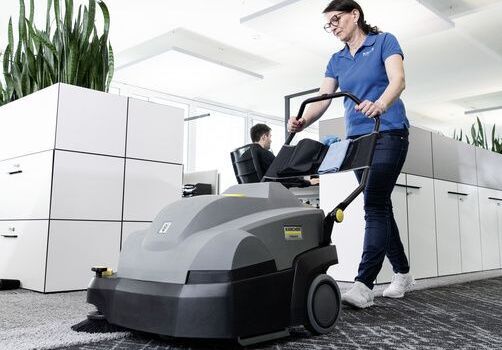
Probably the biggest advantage of daytime cleaning is that it's more sociable. Normal working hours are more compatible with family and social life. Plus, it allows customers and building users to see the cleaners doing their work. This gives cleaning staff more recognition for their efforts and provides opportunities and adds variety to their workday through interactions with other people. All this provides additional motivation. But it's not just the staff who benefit: switching over to daytime cleaning also saves money and helps the environment, since energy consumption will be reduced through lower lighting and heating requirements at night. As well as saving energy costs, this also saves on staffing hours, e.g., if security staff have previously only been deployed during nights to remain on site with cleaners while they carry out their work.
Improved Service, Satisfied Customers
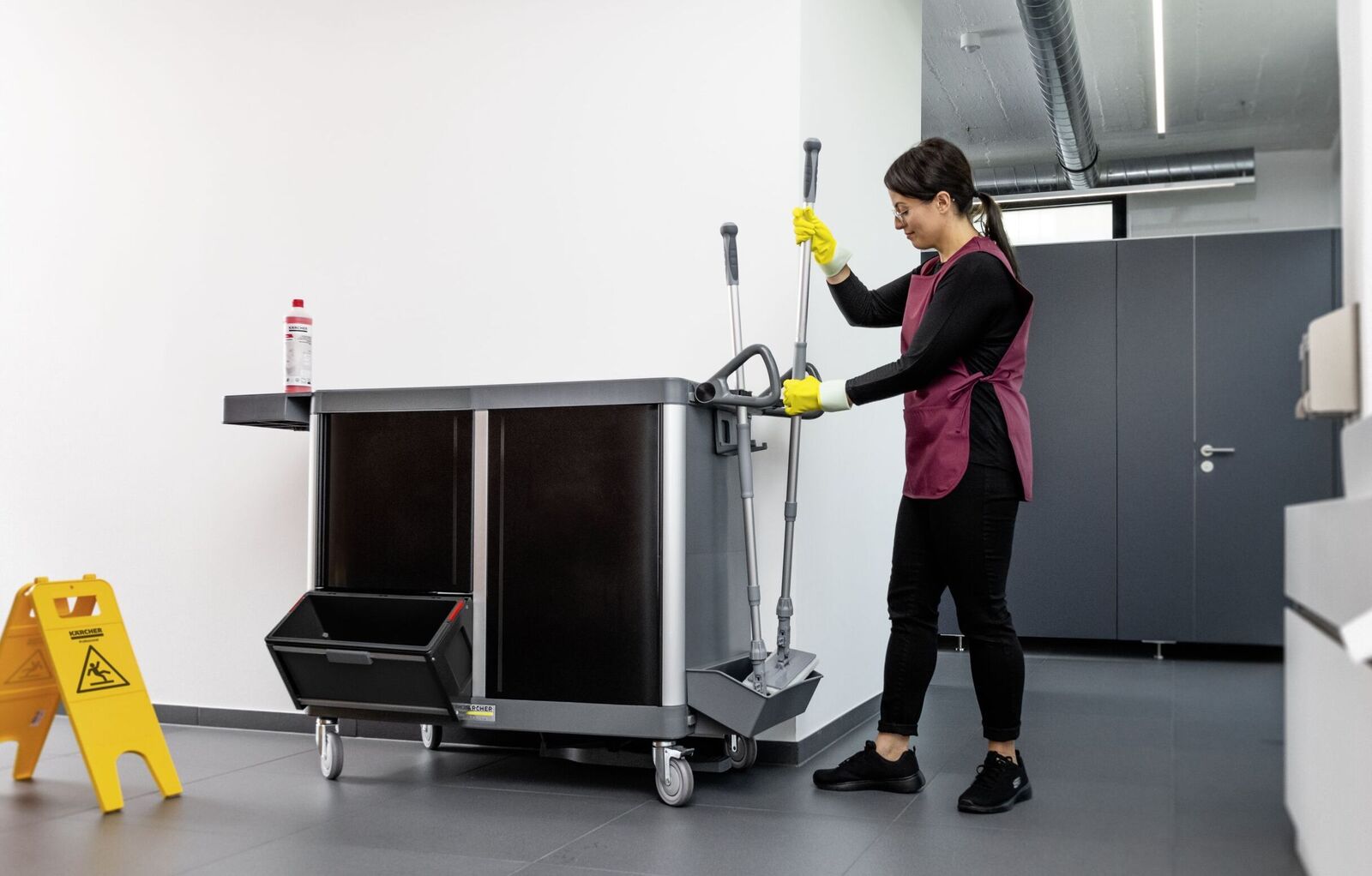
Customers and building users also gain added value from daytime cleaning: any urgent issues (such as a spill or a leakage) can be addressed immediately, as cleaning staff are on site at the same time and can deal with these on an ad hoc basis. Meeting rooms, restroom facilities, and washrooms, etc., can be cleaned in a more targeted manner that is reflective of the level of use. This reduces the overall workload and ensures that building users and customers aren't left waiting too long if a particular area needs cleaning up.
Rethinking Building Cleaning Services
When restructuring building cleaning arrangements, it's a good idea to incorporate time-saving processes and experience from other sectors. New working models facilitate their introduction. All it takes is suitably trained cleaning staff and the right technology.
Don't Reinvent the Wheel – Learn from Other Areas Instead!
When making the switch to daytime cleaning, it's a good idea to look to sectors that already have extensive experience and success using this approach. These include establishments such as hotels, nursing homes, or hospitals. In such settings, practical experience has shown that it's a good idea to plan cleaning measures according to usage. For example, hotel rooms are cleaned when guests are out for the day, and hospital rooms are never cleaned during the doctor's rounds.
This approach can also be implemented according to everyday working practices in office buildings or industrial facilities. For example, cafeterias and break rooms should only be cleaned after the lunch break, and offices should not be cleaned during a conference call.
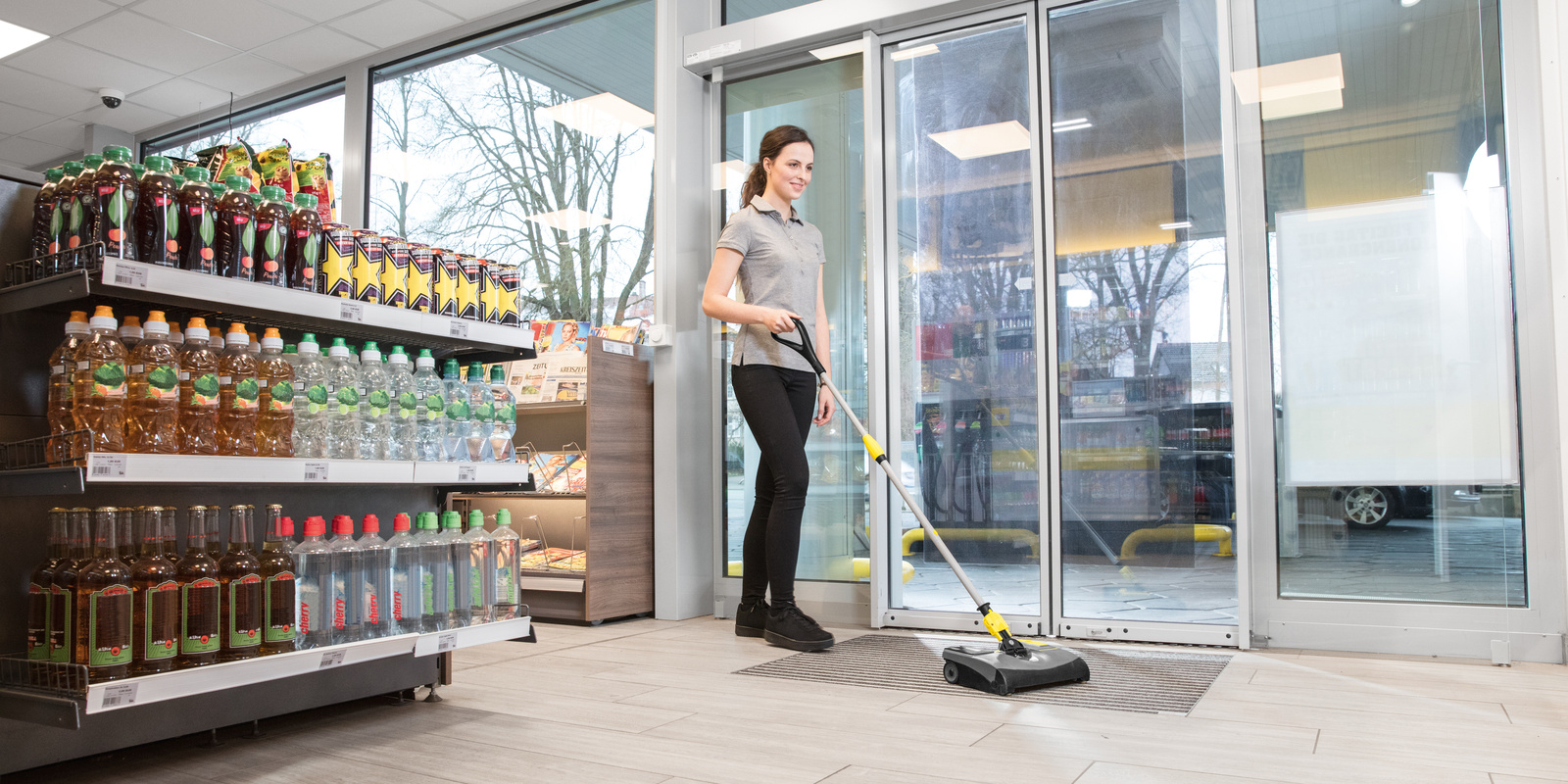
Use Time-Saving Methods: Dry Vacuum Cleaners, Compact Floor Sweepers, and More
To ensure efficient cleaning in public areas, it makes sense to use time-saving processes. Hard floors, for example, don't always need to be wet mopped all over. It's sufficient to pick up loose dirt with a dry vacuum cleaner or a dust mop and to remove ingrained dirt by spot cleaning with a wet cloth. Electric brooms are suitable for removing visible, loose dirt on textile floors, meaning full-surface vacuuming is rarely necessary.
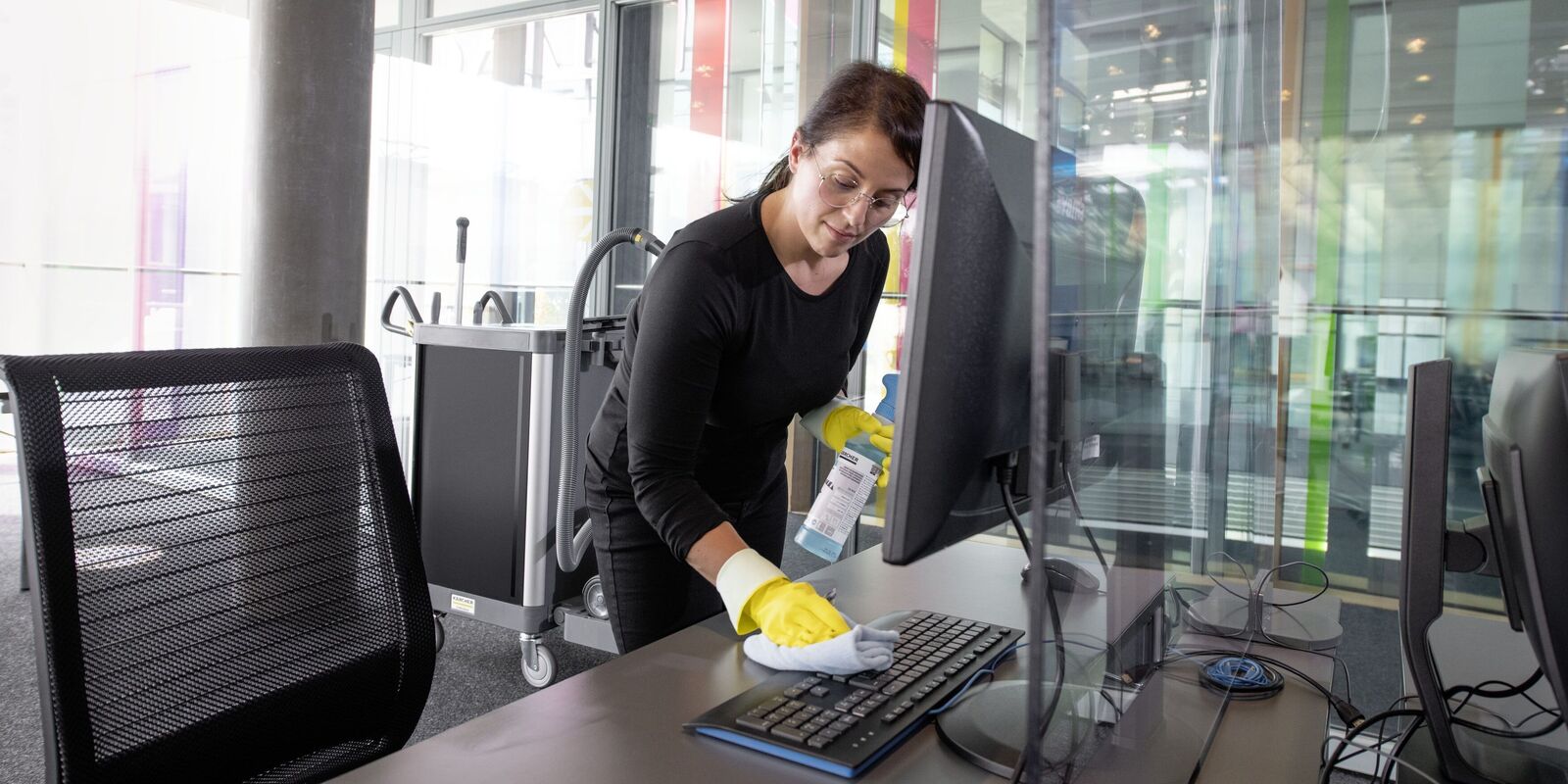
It helps to be well prepared to deal with any urgent issues quickly. If a cup of coffee has spilled over a desk, for example, cloths pre-moistened with water or detergent can be used immediately to wipe up the spill. It's also a good idea to have a spray mop system within easy reach for any liquids that have landed on the floor. Preparing the appropriate equipment and methods in advance saves time and resources—and can be integrated into day-to-day operations with little effort.
Changing with the Times: How to Ensure a Smooth Transition and Integrate "New Work" Concepts into Cleaning Services
Despite all the advantages of daytime cleaning, working hours can't be changed simply at the touch of a button. Breaking up well-established structures and processes presents a challenge for cleaning staff and building users alike. The easiest option for building service contractors is to capitalize on change. For example, it makes sense to introduce daytime cleaning in new buildings, newly contracted work, or property renovations. "New work" concepts on the part of building operators and users also make it easier to integrate daytime cleaning into processes. For context: many companies currently operate with a portion of staff working remotely. This makes it easier to carry out surface cleaning, since offices are only partially occupied. On the other hand, desk-sharing concepts increase the need for and acceptance of cleaning during the day, because every employee will want to turn up to a desk that's clean and ready for use.
Cleaning in Public Areas: Trained Staff, Suitable Technology
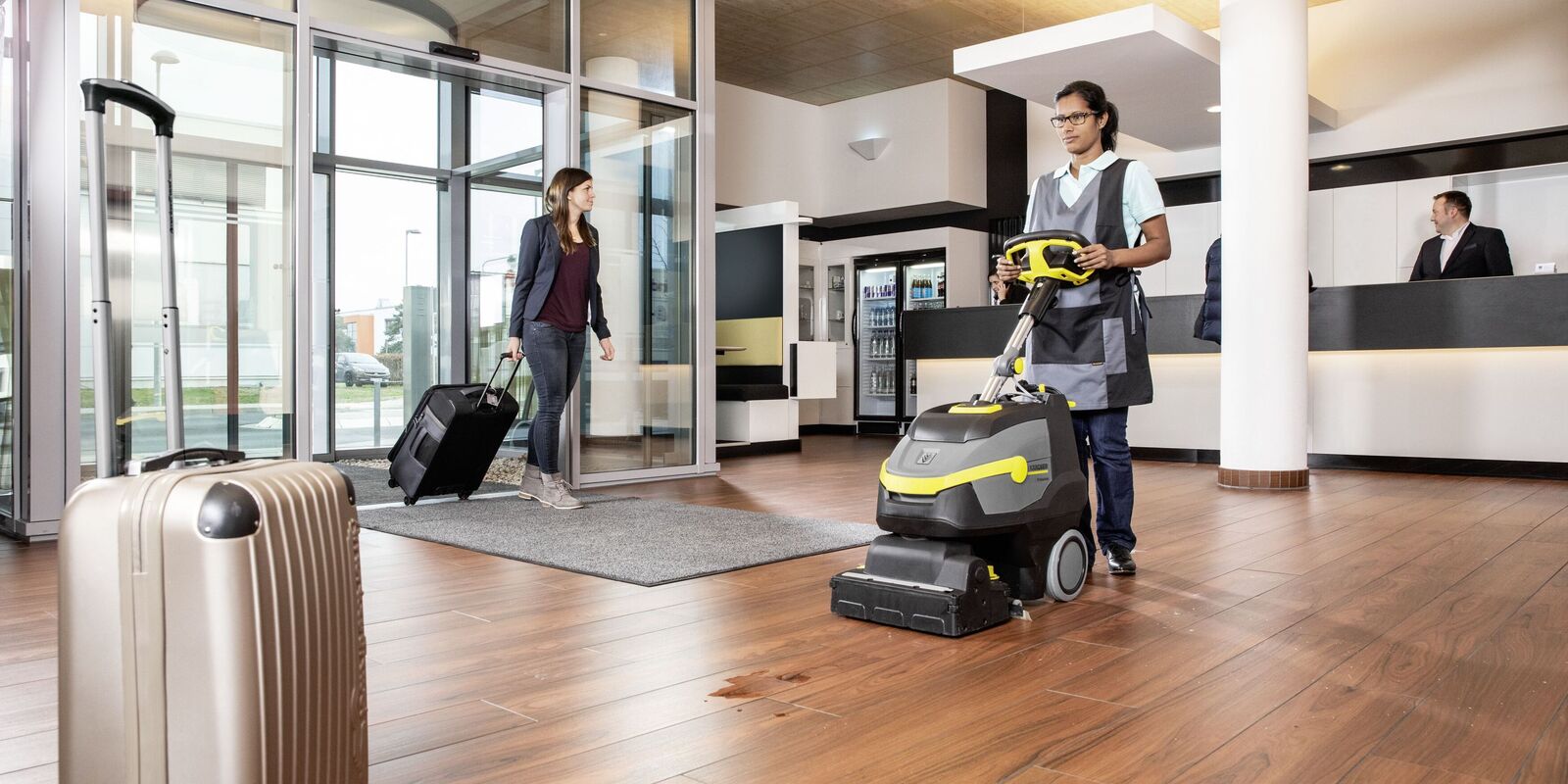
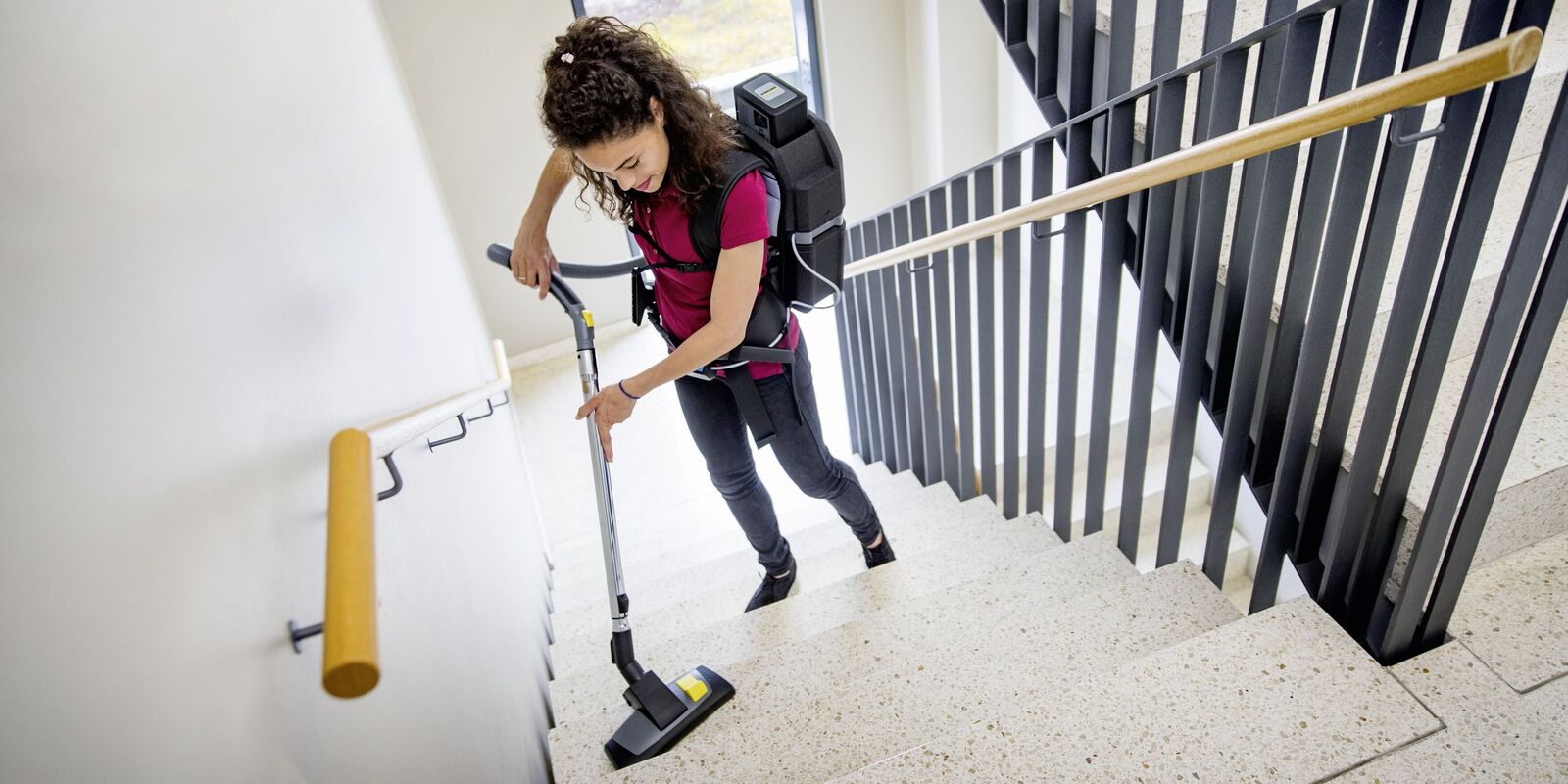
Daytime cleaning during business or office hours places higher demands on cleaning staff—including when it comes to speaking and interacting with other people on the premises. They should be professionally trained in how to deal with building users and customers. It may also make sense to procure new work clothing (uniforms, etc.), since cleaners will be publicly visible when going about their work.
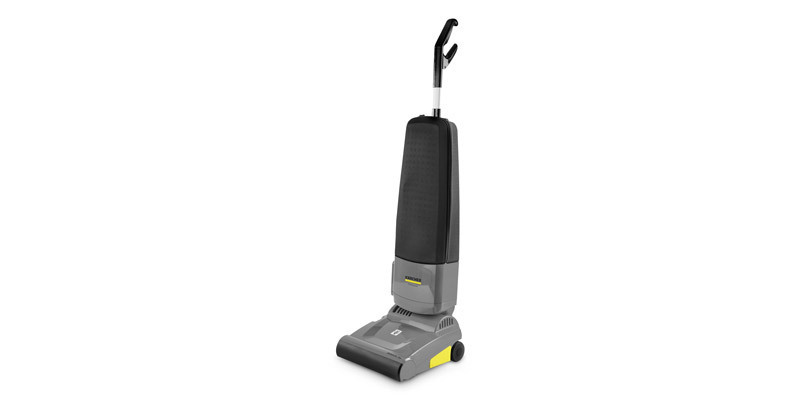
The types of equipment and tools used should also be carefully considered. For public areas, it makes sense to choose low-noise and cordless models that are smaller and more maneuverable. Battery-powered vacuum cleaners are quieter and consume around 50 percent less power than corded machines. What's more, the use of battery-powered appliances means that there are no cables left lying around to present a tripping hazard. In addition to the right equipment, it's critical to apply appropriate working methods and behavior when cleaning in the direct vicinity of customers.
Tip:
To ensure the scent of detergent is not overpowering, only products with a mild scent should be used.
Digitalization in Daytime Cleaning
Sensor-assisted cleaning and digitalization can help to implement daytime cleaning efficiently. The use of sensors can save unnecessary work, while digitalization helps to reduce the administrative burden.
When the Trash Can Thinks for Itself: Sensor-Assisted Cleaning
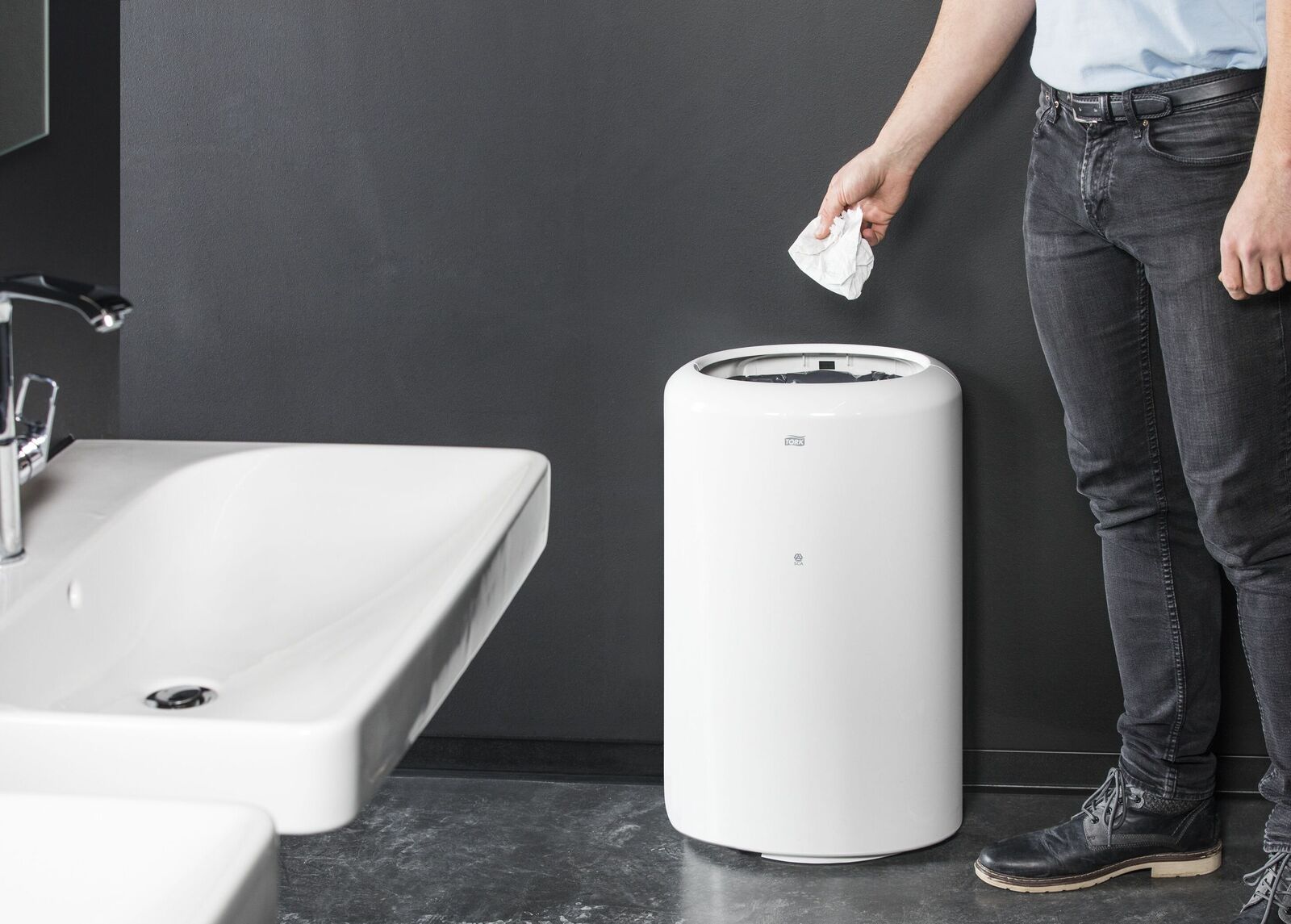
Changes that ease the introduction of daytime cleaning don't only come from the customer—certain innovations also come from the cleaning industry itself. Sensor-assisted cleaning is gaining increasing significance as a way of ensuring staff are deployed as efficiently as possible. The trend is moving away from strict cleaning schedules towards needs-based cleaning. This eliminates unnecessary trips for cleaning staff, frees up more time for ad hoc services, and enables new billing models with basic services and extra services.
The key benefit here is that sensors monitor the frequency of use of rooms and report the cleaning requirements directly to the cleaning staff. This allows meeting rooms or entrance areas, for example, to be cleaned only as and when required. In addition, sensors in restroom facilities can report the filling levels of soap dispensers or trash bins, meaning that these can be replenished or emptied when required rather than according to a rigid schedule.
All-in-One Hassle-Free Package: Digitalization for Even Greater Efficiency
Many building service contractors and building operators still work with Excel spreadsheets and paper forms to manage staff and machines. This takes up unnecessary time, and can even lead to errors or data loss if information is stored or filed in various locations. Updates get forgotten about, meaning that there is no longer an adequate overview of staff or the machines in use. Digital solutions bundle all the data into one place, so there is no risk of problems between contact points or data loss.
Use of Robotics
Integrating robotics into daily cleaning helps to relieve staff of repetitive and time-consuming tasks. When these are deployed in public areas, it's fundamentally important to consider safety.

Welcome to the Future: What Robots Contribute to Today's Cleaning Operations
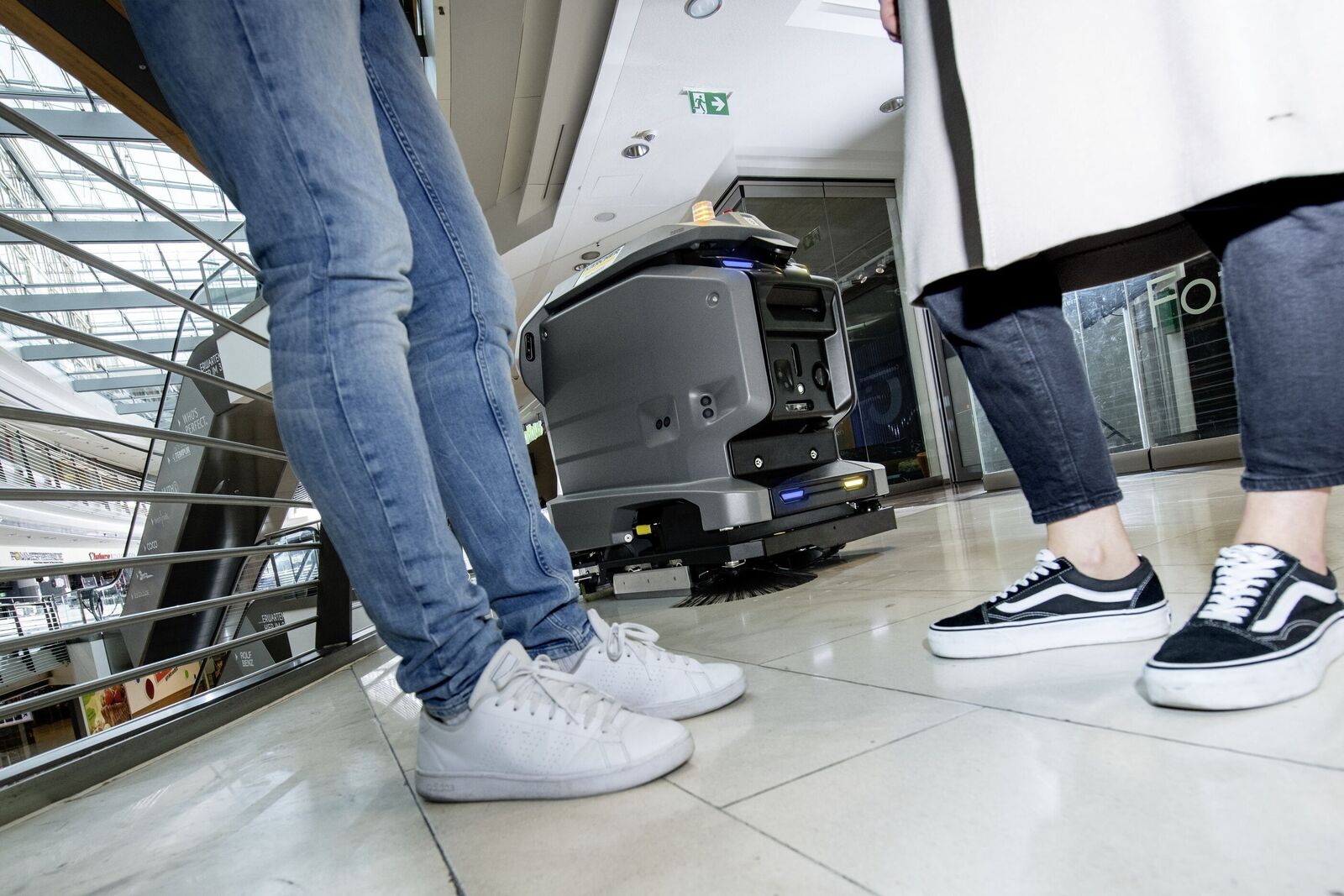
Floor cleaning in larger buildings is a tedious and strenuous task that ties up multiple employees for hours on end. Cleaning robots can take over these repetitive tasks, freeing up time for cleaning staff to take on more complex jobs that they otherwise might not get around to. Options available on the market include autonomous floor scrubbers, for example, which can maneuver easily even in tight spaces and clean medium to large areas quickly. Fully autonomous models can control their own docking stations, refill resources, empty out dirty water, and clean several thousand square feet per day—all without the need for any human intervention. Cleaning routes can be created very easily. No programming experience is necessary for this. Nevertheless, it is important to consider in advance which areas are heavily or less heavily trafficked, i.e., where more or less cleaning will be required.
Tip:
Specialist staff should plan routes with strategic placement of docking stations, in order to minimize the distances traveled and save time.
Clean Results Are a Safe Bet with Tested and Certified Robotics
As a general rule, cleaning robots must satisfy clear safety requirements for deployment in public spaces. Robots must be able to navigate reliably, even in heavily trafficked areas. This should be verified by an independent testing authority, such as UL (Underwriters Laboratories) or Intertek in the United States. People, other moving obstacles, or stationary objects must be reliably detected by means of 360° environment detection using laser scanners, 3D sensors, and ultrasonic sensors. IT security is also important. Any vulnerabilities should be discovered and promptly rectified by IT security experts in the course of comprehensive tests. It is also important that the data from 2D and 3D cameras is only processed in real time: this data must not be stored and must be protected against attacks from hackers. Data security builds trust among customers and building users alike.
Tip:
The processing of personal data by deployed cleaning robots should be considered harmless in accordance with applicable US data privacy laws, such as the California Consumer Privacy Act (CCPA) and California Privacy Rights Act (CPRA), or other relevant directives.