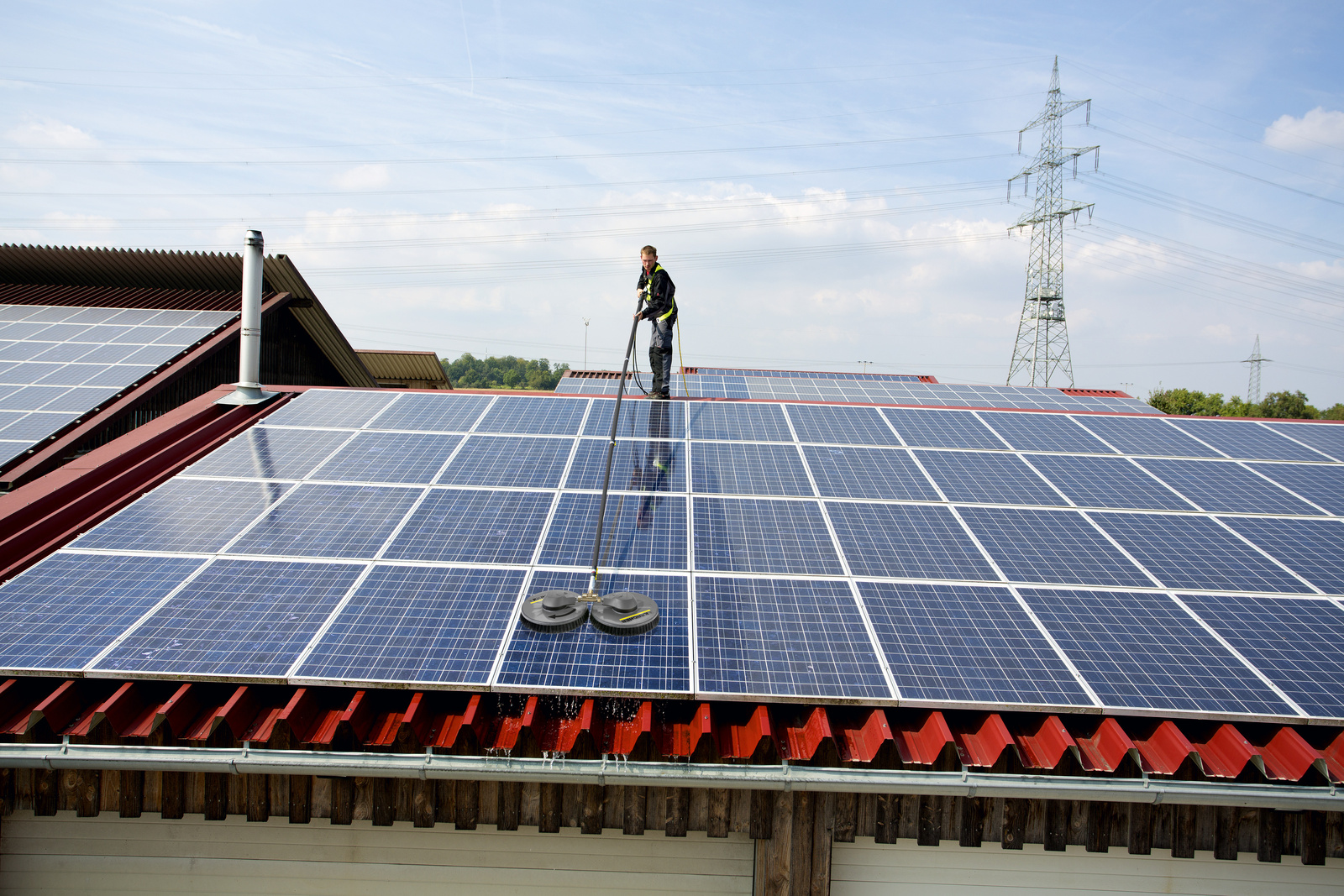
Ready for the sun: How to keep balcony power plants and solar systems efficient
Regularly cleaning your solar panel system not only ensures greater energy yield, but also protects your investment – regardless of whether it is a permanently installed system or a compact balcony power plant. With the right accessories and a little practice, you can safely and conveniently clean PV modules yourself, without risking damage to people or materials.
Why regular cleaning makes all the difference
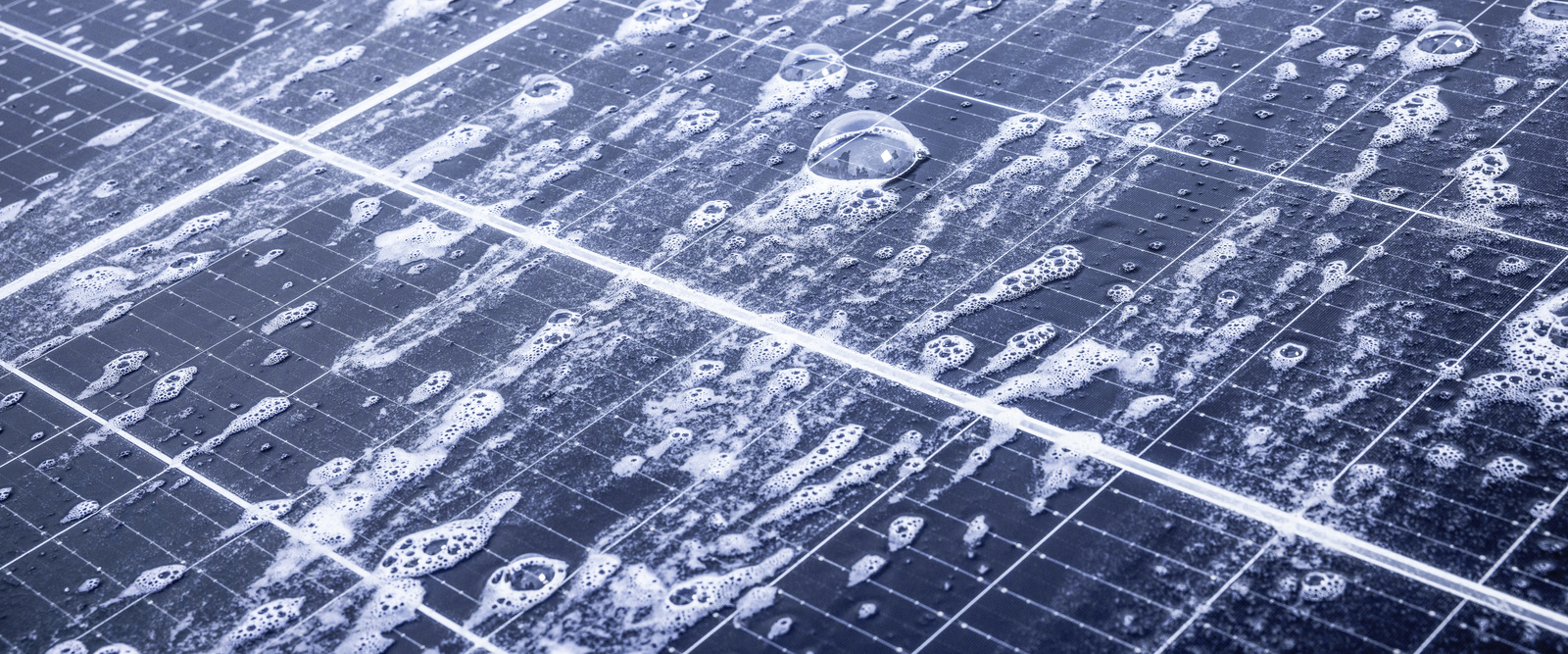
Whether on the roof, balcony, garage, or terrace, clean solar panels are essential for sustainable electricity production. However, sun and rain alone are often not enough to keep PV panels clean in the long term. Over time, dust, pollen, bird droppings and moss accumulate, reducing performance and shortening the system's service life.
What types of dirt are there?
Depending on the location, contamination can occur in a variety of ways.
- Dust and pollen: These particles form a fine film on the surface, reducing light transmission. These particles are particularly stubborn in spring or during dry summer months.
- Bird droppings: Not only are these unsightly, they are also corrosive. If left on glass for a long time, they can damage its surface.
- Moss and algae: These can accumulate, particularly at the edges and in shaded areas. These green deposits not only reduce energy yield, but also retain moisture, which can cause long-term damage.
- Industrial and exhaust residues: In city centres with heavy traffic and also near industrial plants, fine dust accumulates, necessitating more frequent and thorough cleaning.
In many cases, rain and wind take care of basic cleaning. However, wherever there is little inclination or the modules are installed in dusty or urban environments, it is worth cleaning the solar panels regularly. This prevents stubborn deposits and ensures a permanently clear view of the sun.
When is the best time to clean?
A slightly cooler, cloudy day is ideal for cleaning photovoltaic systems. This avoids the risk of cracks forming in direct sunlight due to the difference in temperature between the cold water and hot glass. Under no circumstances should cleaning be carried out at temperatures around freezing point, as the temperature differences could also cause damage in this case.
Cleaning is recommended after the flowering season or after prolonged dry periods. The modules benefit particularly from thorough maintenance in spring and late summer, as they are usually most heavily soiled during these periods. Balcony power plants on terraces or flat roofs usually only need to be cleaned once or twice a year, while larger roof systems should be checked and cleaned more frequently depending on their location.
An additional tip: After rainfall, much of the dirt has already been loosened, which makes cleaning easier and reduces water consumption.
What should be considered?
Even a thin layer of dust can reduce the performance of the modules by several percent, and by up to 20 percent in the case of heavier soiling. Therefore, cleaning is not an end in itself, but improves efficiency. Every kilowatt hour counts, and a clean surface ensures solar radiation is used as efficiently as possible.
It is important that PV systems and balcony power plants are always treated with care. Scratches or aggressive cleaning agents can permanently damage the sensitive glass surface. Those who wish to clean their PV system should therefore exercise caution and use soft brushes, clear water and low pressure.
Which products are used?
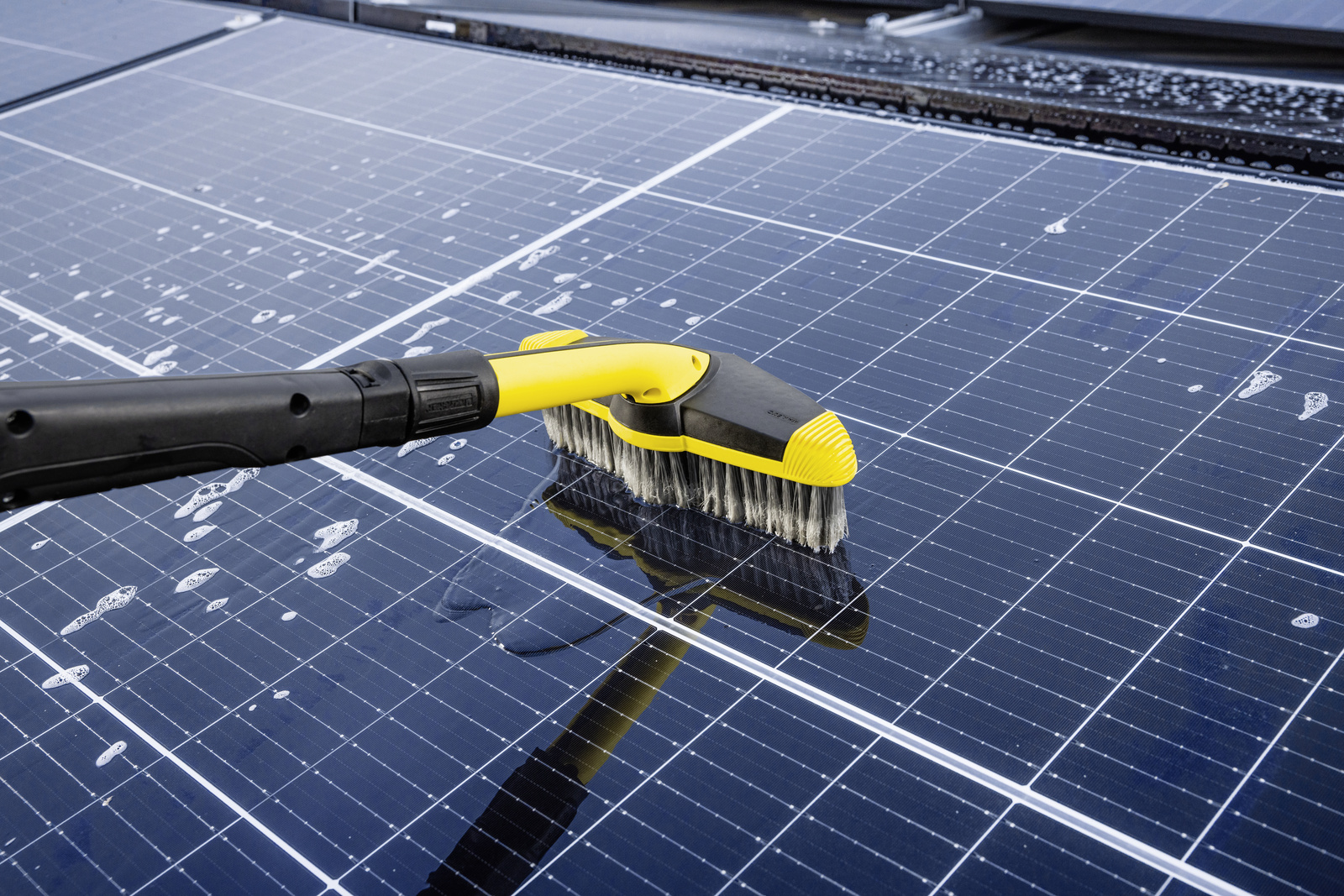
Equipment and accessories that are gentle yet effective are ideal for cleaning PV modules. A pressure washer combined with a soft wash brush is particularly practical. Its soft bristles remove dust and pollen without damaging the surface. The continuous water supply immediately rinses away the loosened dirt.
Using a rotating wash brush makes the job even easier. It ensures an even clean and reduces the amount of effort required.Telescopic spray lances and swivel joints help you to safely reach higher or hard-to-reach areas from the ground. Modules that are easy to reach, such as balcony power plants or panels installed in the garden, can also be conveniently cleaned with a low-pressure washer.
Cleaning agent for stubborn stains
For stubborn residues,such as dried bird droppings,a mild, natural-based cleaning agent can be used. For best results, it should be applied from bottom to top so that all areas are evenly moistened. After leaving it to work for a short time, simply rinse with clean water. To achieve a streak-free finish, use a glass finisher to prevent limescale stains and delay re-soiling. Alternatively, microfiber cloths or a squeegee can be used for final drying.
What is the best way to clean gently?
The correct procedure is crucial to achieving a good result:
- Remove loose dirt: First, rinse off leaves, sticks, and coarse dust with water and low pressure. A garden hose or a pressure washer set to the lowest pressure setting is suitable for this.
- Clean with a soft brush: Gently scrub the panels using a wash brush. A continuous supply of water reduces the risk of scratches. Important: Check the bristles for dirt particles beforehand to prevent scratches. Tip: This can be done comfortably and efficiently with a high- or low-pressure cleaner in combination with a soft washing brush.
- Use cleaning agents: If necessary, apply a suitable cleaning agent, preferably a universal cleaner, manually using a spray bottle or with the help of a pressure washer from bottom to top. Leave it to soak in, then rinse thoroughly.
- Rinse and dry: Clear water removes residues, and a squeegee ensures streak-free surfaces.
- Avoid limescale stains: Applying a “glass finisher” after cleaning helps to prevent streaks and residue, and stops the surface from becoming dirty again quickly.
Important: Only clean the glass surfaces – not the frames, connectors, or the inverter. These sensitive components are not designed for direct contact with water. If you do not have a wash brush to hand, you can use a pressure washer at the lowest pressure setting and a minimum distance of around 15 centimetres. Another option is to use only the nozzle without the lance. In all cases, follow the manufacturer's instructions.
Safety first
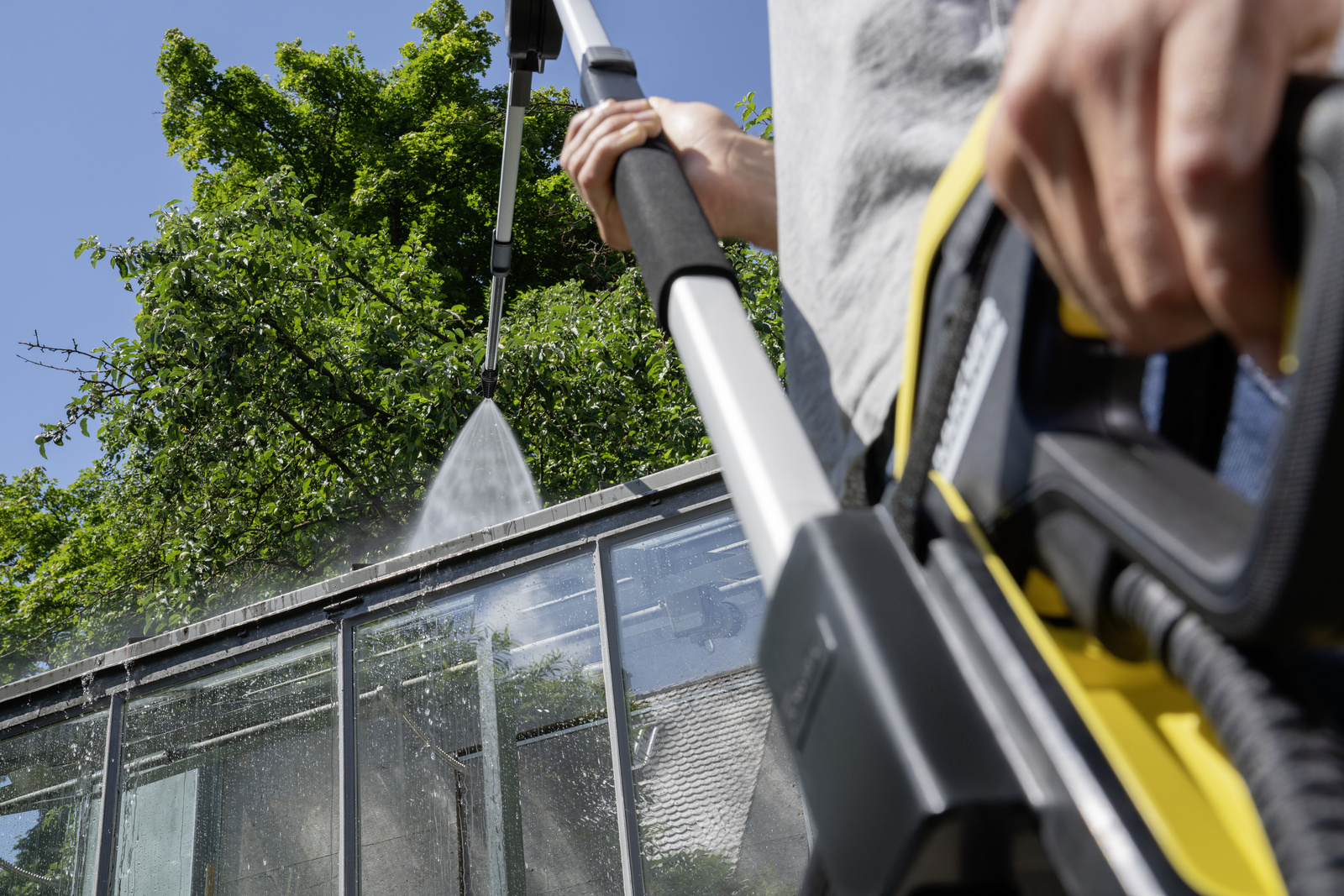
As important as a clean system is, safety always comes first. Working on roofs or ladders carries a high risk. A misstep or accidentally stepping on the modules can not only cause damage but also lead to serious accidents. Therefore, only clean areas that can be safely reached from the ground. A telescopic spray lance for working with a pressure washerhelps to reach high and hard-to-reach solar modules.
For hard-to-reach roof systems, it is better to call in a specialist company. If you decide to do it yourself, make sure you have a firm footing, as slipping or accidentally stepping on the solar modules can have fatal consequences. Electrical safety is also important: the system should not be connected to the power supply, and all plug connections must remain dry. For balcony power plants, it is sufficient to unplug the power cord before cleaning.
Professional Cleaning for Solar and Photovoltaic Systems
While it was originally claimed that cleaning and maintaining photovoltaic systems was unnecessary, it has since become clear that weather conditions and air pollution do leave their mark. To utilize solar power as efficiently as possible and maintain electricity yields at the highest level, regular professional cleaning using the appropriate equipment is recommended.