
Cleaning and Maintaining Ceramic Tiles
Cleaning and maintaining ceramic tiles—how does it work? They are fired at a temperature of 1,832 to 2,552°F (1000 to 1400°C) and made of inorganic materials. Terracotta, quary tile, porcelain, earthenware, and stoneware are widely used nowadays. Although there are many different variations, the cleaning steps are always similar. Only a few types of tile require maintenance.
Know What You Are Dealing With: A Brief Introduction to the Materials Science of Ceramics
Walls and floors are made with many different appearances and materials. There is natural stone, such as marble or granite, as well as cement-bound artificial stone, such as terrazzo or engineered marble. Where ceramic tiles are used, a distinction is made between five different types of surface:
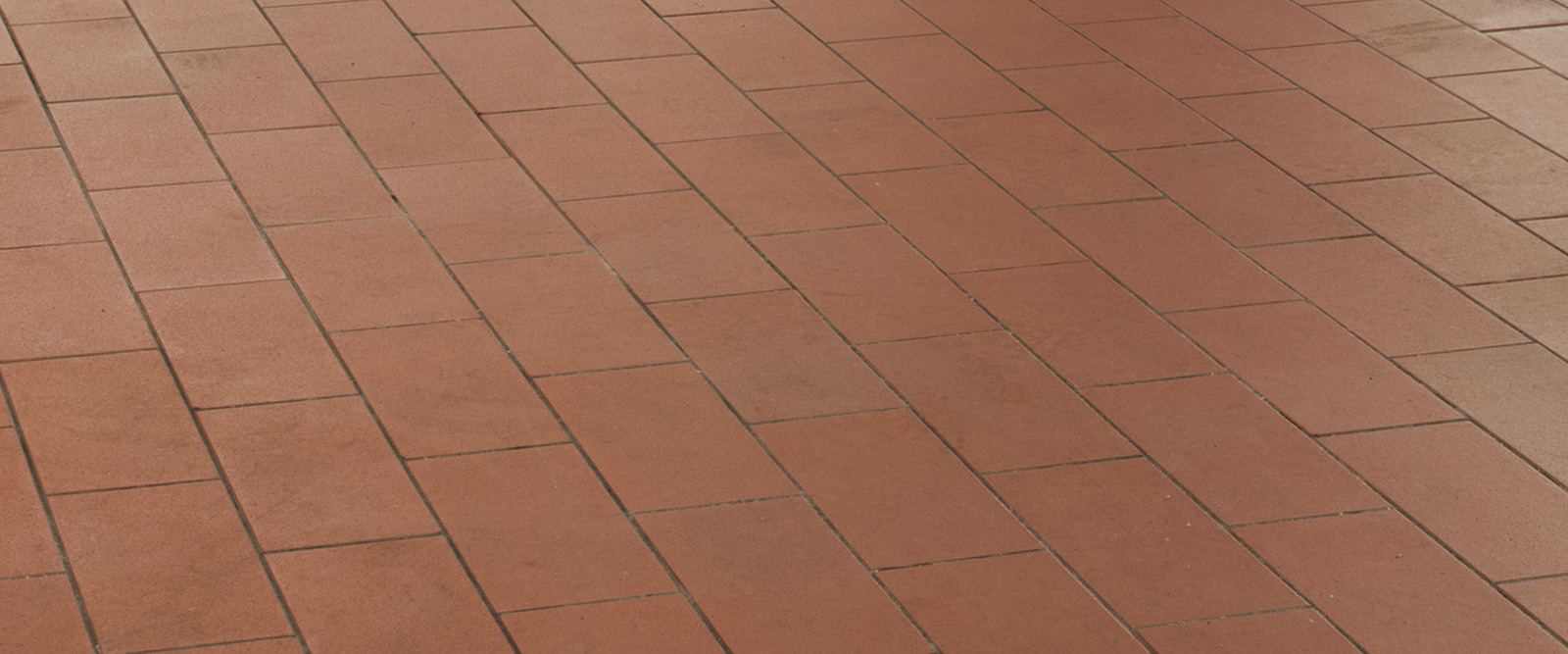
- Terracotta: Red and warm in color, coarse in texture, rather rustic in appearance
- Quary Tile: Red or yellow coloring, popular for workshop floors or exterior walls; glazed or unglazed
- Porcelain: Mostly solid-colored, printed, or polished, microporous surface
- Non-porcelain Ceramic Tile: Softer, less mechanically resilient, suitable for walls, glazed
- Ceramic Tile: Glazed or unglazed; the unglazed version with a rough surface is often laid in kitchens with a raised textured pattern to minimize risk of slipping
What the R Class is All About: Anti-Slip Tiles
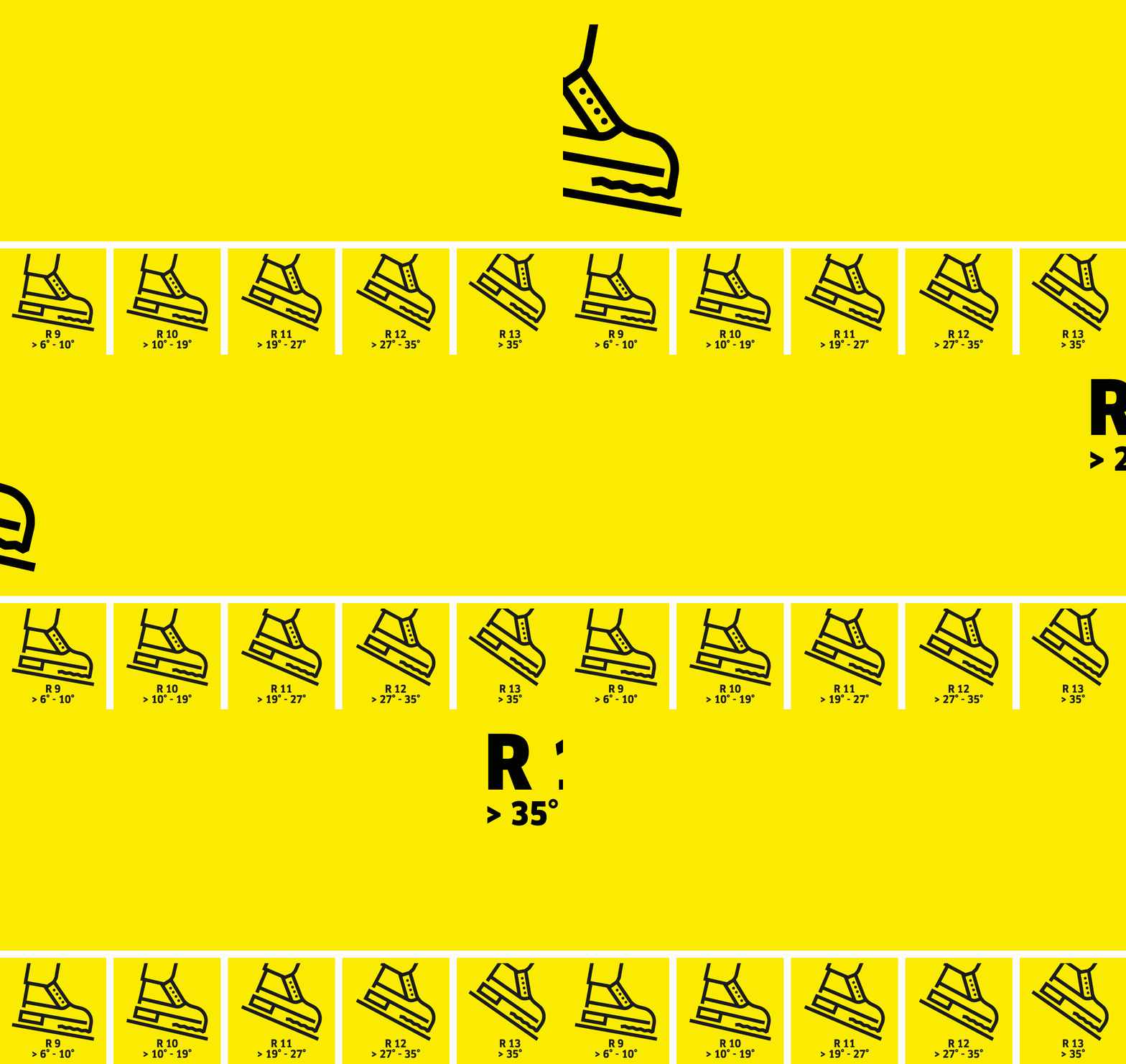
If tiles are laid on floors, an anti-slip rating is required in commercial areas. In the United States, this is typically measured by the Dynamic Coefficient of Friction (DCOF). You may also see the R-class rating, a common European standard that measures slip resistance on an inclined plane, with ratings from R9 to R13. In areas where slip hazards play a major role, for example in meat processing, a higher rating (like R13) is a must. Tiles with a raised texture also have areas between the patterns so that water can drain and does not create a slipping hazard. However, dirt accumulates particularly well on them, and cleaning is time-consuming.
Ceramic Tiles: Maintenance Cleaning and Deep Cleaning
The Vital Element: Maintenance Cleaning of Ceramic Tiles
If you want to clean ceramic tiles, regular maintenance cleaning is the vital element. Cleaning is carried out dry and/or wet, depending on the degree of dirt. Loose dirt can be removed with a vacuum cleaner or by means of dust-binding wiping with a microfiber material, which becomes electrostatically charged. Afterward, work can be done manually with a large surface wiping machine, microfiber wiping cloth, and a suitable cleaning agent.
Floor Scrubbers for Large Areas
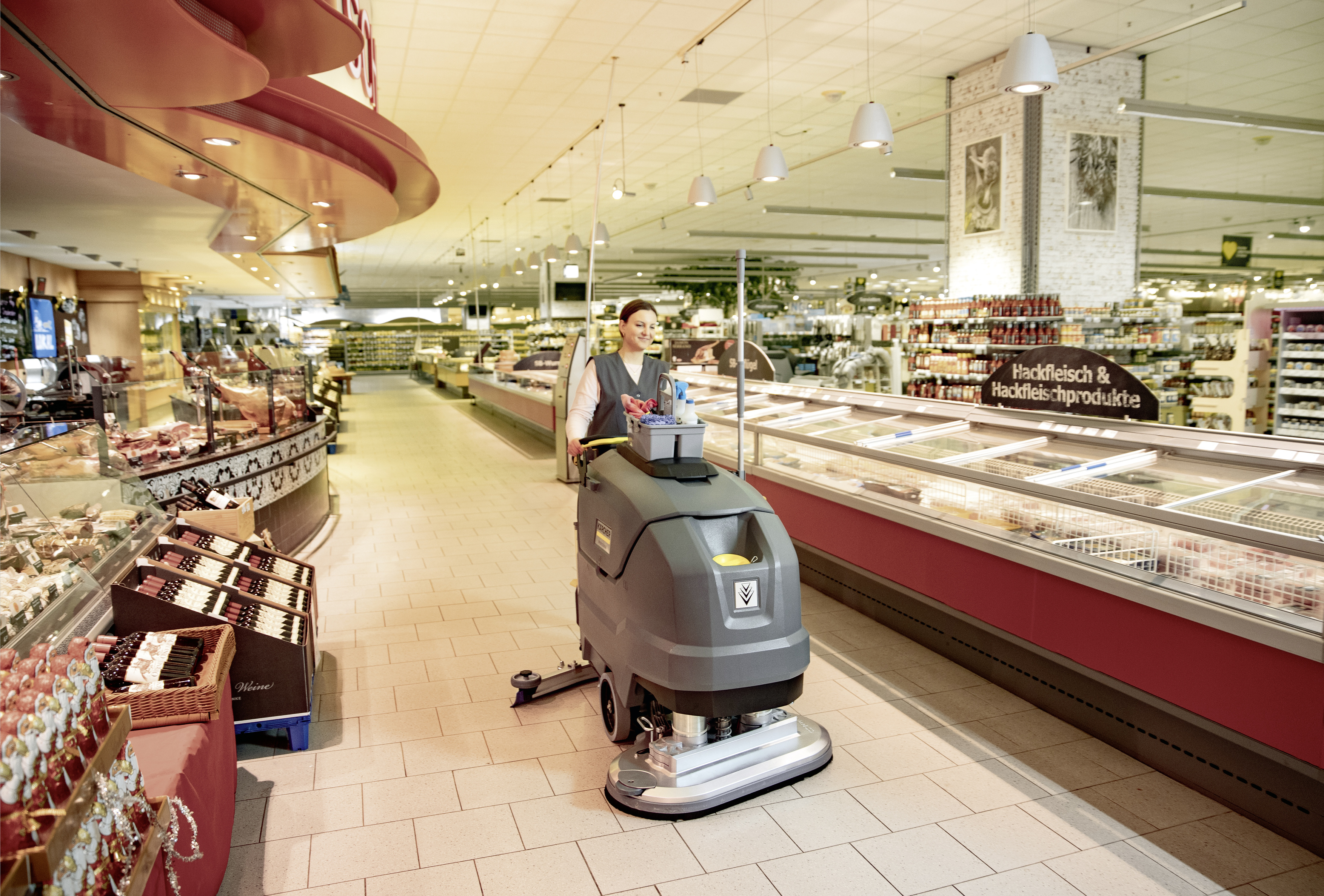
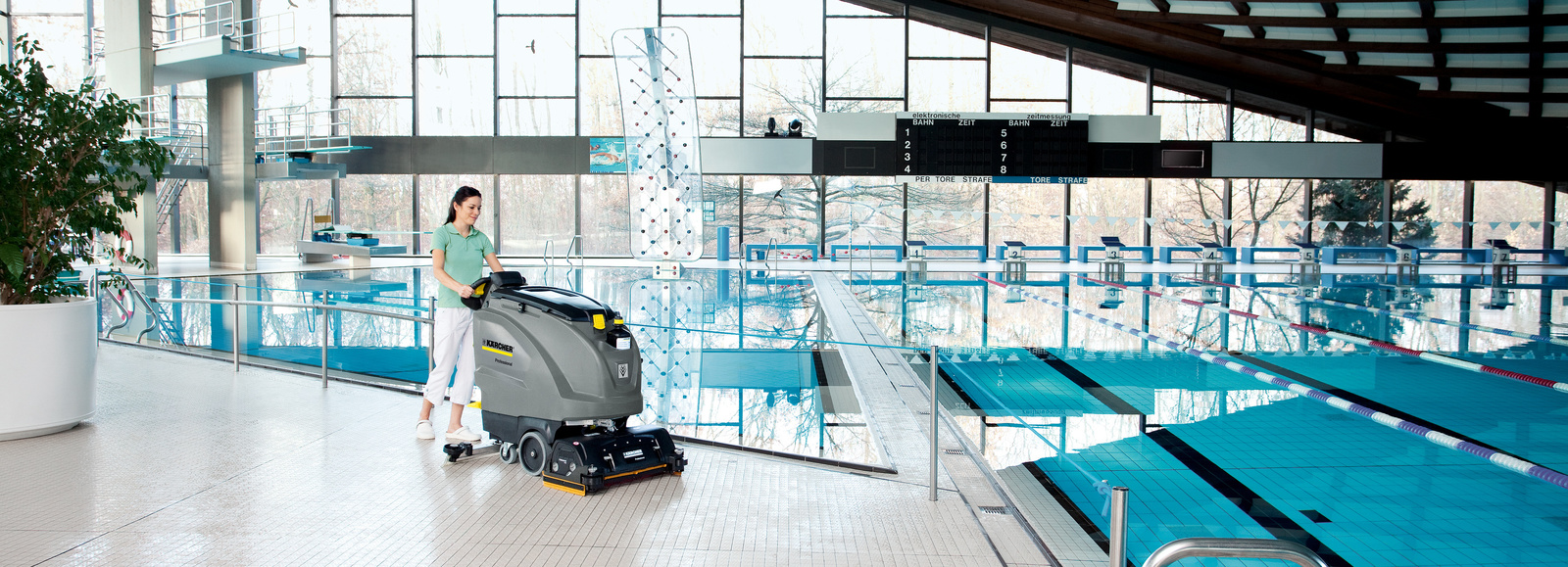
For large areas, floor scrubbers are usually used; in this case, loose, fine dirt does not need to be removed in advance. To achieve the desired cleaning result, choosing the right brushes or pads for the machines is key. Ceramic tiles with a coarse texture scrub up especially well with the use of very deep roller brushes, while ceramic tiles such as porcelain with a finer texture require microfiber rollers.
The right squeegees should also be used to vacuum the dirty water. Closed squeegees are recommended for textured surfaces, and slotted squeegees for glossy surfaces. For stubborn dirt on porcelain (graying), melamine resin pads are recommended in combination with wheel scrubbing heads.
Tip: Walls can also be cleaned with a large surface wiping machine and telescoping wand, which enables you to achieve good results quickly and efficiently.
It's That Time Again: Deep Cleaning Ceramic Tiles
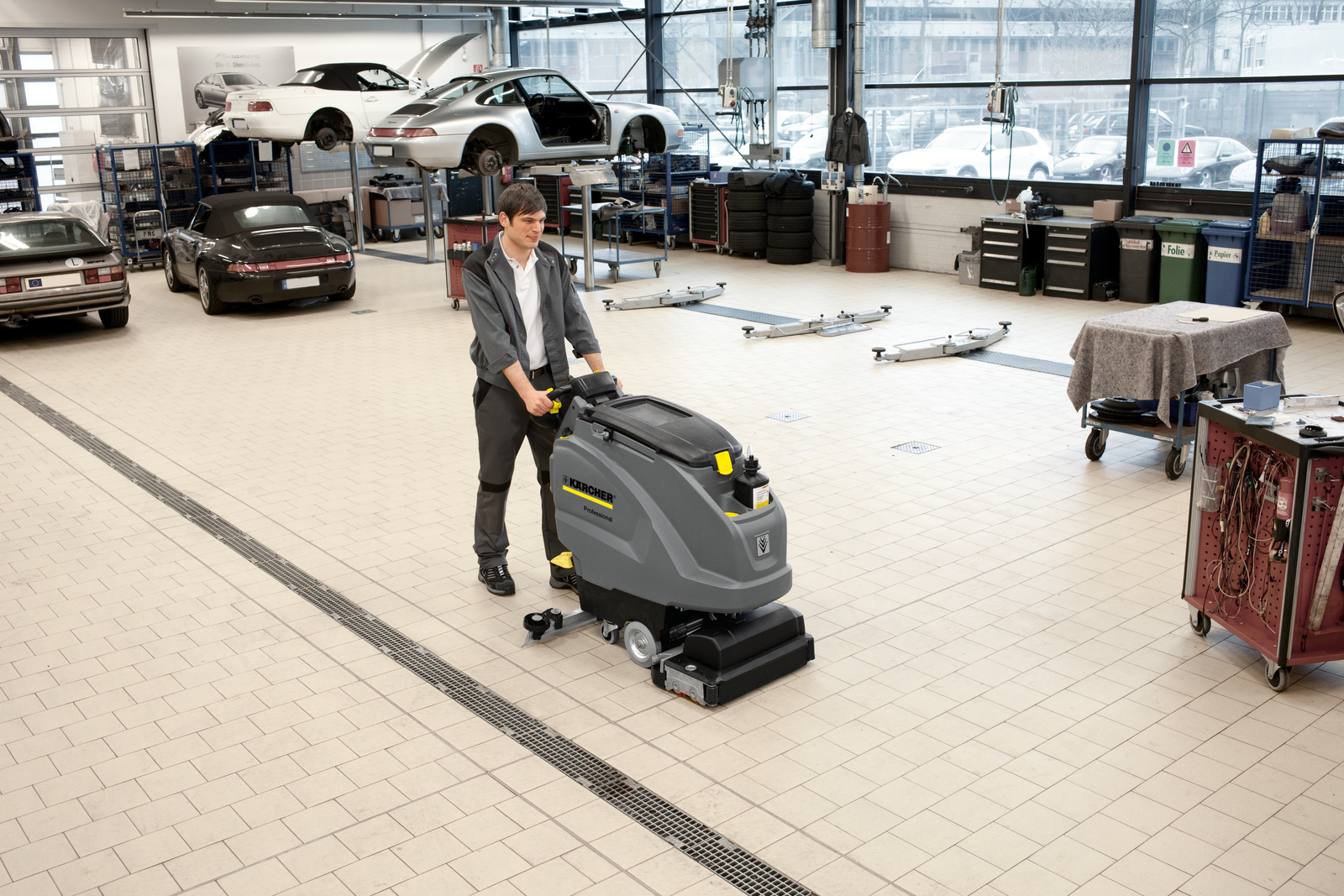
Single-disc machines or floor scrubbers are used to deep clean ceramic tiles on floors. More highly concentrated cleaning agents (acidic as well as alkaline) can help to achieve a good result rapidly.
Surface Cleaners for Special Cases
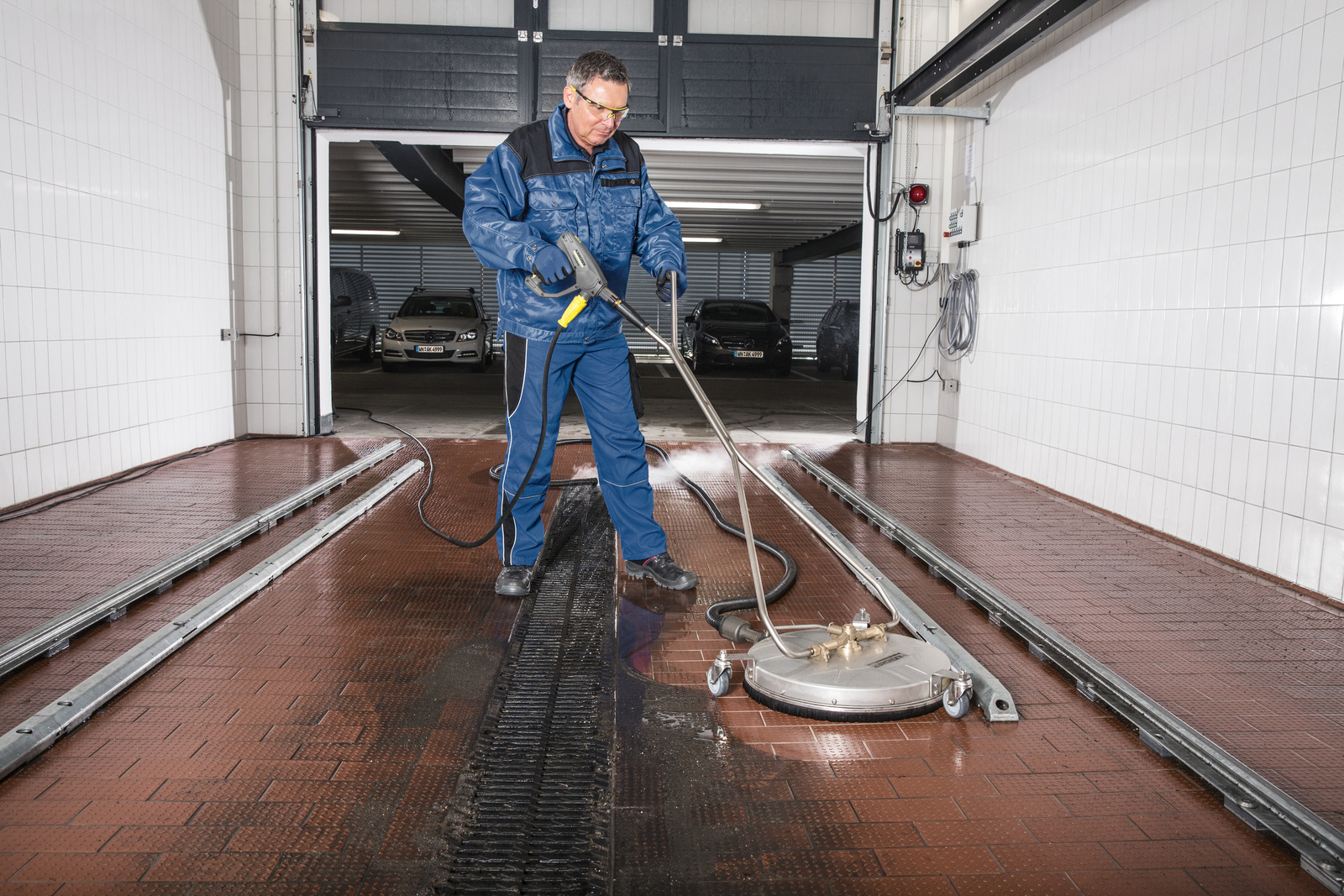
For textured ceramic tiles or confined spaces, a pressure washer with a surface cleaner may be useful. The surface cleaner consists of a rotating nozzle bar under a hood, to which power nozzles are attached in a slightly offset position. They feed the water to the surface at high pressure and loosen the dirt very effectively.
Cup Foam Lances for Longer Contact Time
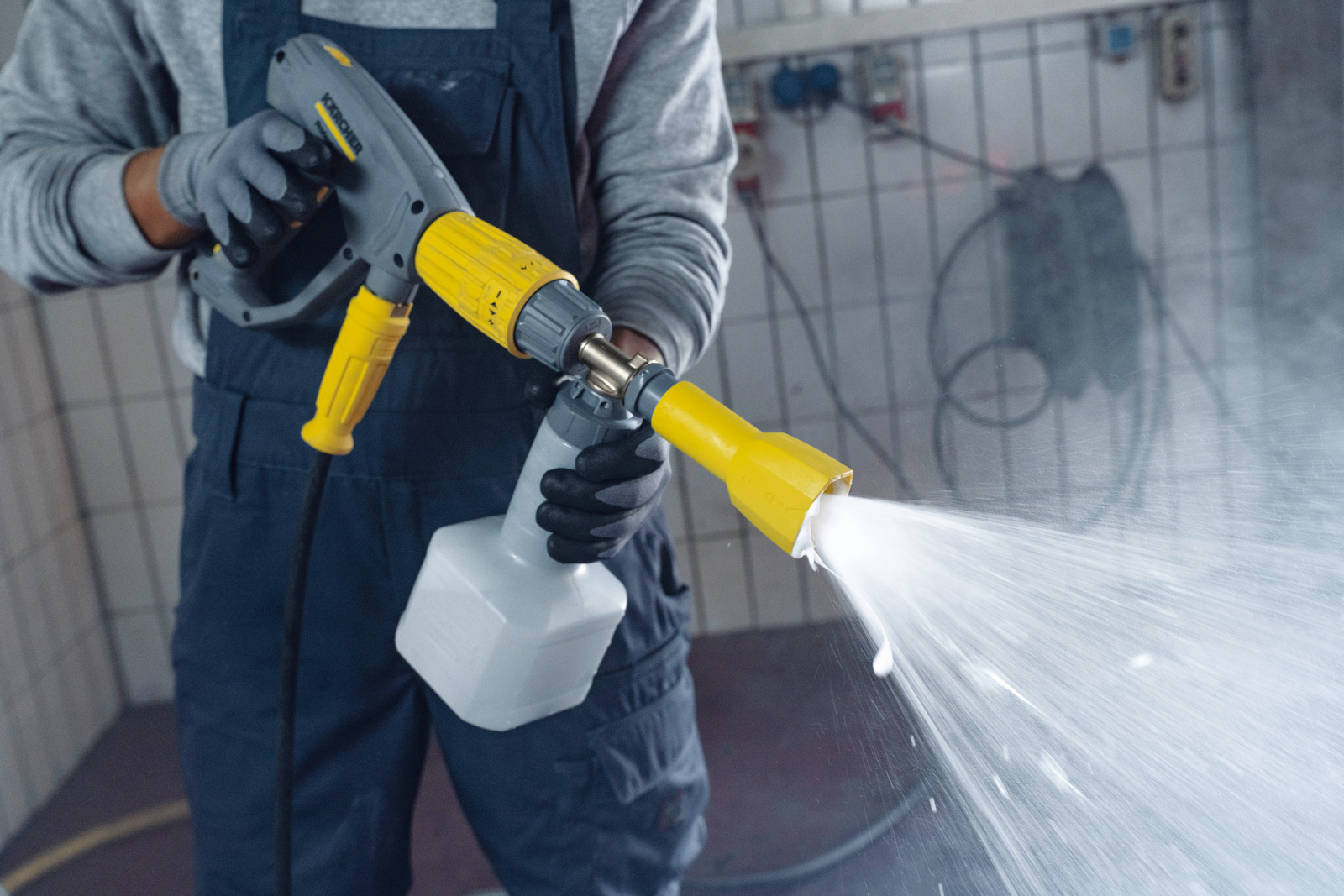
For large wall surfaces, floors, or restroom facilities, pressure washers with cup foam lances are the technology of choice. With the help of the foaming cleaning agent and air, which is added at the nozzle, they generate foam with the high-pressure jet. The great thing about this system is that you can see where the cleaning agent has been applied, and the foam stays in place for longer than a normal cleaning agent, thereby increasing the contact time.
Tip 1: Never direct the high-pressure jet directly at the grout lines to avoid damage.
Tip 2: If the cleaning agent used is acidic, cement-based tile grout must be rinsed with water before use to ensure that absorbed acid does not cause any damage.
Steam Cleaner for Tiled Walls
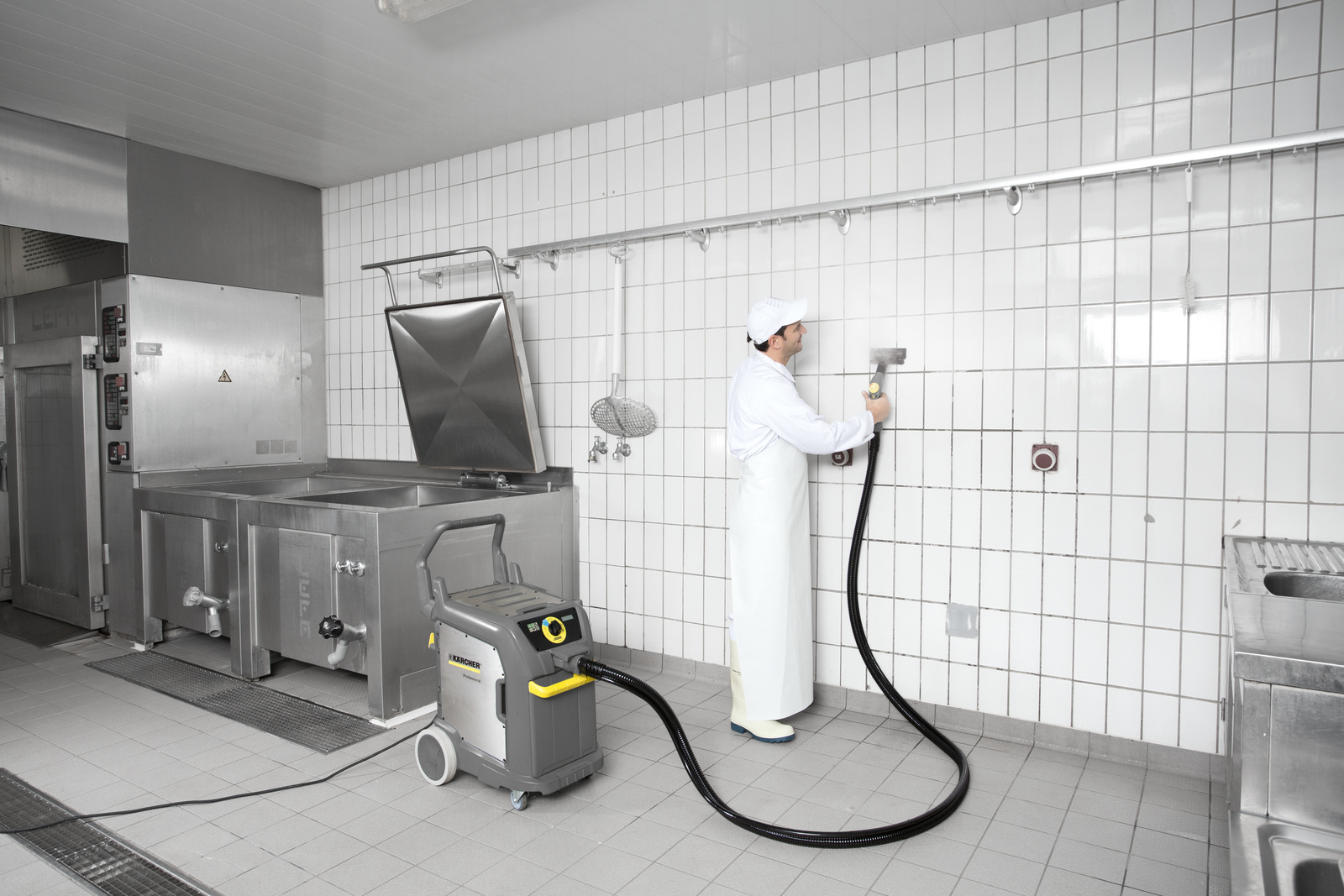
To deep clean ceramic tiles on walls, a steam cleaner may also be suitable, depending on the available space. The steam emerges from the nozzle in very fine drops at a temperature of 212°F (100°C), a pressure of up to 116 psi (8 bar) and at a speed of around 105 mph (170 km/h). A combination of lint-free terry cloths and a large floor nozzle enables effective cleaning over larger areas.
Particle Spray Processes for Outdoor Areas
The low-pressure particle spray process is a gentle, efficient method for the non-porcelain ceramic tile surfaces in outdoor areas heavily affected by mineral soiling, after pre-cleaning with the pressure washer. Here, a jet gun is supplied with compressed air via an industrial compressor. In addition, a very fine, soft spray agent and water are added to the air in the mixing chamber for dust-binding work. The mixture of air, water, and spray agent then emerges at the nozzle of the spray gun, whereby the air pressure, water quantity, and spray agent volume can be regulated.
Cleaning Agents for Ceramic Tiles
Ceramic tiles can be cleaned with acidic and alkaline cleaning agents. Acidic cleaning agents help against mineral dirt such as limescale, urine deposits, or rust; alkaline cleaning agents are ideal for removing organic dirt such as grease, protein, or oils.
In some ceramic tiles, such as terracotta, the color tone is created by metal oxide. Therefore, when using acidic cleaning agents, make sure that they do not contain phosphoric or hydrochloric acid, since the rust-removing effect of these may lead to changes in color.
In general, ceramic tiles are also resistant to alkaline cleaning agents, but the cleaning agent should not contain sodium silicates. These may have a structure-changing effect and make surfaces rougher or smoother.
Is Maintaining Ceramic Tiles a Must? When Oiling and Other Methods Are Useful
Surfaces are maintained to make them more hard-wearing against mechanical stress, to protect pores from water penetration, or to improve their appearance. Ceramic tiles do not need to be protected from mechanical stress due to their hardness.
Tiles with High Water Absorption
Terracotta and non-porcelain ceramic tiles are floor coverings that can have high water absorption. If such floors are oiled, the oil penetrates into the pores and protects the ceramic tile from moisture. If you additionally want to achieve a rustic look with terracotta, you can use what is known as buffalo stain, a wax-oil mixture that contains carbon black. The carbon black settles in the structure, creating a pre-loved appearance. Depending on the type of tile, you may want to increase the level of shine, which can be achieved by using a wipe care product based on water-soluble polymers.
Tiles with Low Water Absorption
However, impregnation is not worthwhile for a floor covering such as porcelain, since these types of floor coverings have a low water absorption. This means that moisture cannot penetrate, the impregnation remains on the surface, and runs off quickly. If the porcelain has been coated in one of the previous cleaning processes, the coating should be removed with a universal deep cleaner, as otherwise an unattractive film will develop over time.
Tip: The care agent should not be applied directly to the ceramic tiles, but should be applied with a cleaning textile in order to ensure even distribution.
FAQs
Strange But True: When Gypsum Forms on Ceramic Tiles
Here's a tip for cleaning floors with ceramic tiles: Turn off the underfloor heating before starting the cleaning tasks. This prevents the cleaning agent from drying too quickly on the surface. In addition, some acids have a tendency to convert lime into gypsum over a long contact time. This process accelerates with the added warmth of underfloor heating. The resulting gypsum deposits are difficult to remove mechanically, so it's better to turn off the heating.