Solar and Photovoltaic Panel Cleaning
It was originally said that cleaning and maintenance of photovoltaic systems was not necessary. But now it has become apparent that weather and air pollution do leave their mark. In order to use solar power as efficiently as possible and to keep the electricity yield at the highest possible level, regular professional cleaning with the right equipment is necessary.
Cleaning and Maintenance of Photovoltaic Systems
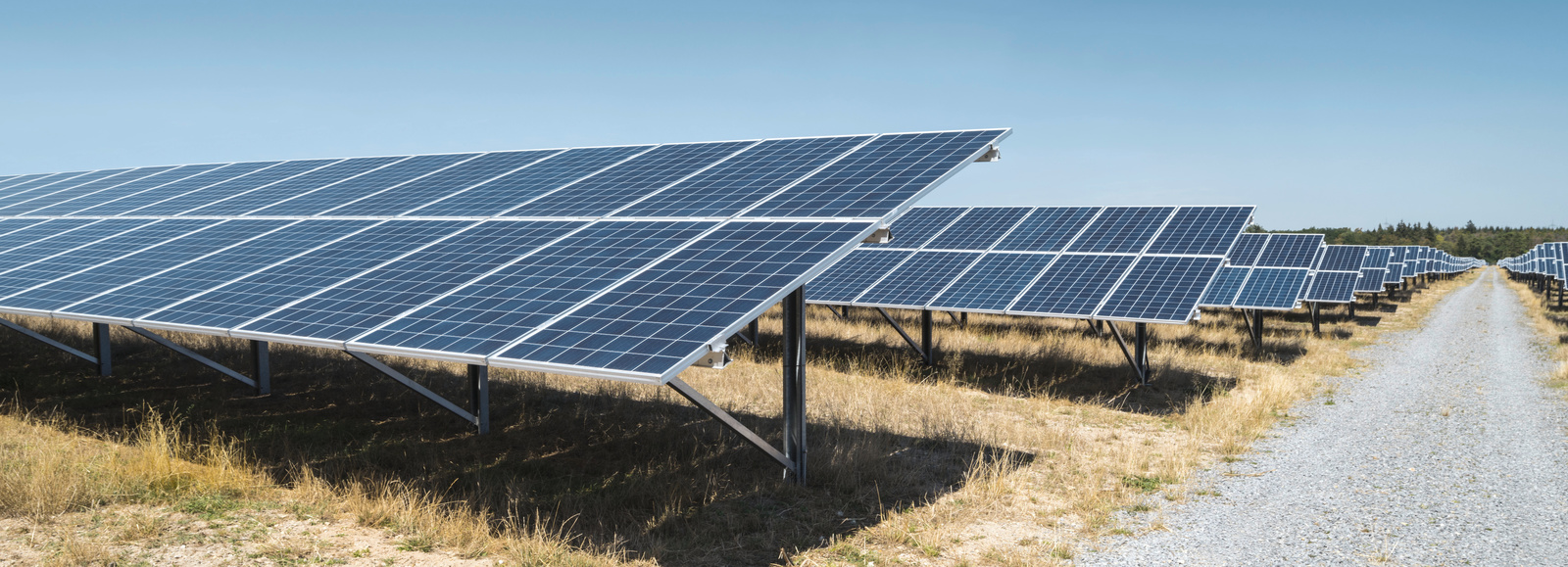
All types of photovoltaic systems should capture sunlight for as many hours as possible and withstand external influences. These include snowstorms, rain, storms, and hail, as well as, depending on the location, soot, pollen, dust from road traffic, leaves, needles, or bird droppings. In agricultural areas, additional films of dirt containing grease and oil form due to particle emissions during the ventilation of poultry houses.
Why Should I Clean Solar Panels?
Clean the panels regularly, not only because of their appearance. Contamination can reduce the electricity yield by up to 30 percent. Thorough, professional cleaning is necessary, and this does not only apply to the surfaces of the solar collectors. Deposits build up at the junctions between the glass and the frame, which over time can lead to the formation of moss and lichen over a wide area.
Proper cleaning of the solar panels requires the right cleaning technique due to the heavy soiling. The modules are often mounted on roofs at a steep angle of 45 degrees, so take measures to ensure operator safety.
When Should I Clean Photovoltaic Panels?
You should clean solar systems using the right technology and, depending on the location, using professional service providers.
In the agricultural sector, we recommend you clean them two to four times a year, for example after flowering or after harvesting, when the pollution is very heavy.
Panels that are exposed to less pollution from the environment can be cleaned once a year or every two to three years. In this case green energy can be generated even more sustainably—a topic that will become increasingly important in the future.
The Right Tools for Cleaning Solar Panels
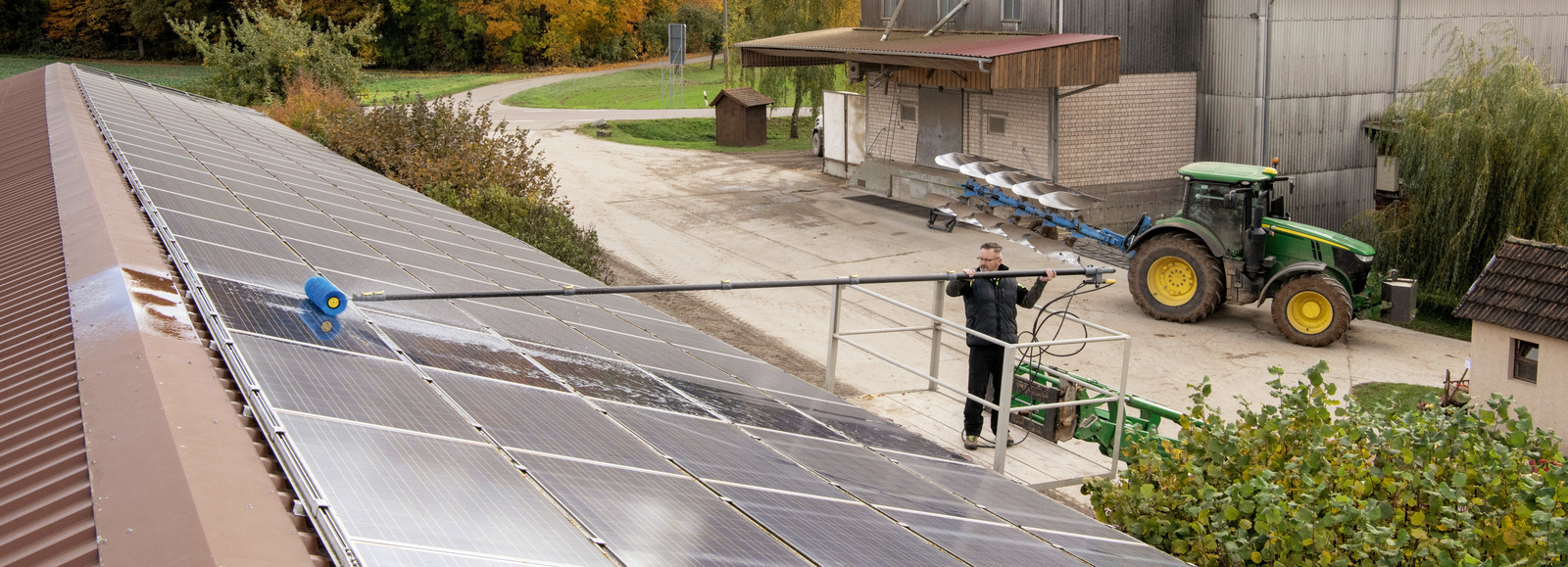
A professional pressure washer in combination with a brush attachment or a roller brush and a telescoping wand are among the best ways to clean solar panels efficiently and ergonomically.
With the right cleaning technique, it is possible to clean a solar panel area of up to approximately 16,000 square feet (1,500 square meters) per day.
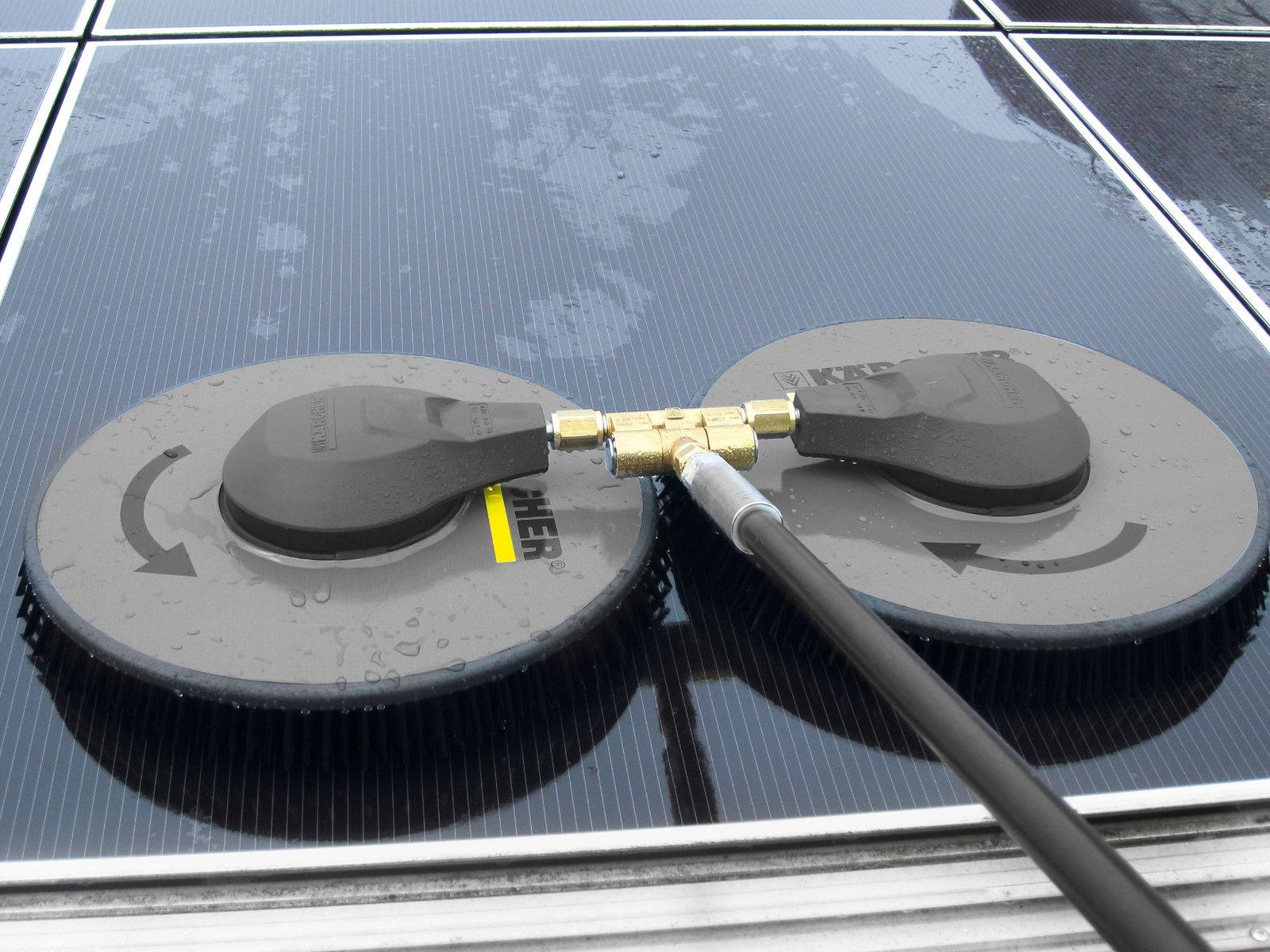
Brush Attachment
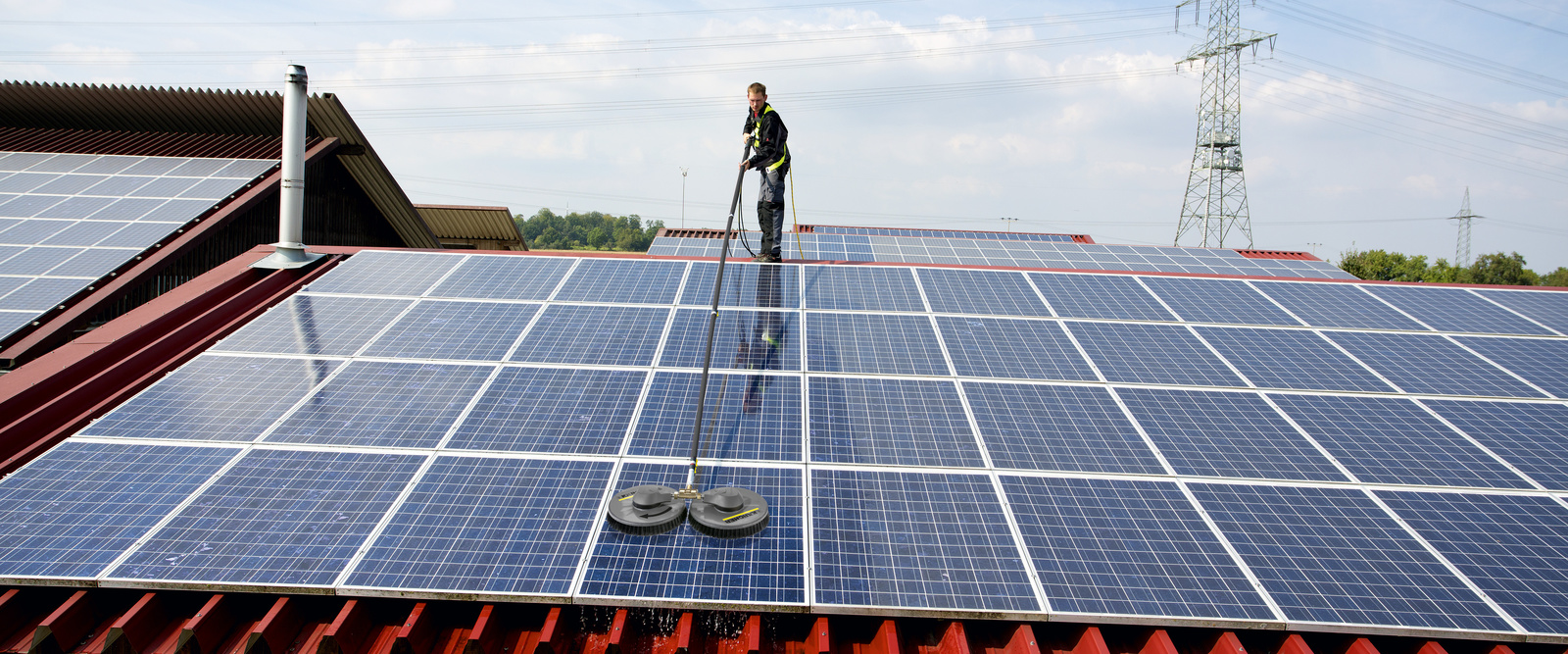
We recommend an attachment with two disc brushes that reach a working width of 31.5 inches (800 millimeters). The effort required is reduced because the system neutralizes the drifting movement with the help of the counter-rotating movements of the two brushes. In addition, the large working width ensures a high area output, which reduces the amount of work required for solar cleaning. The disc brushes have ball bearings and are driven by the water from the pressure washer. Low-pressure operation with cold water and a delivery rate of 185 to 264 gallons per hour (700 to 1000 liters per hour) is sufficient.
A nylon bristle ensures scratch-free cleaning to protect the sensitive surfaces of the solar panels during cleaning. Models with harder bristles on the outside of the plates also ensure very good cleaning results on the module frames.
It should be possible to control the amount of water comfortably via a lever on the wand while the brushes are guided in paths over the solar modules. Turning the water up a little at the beginning creates a sliding layer that makes it easier to move the brushes on the surface. A self-adjusting articulated joint to which the brush head is attached can help compensate for different working angles.
Telescopic Wand
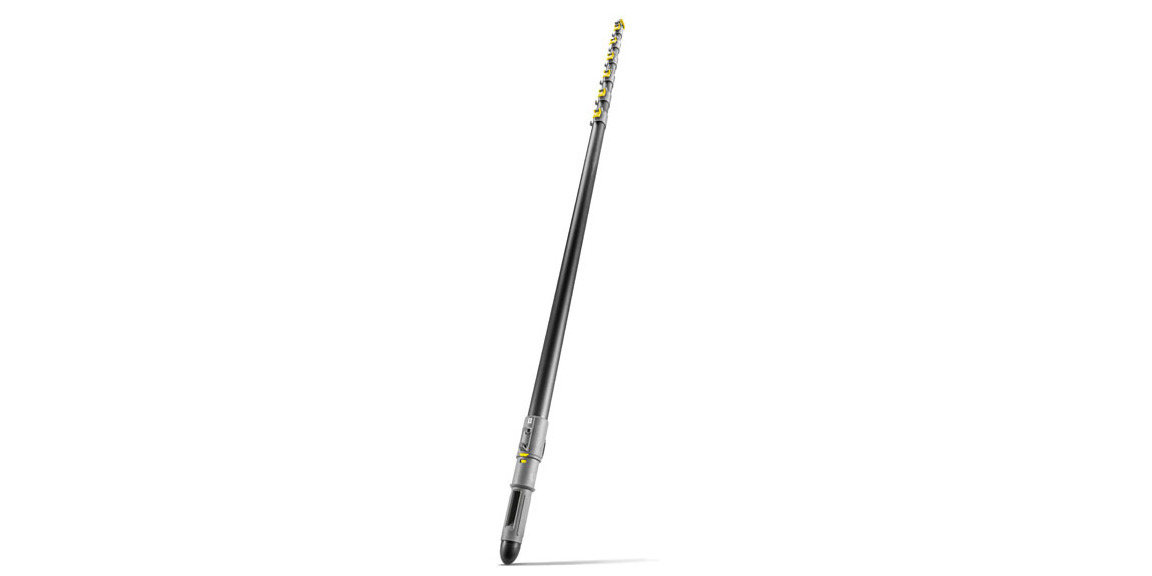
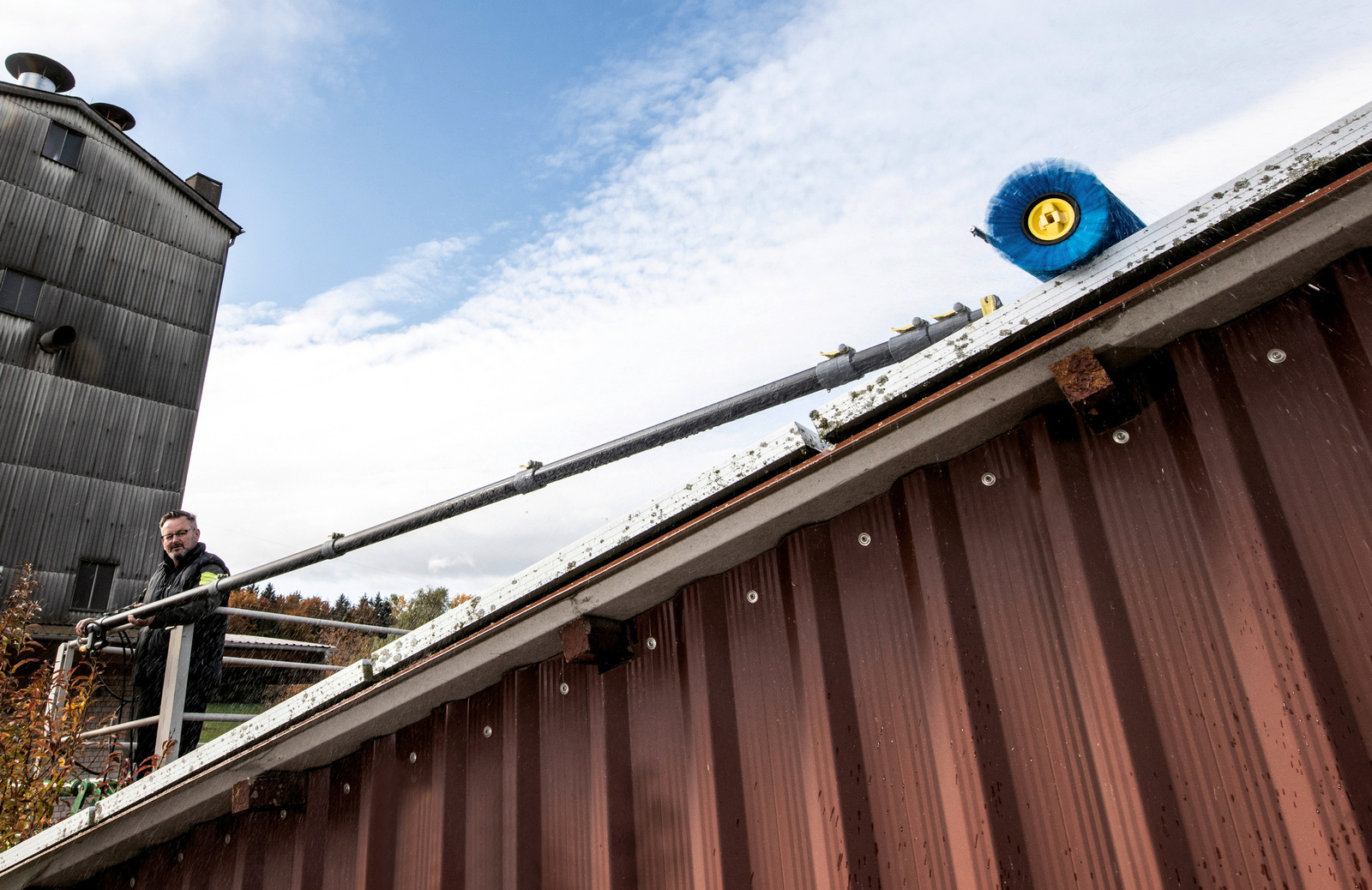
Choose the length of the telescoping wand to match the size of the system, or use an infinitely extendable wand. Longer wands made of carbon or carbon composite are lighter and therefore more comfortable to handle.
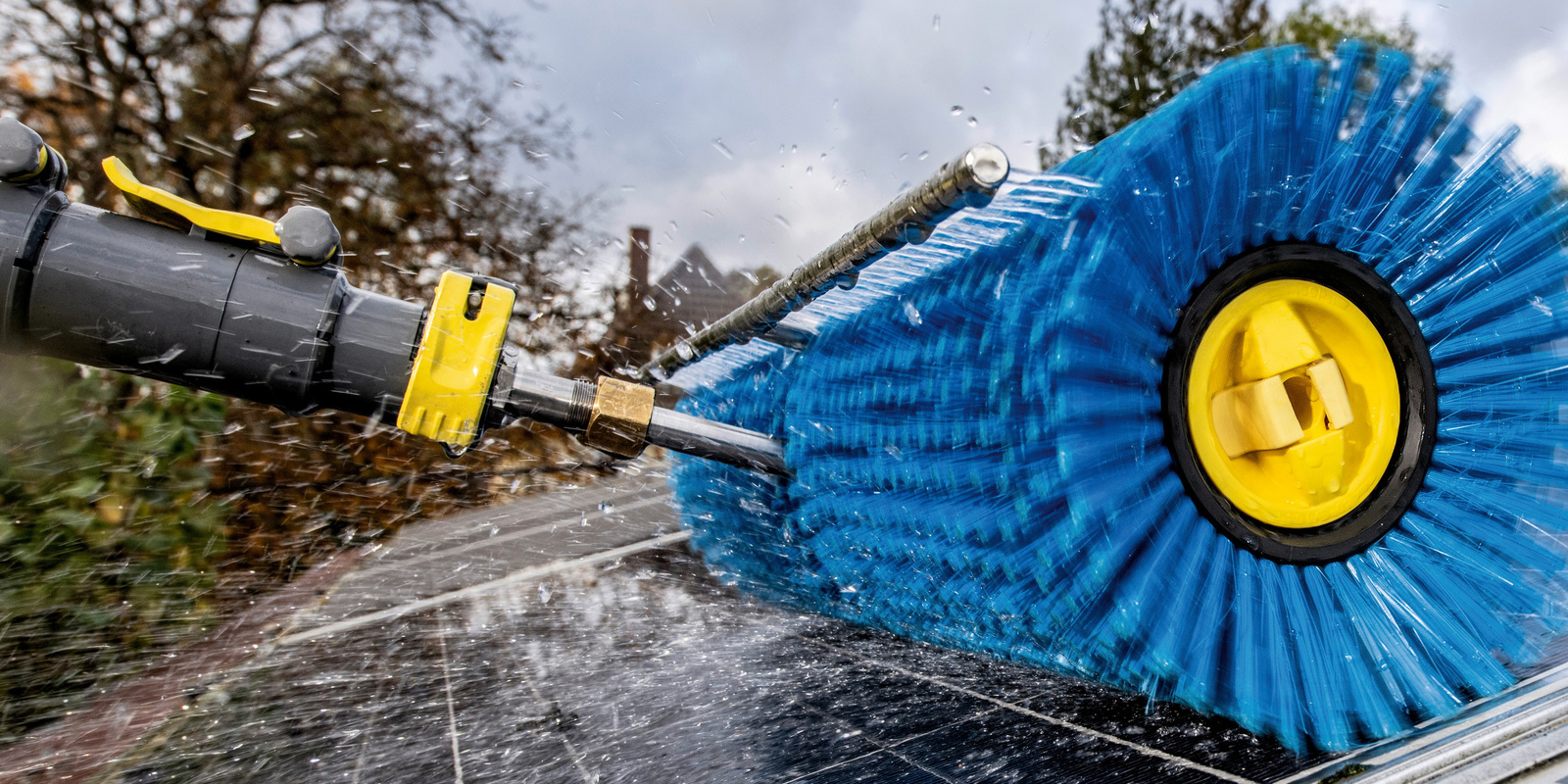
If you value more flexibility and have to clean large facades in addition to photovoltaic systems, you are better off with a variable wand system. Pole systems that are suitable for vertical and horizontal surfaces are available and can be combined with different attachments. Use a pressure nozzle for spot cleaning, an attachment with disc brushes for working on horizontal PV elements, or a rotating pressure roller brush, which is also suitable for vertical facades.
Use Cleaning Detergents and a Water Softening System for the Best Results
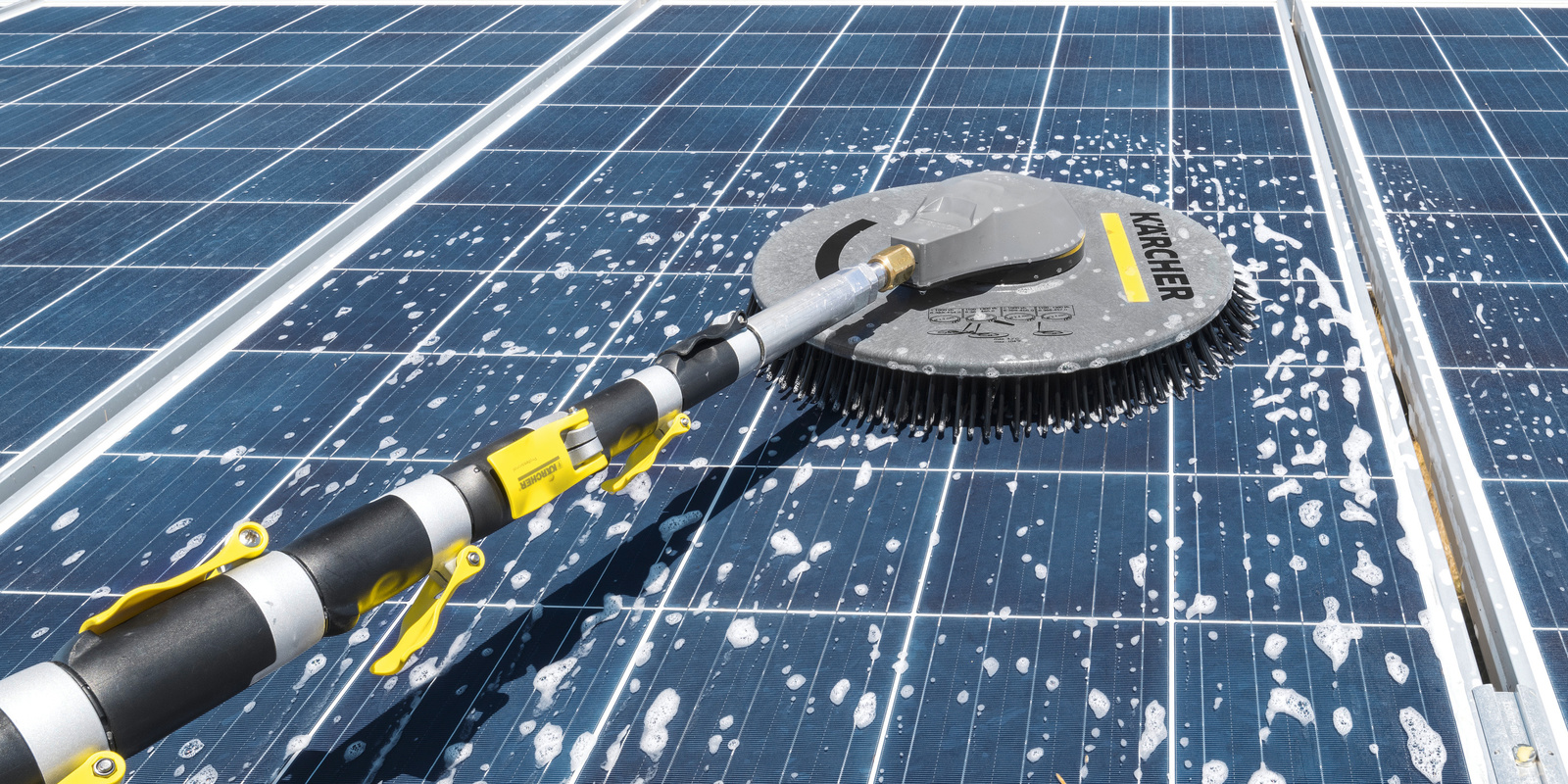
Cleaning Detergents
If you are using cleaning detergents, they should be suitable for removing stubborn, greasy dirt and mineral residues.
If the water film breaks down quickly, streak-free drying without hard water stains is possible. Soaking time and rinsing shouldn't therefore be needed, facilitating the cleaning. In order to clean the photovoltaics sustainably, we recommend a cleaning detergent that prevents further soiling.
Water Softening System
If the water hardness range is greater than medium, we recommend a water softening system. This prevents staining despite the high lime and mineral content of the tap water. The water softener contains a resin filter with an ion exchanger that retains limescale and minerals.
Working on Solar Panels: Safety Precautions for Cleaning
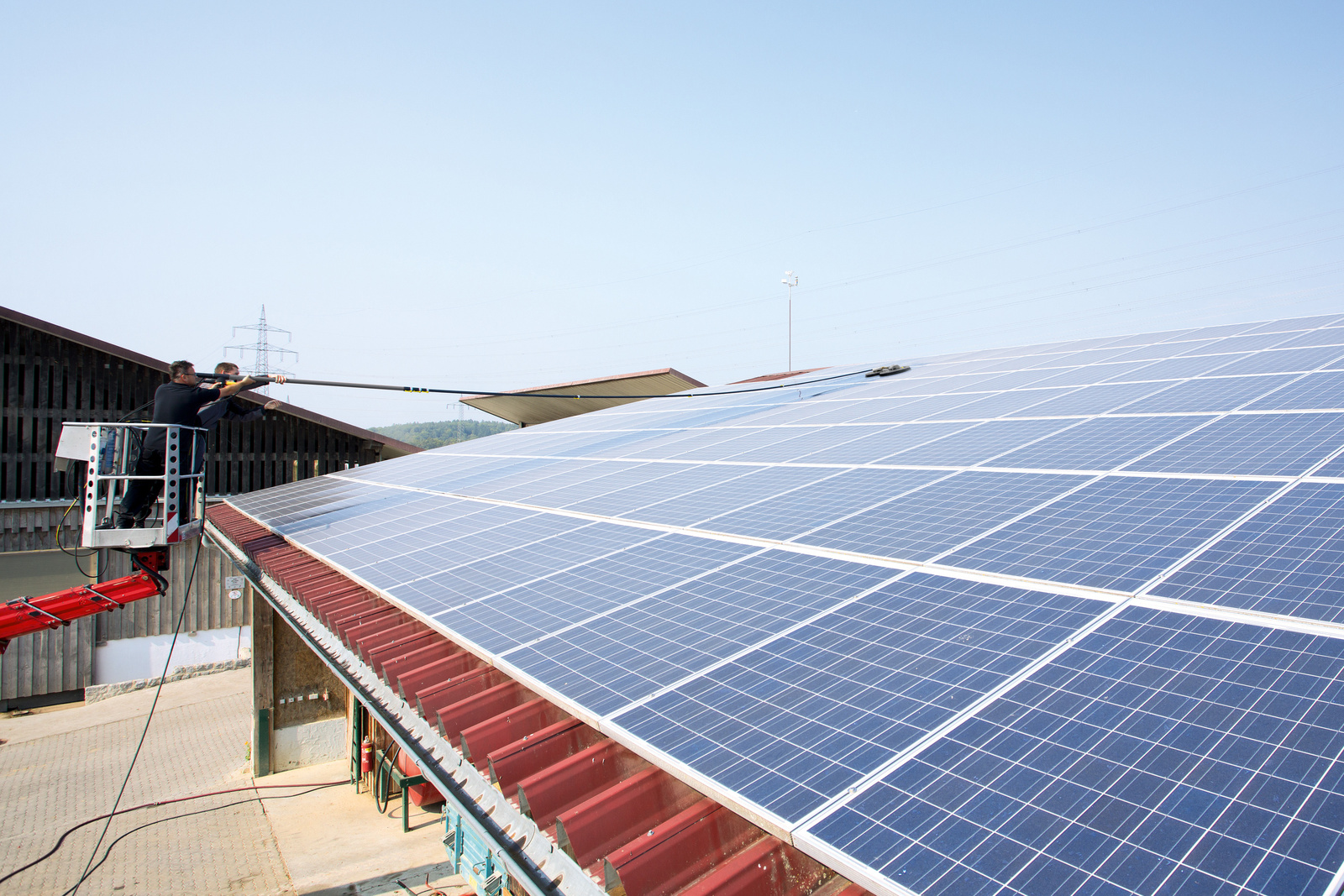
The position of a system determines from where and with which tools the solar panels can best be cleaned in a way that ensures the safety of the employees.
On roofs that are difficult to access, use an aerial lift. If the roof is easily accessible, work from the roof ridge or with the help of fall protection attached to the roof. The prerequisite for this is that the necessary safety hooks are located on the roof ridge.
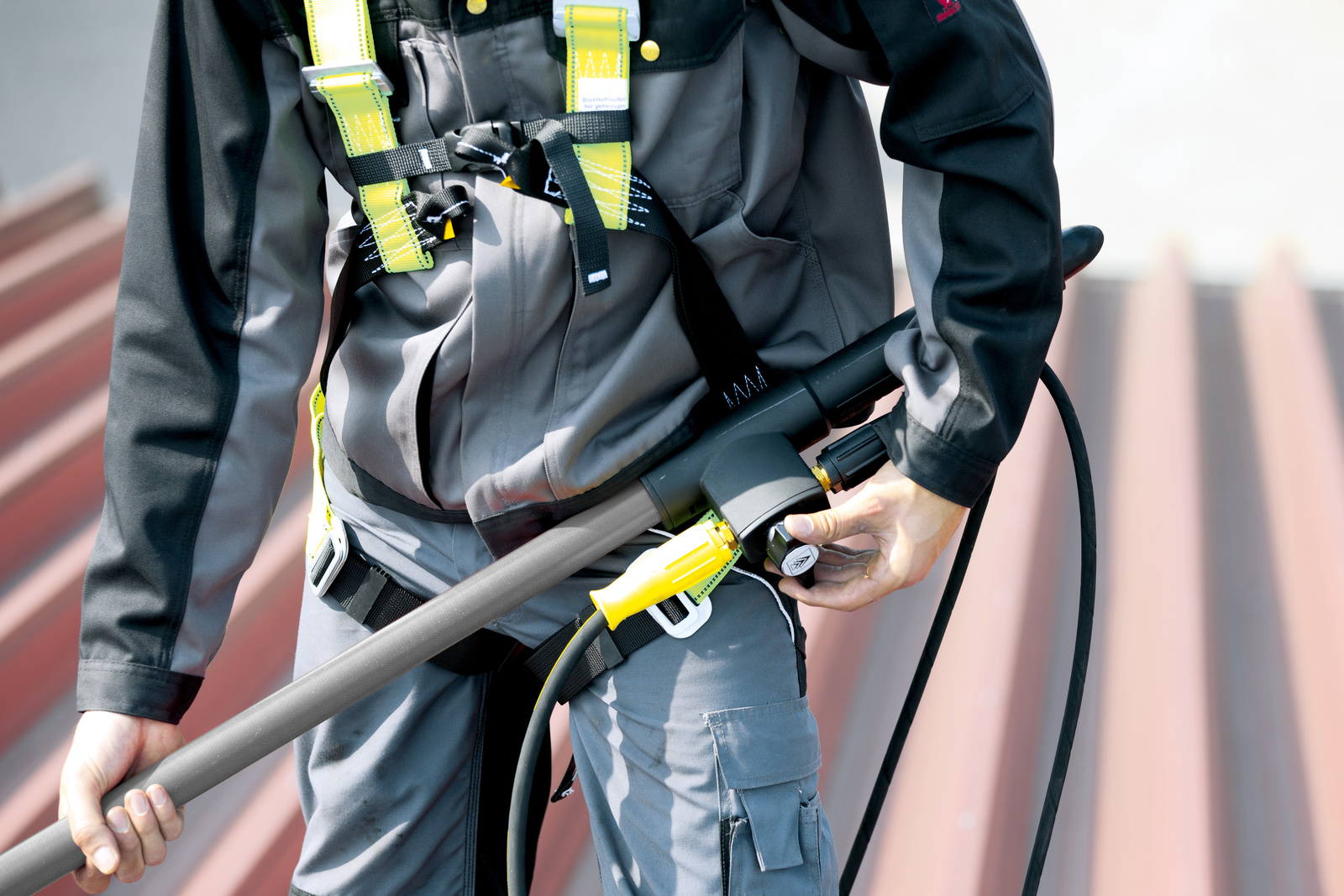
Fall protection equipment consists of a harness around the pelvis and shoulders that is connected to a lifeline. In an emergency, the harness immediately hooks on and safely catches the user. Some safety systems also include a shock-absorbing lanyard to reduce the impact in the event of a fall.