
Carpet Care
Carpet feels warm, dampens sound, and creates a feel-good atmosphere. Depending on the material and quality, textile floor coverings are more or less sensitive to moisture. Removing stains from textiles, unlike other coverings, involves more effort. This can quickly lead to an unkempt appearance. Carpet care and maintenance requires some expertise because the structure of the textile covering should be known as well as the cleaning characteristics of the individual parts. Here is what to consider when cleaning carpets and how to quickly remove stains during maintenance cleaning.
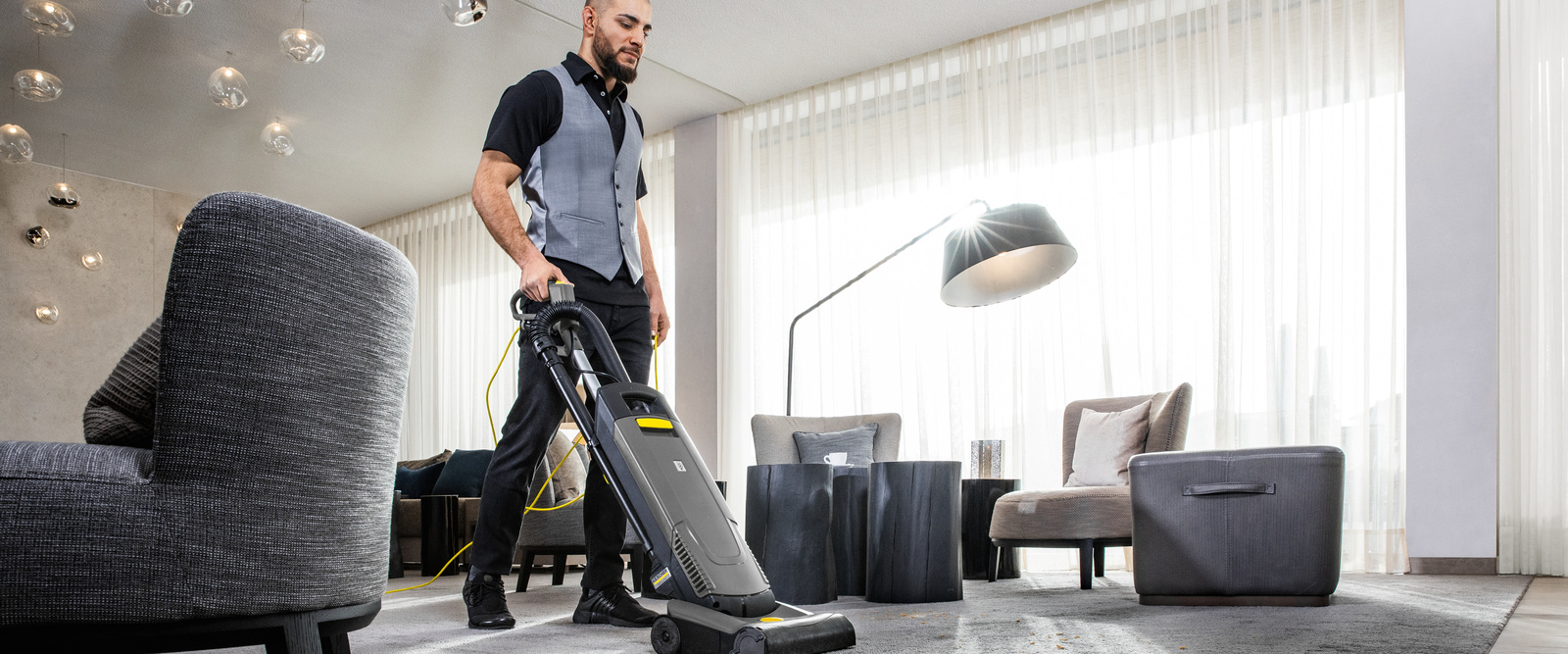
Staying Grounded: Pros and Cons of Textile Floor Coverings
Colors, pile, and material: carpet is available in countless variants, offering a range of design options for different usage classes and their requirements.
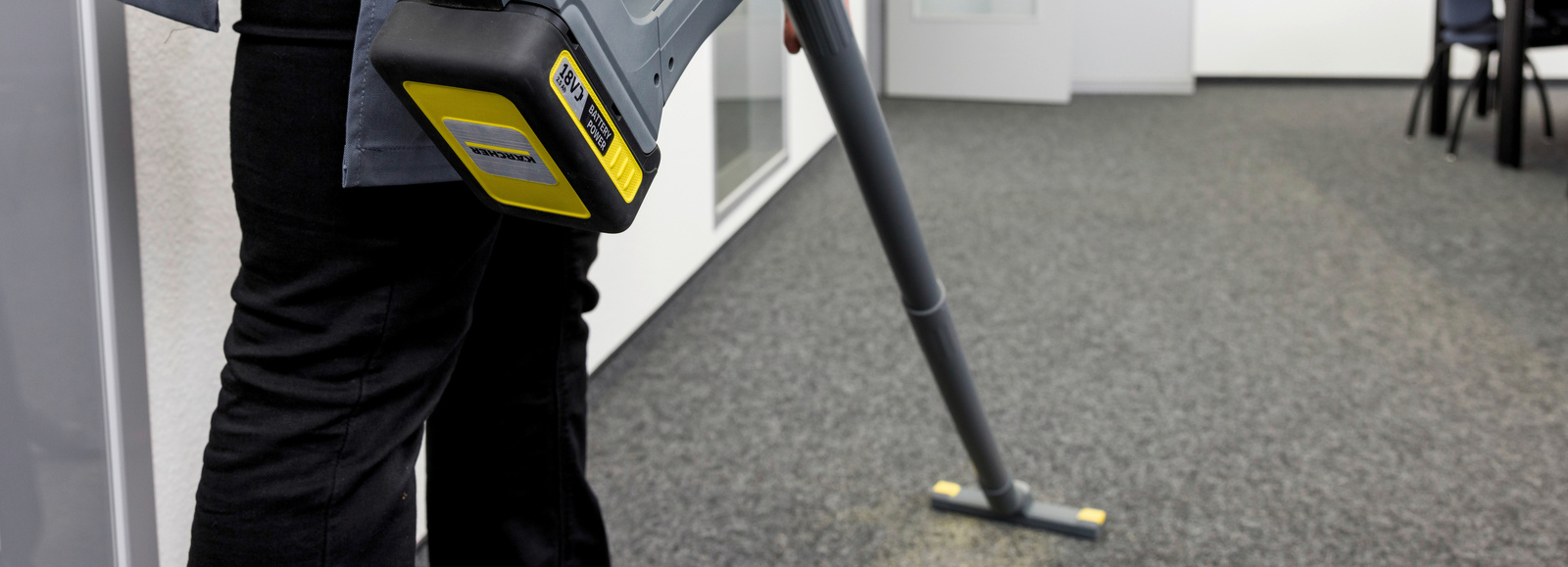
Carpets and Pile Types
Velour carpets are available in short and high-pile versions. The pile consists of the upright yarn ends that form the surface of the carpet. The higher the pile, the better the sound and heat insulation. However, high-pile carpets shouldn't be placed in busy areas. The crimped pile makes the carpet robust due to the twisted yarn, so that footprints are hardly noticeable. With loop pile (boucle), the loops of the yarn are not cut open as with velour, resulting in a coarse structure.
Carpets and Usage Classes
The durability depends on the use class that manufacturers specify. Carpets with higher use classes are also often installed in residential areas. If textile coverings are to be installed in offices, their suitability for a caster chair and their fire rating also come into play.
Pros and Cons of Textile Floor Coverings
Carpets can offer a soft feel as well as a flexible surface that is pleasant to walk on. Depending on the usage class, they are very robust. Since they tend to absorb noise, they dampen the development of sounds in the room. Their dust-binding property leads to a low level of fine dust in the air we breathe.
Depending on the frequency of use, the nature and quality of the carpet, worn spots or tracks can develop over time. Their material makes them more or less sensitive to moisture. The effort required for maintenance cleaning is often less than for tiled floors, for example. However, stubborn dirt is more difficult to remove.
Before Cleaning Begins: Need to Know Info About the Structure of Textile Floor Coverings
Textile coverings usually consist of a wear layer, backing/backing material, adhesive/fixing, and underside. Each part has its own characteristics that might be relevant to cleaning. Being aware of this and knowing what you are dealing with will prevent damage from improper cleaning.
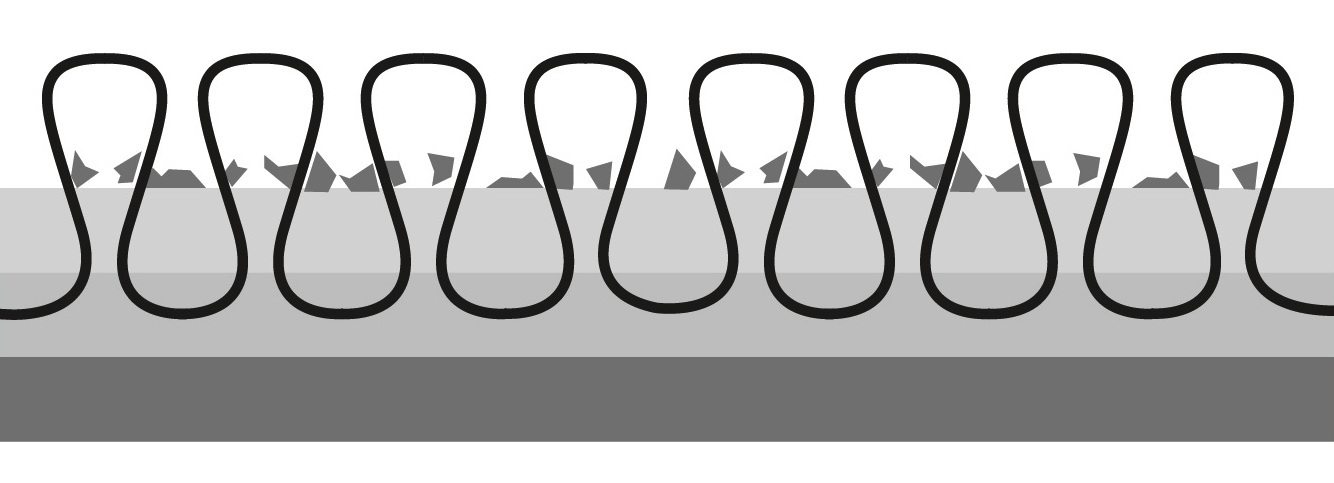
Textile Floor Coverings: Underside, Fixing, and Backing
If the flooring is, for example, wood, a raised floor, or made of concrete screed, moisture penetrating to or soaking the covering must be avoided. It can lead to swelling and shape distortions, disturbance of electrical installations, or mold formation. In the case of asphalt screed, organic solvents can cause asphalt components to dissolve, move to the surface, and form brown stains.
Whether the fixing is adhesive tape or full/partial bonding with dispersion adhesive, conductive adhesive, or resumption adhesive, moisture penetration or the covering getting soaked should also be avoided. It can lead to re-emulsification and loss of adhesive strength. Rubber adhesive contains solvents and is water-resistant, but is rarely used anymore.
The backing material is sometimes not so sensitive to water, but pay attention to how it interacts with other components. PU foam backing, for example, can store moisture like a sponge. In combination with moisture-sensitive adhesives or substrates, this can lead to damage. Jute shrinks due to soaking and drying and can release yellowish dye into the pile. Heavy coatings are usually only used for carpet tiles and are impermeable to water. The floor edge area is critical in this case. This is where moisture penetration and damage to the substrate can occur.
Tip – Runners, Dirt-Trapping Mats, and More
Clean runners, dirt-trapping mats, and the like, in the same way as the textile floor coverings. In the case of moisture-sensitive surfaces, however, it is possible to place the carpet on a non-sensitive surface for cleaning and work there.
Fiber Types and Carpet Cleaning Methods
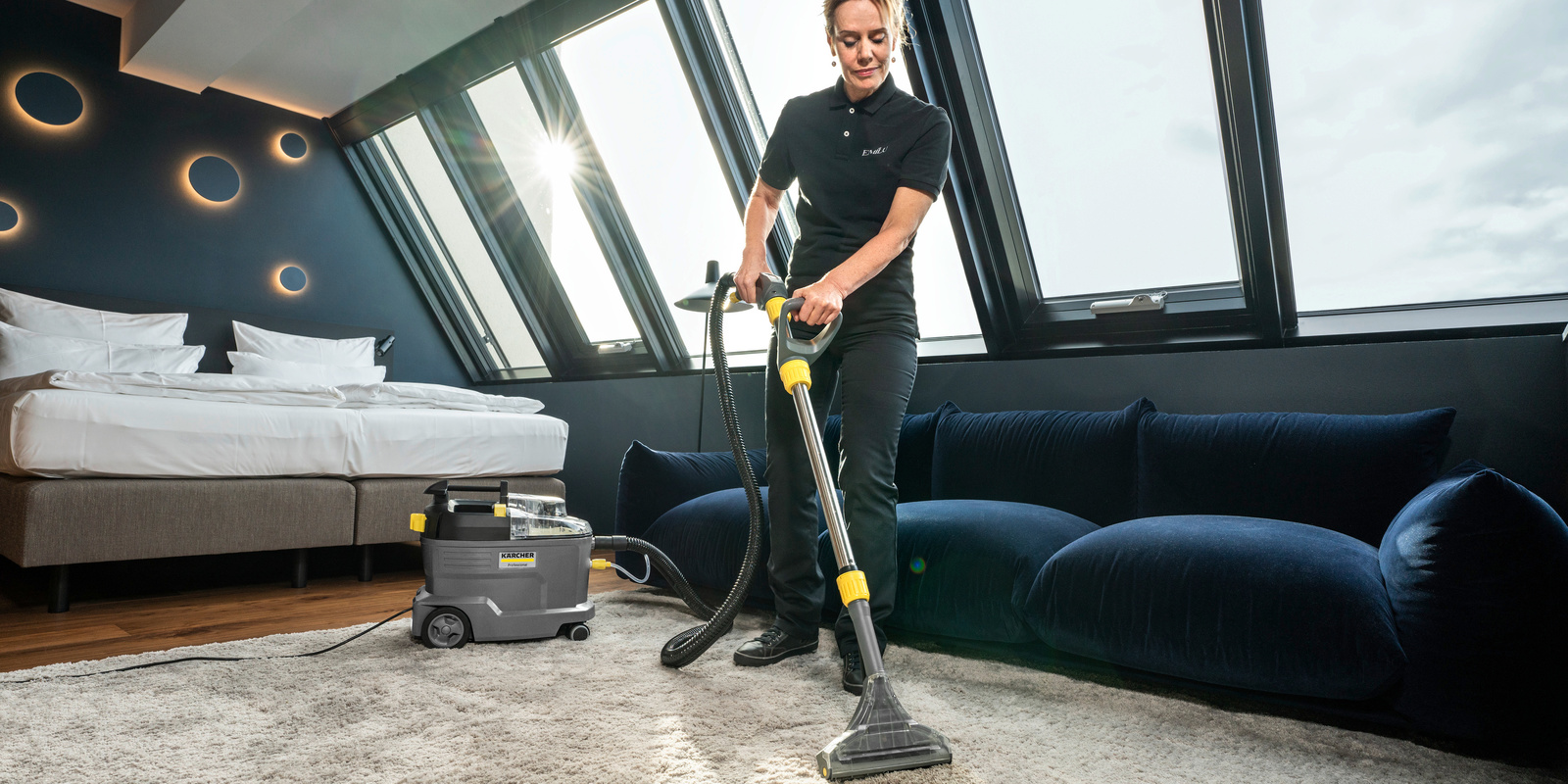
Various materials are used for carpeting. These include the durable synthetic fiber polyamide, which is easy to care for and can imitate the look of wool, among other things. The natural fiber sisal is made from agave leaves, which gives it a firm structure. Sisal carpets are very robust but must not get wet. On the other hand, the protein fiber wool regulates the indoor climate because it can absorb moisture from the air and release it again.
Whether it’s the cleaning agent, mechanical action, or temperature, the fibers react very differently to different cleaning approaches. For example, while natural fibers are very sensitive to acidic cleaning agents (pH value less than 3), synthetic fibers are resistant (exception: polyamide). As a rule, natural and synthetic fibers tolerate strong mechanical action quite well, whereas protein fibers react very sensitively to too much of it. Modern cleaning technology delivers very good results with cold water. If a heated spray extraction cleaner is used, it should be noted that natural and protein fibers can react sensitively above 104°F (40°C). Professional cleaning is therefore only possible if the type of fiber is known.
Problems When Cleaning Carpets
Various problems can occur when cleaning carpets. For example, white-yellow stains often form when chemical substances such as acid have come into contact with the pile. Such discolorations, which cannot be removed by cleaning, often occur due to accidentally dripped sanitary cleaners when moving to sanitary areas.
Fogging can occur on tapestries. If there is ventilation behind the carpet, the tapestry filters the room air at these points, depositing dirt from the air. These spots stand out visually from the rest of the covering. An uneven appearance called shading occurs when fibers of a velour covering fold over. There is neither an explanation nor a cleaning solution for this. Sometimes shading reappears even after replacing a covering and can only be prevented by using a different type of textile.
Tip: The Burn Test
The burn test is a good way to find out the type of fiber in question. To do this, remove individual fibers from the covering and twist them into a yarn. After ignition, the fibers can be distinguished according to odor, residue, or burning behavior.
Maintenance Cleaning for Carpets
Maintenance cleaning is mainly aimed at removing loose dirt that accumulates daily. Intermediate cleaning, which should ideally take place every six months depending on the frequency of use, removes traffic patterns and adhering dirt. Finally, basic cleaning aims to remove deep-seated dirt.
Basic Carpet Cleaning
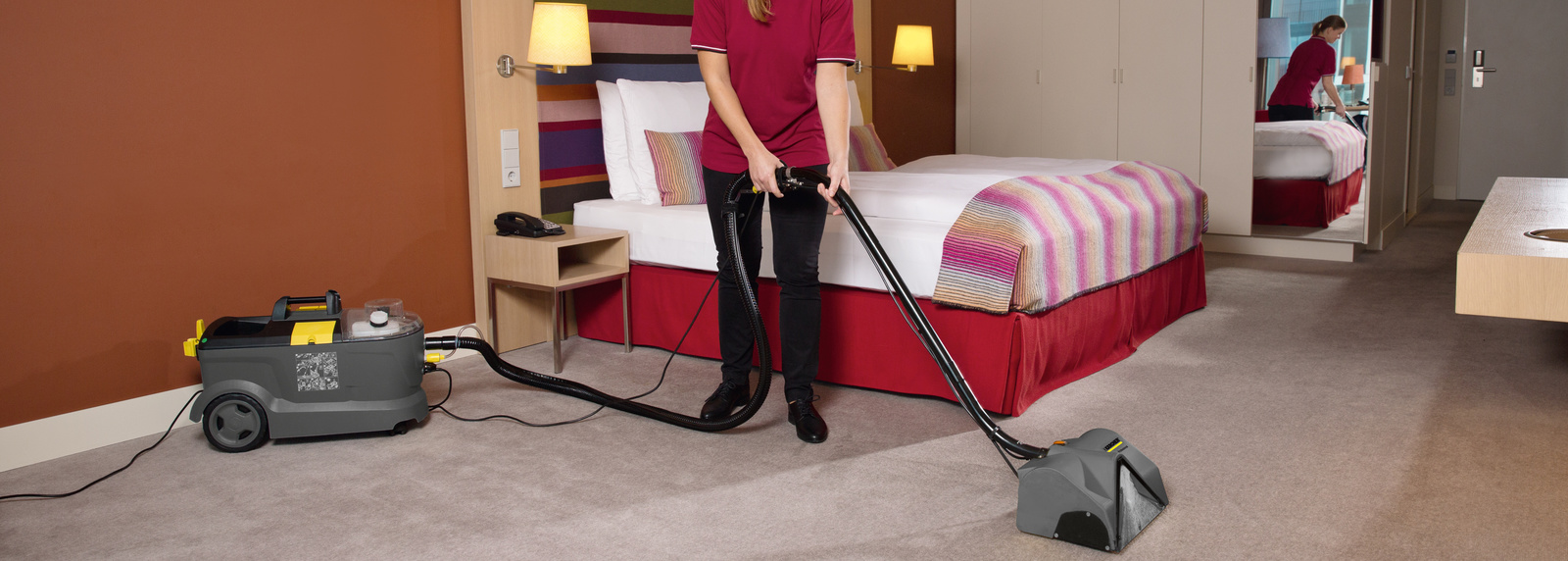
Even with regular cleaning, intermediate methods don't always achieve the desired results. That's when you need to take extra measures to keep your carpet clean and pristine as long as possible. There are three main methods to keep your carpets clean: spray extraction, wet carpet shampooing, or the combination method, which combines spray extraction with the microfiber/yarn method.
Intermediate Carpet Cleaning
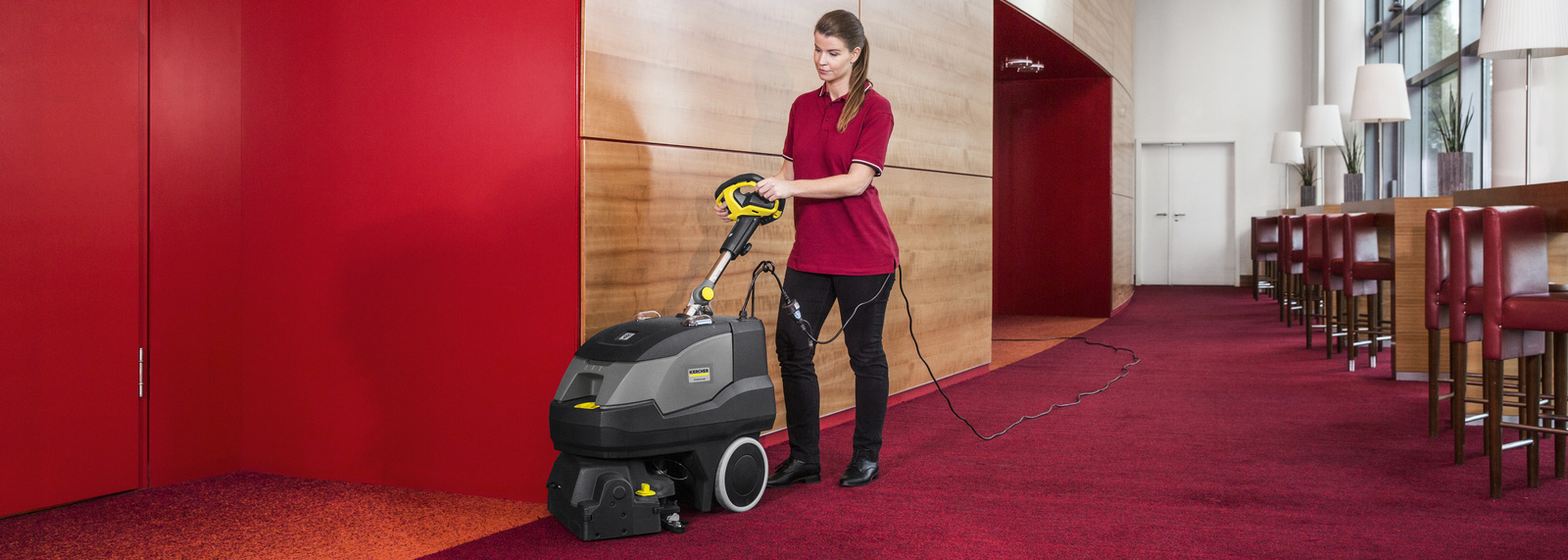
As beautiful, soft, and noise-absorbing as carpets are, time takes a toll on them, leaving traces and trails that a simple household vacuum cleaner struggles to remove. To extend the time before a replacement is needed, you can perform a complete carpet cleaning yourself. The techniques, from iCapsol to microfiber or yarn pads, are also suitable for moisture-sensitive floor coverings and substrates or areas where a short drying time is required, such as hotel lobbies or corridors.
Vacuuming, Sweeping, and Stain Removal
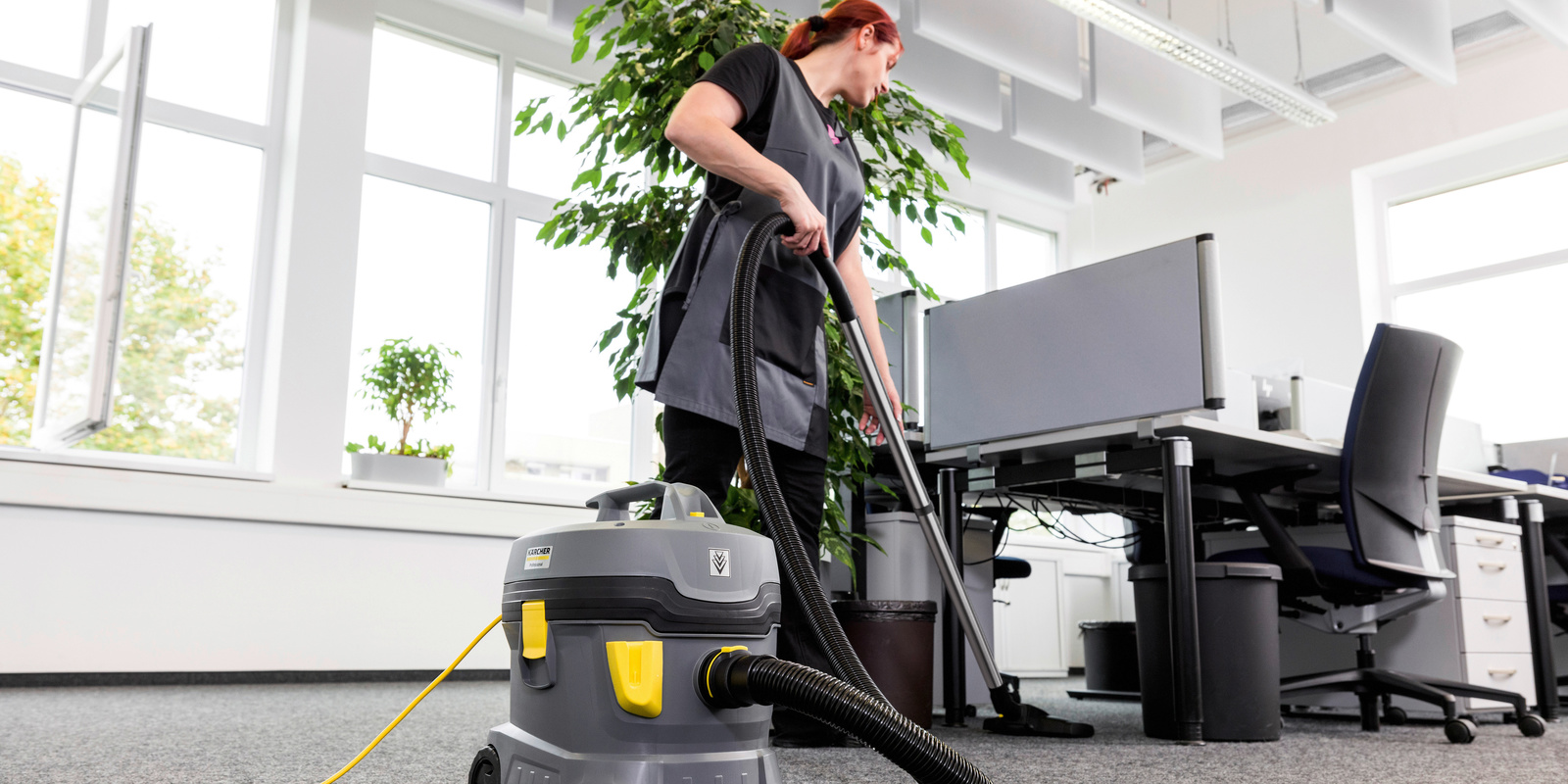
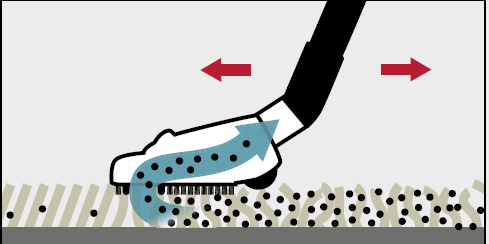
To remove hair, lint, dust, or sand from textile floor coverings, they can be cleaned simply by vacuuming. The vacuum created by the suction fan ensures that the loose dirt is picked up.
Tip – Brush Mechanism Helps
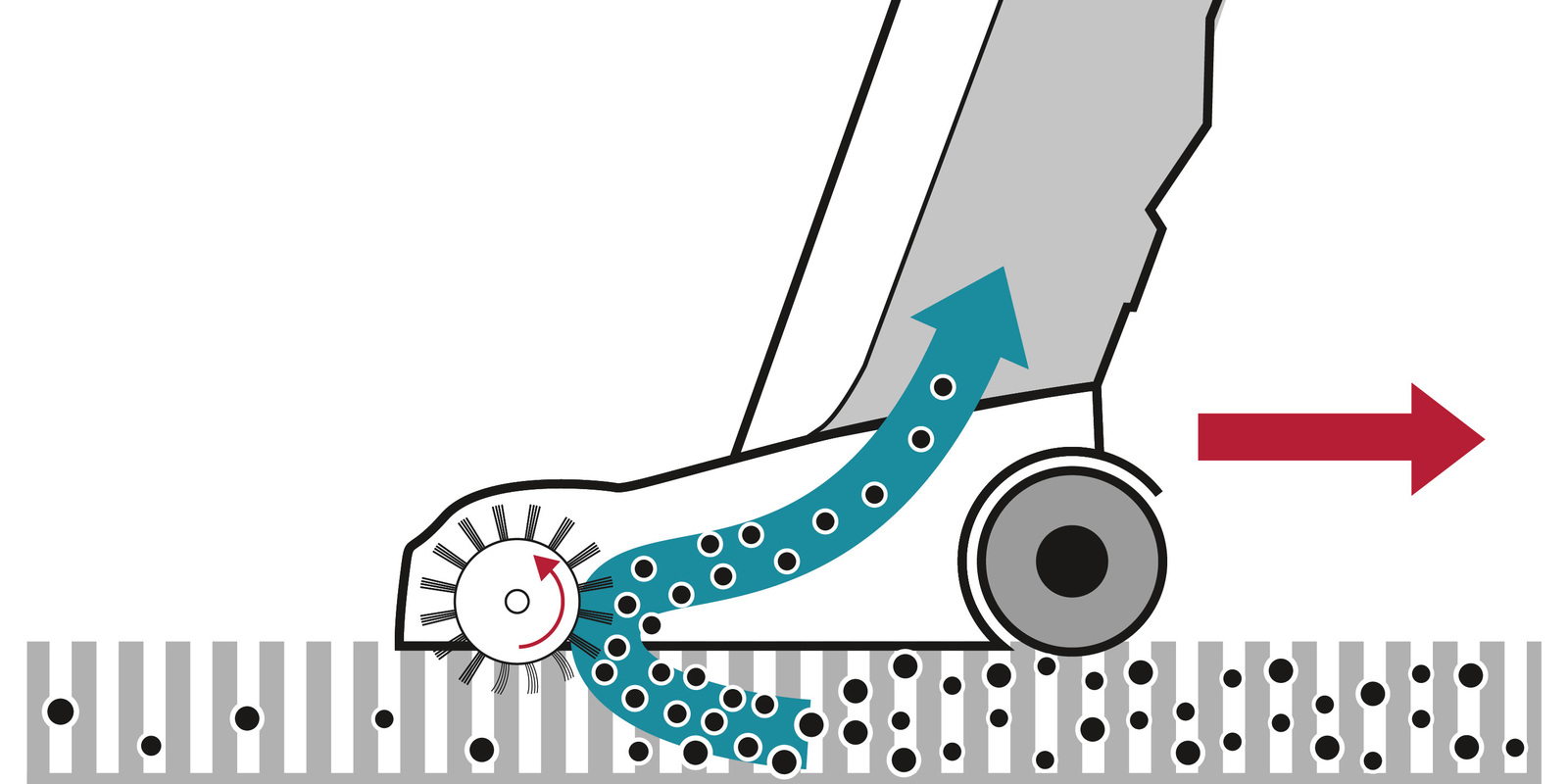
A lack of a proper brush mechanism can lead to anchored dirt particles remaining in the pavement.

Brush Vacuuming: The Most Thorough Daily Method
The most thorough method for daily maintenance cleaning of the carpet is brush vacuuming. In addition to dust removal, an electric brush with the appropriate mechanism ensures that significantly more dirt can be removed. In addition, the carpet fiber is brushed up.
Tip – Using Carpet Vacuum Sweepers
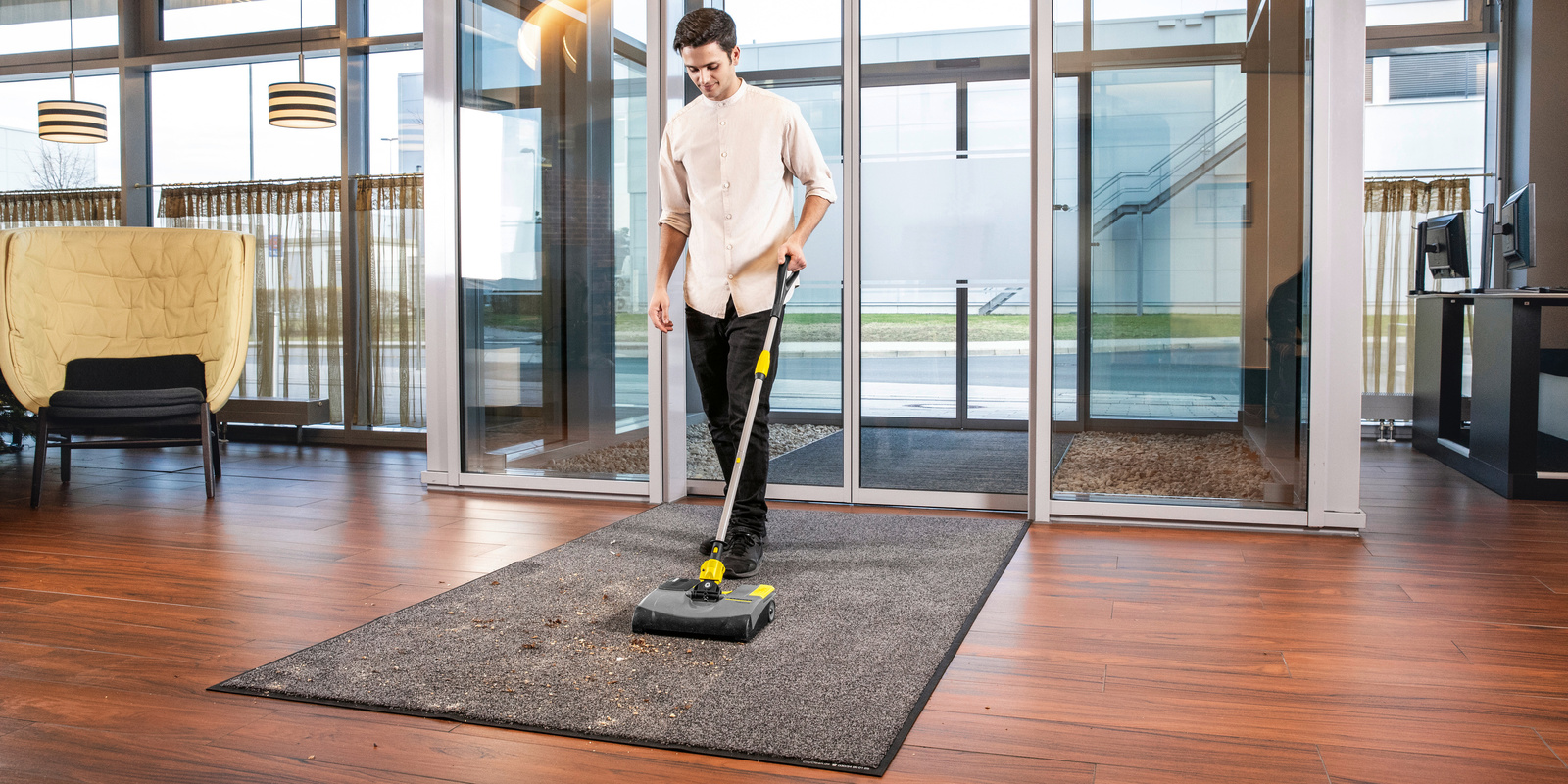
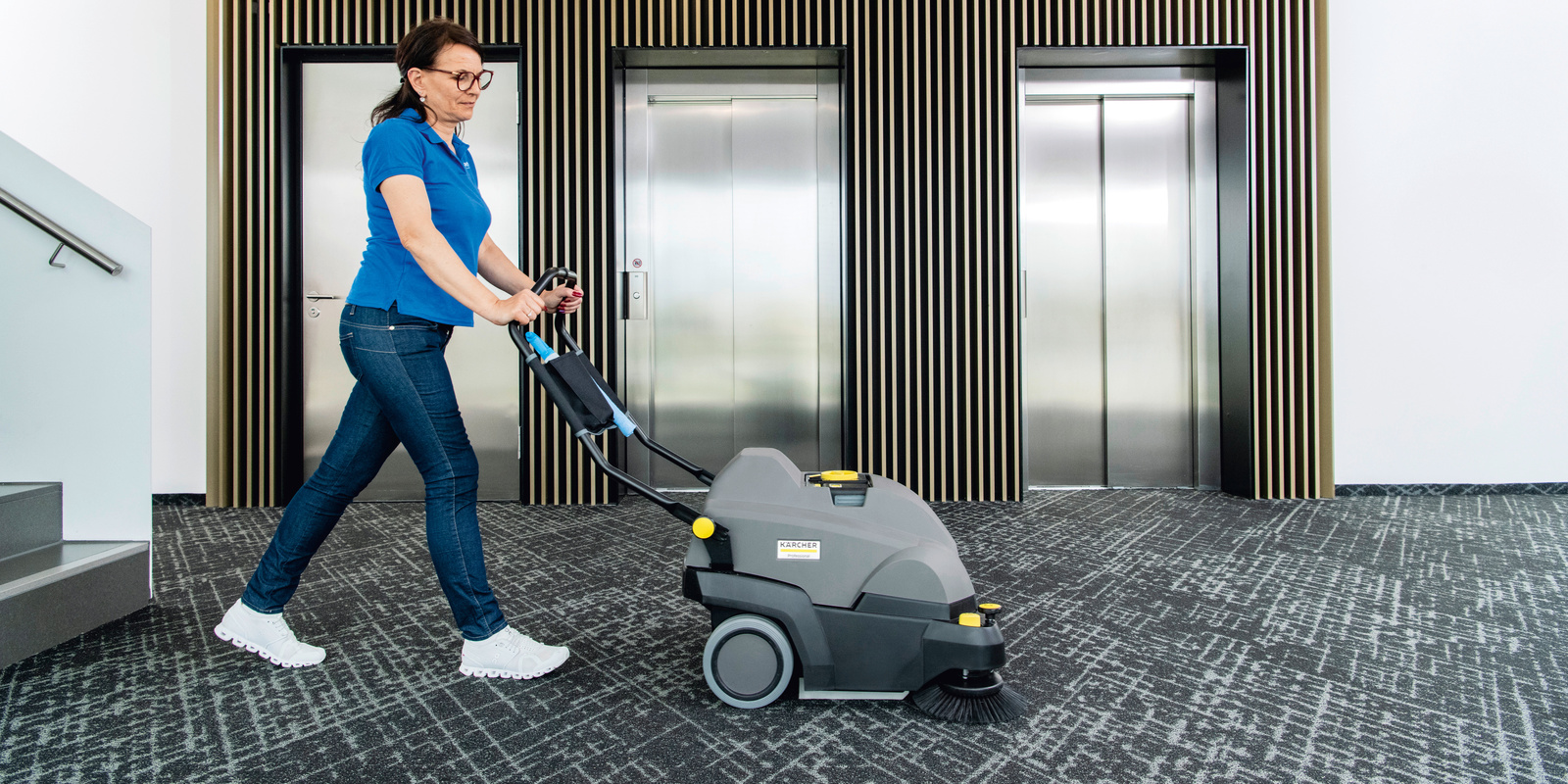
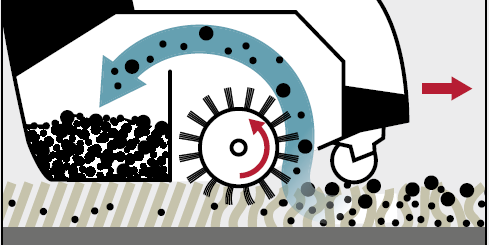
If you want to clean large areas efficiently, you can also use carpet vacuum sweepers. An antistatic sweeping roller mechanically works the floor covering so that dirt is removed. The dust that is stirred up is picked up by the carpet vacuum sweeper.
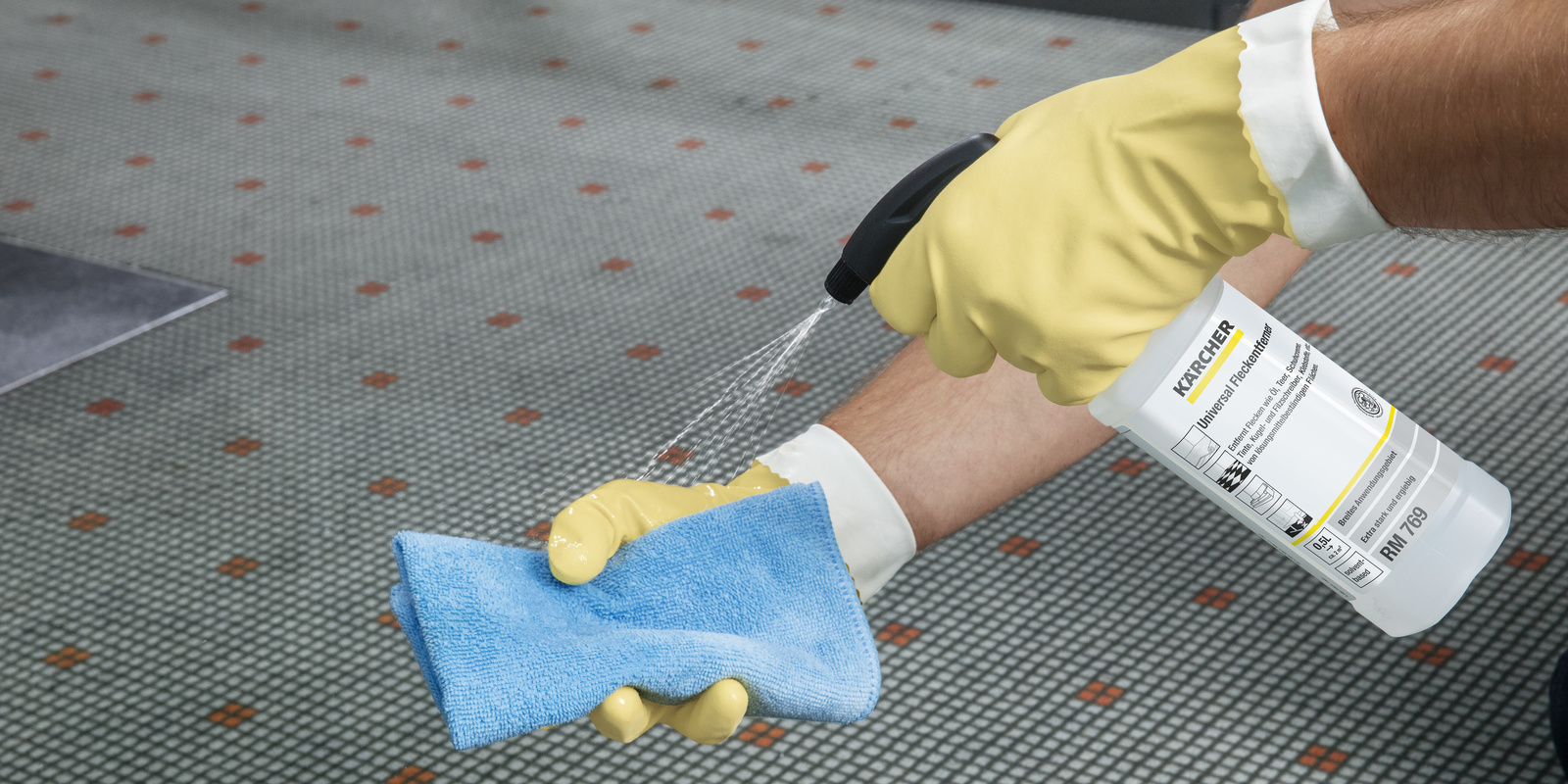
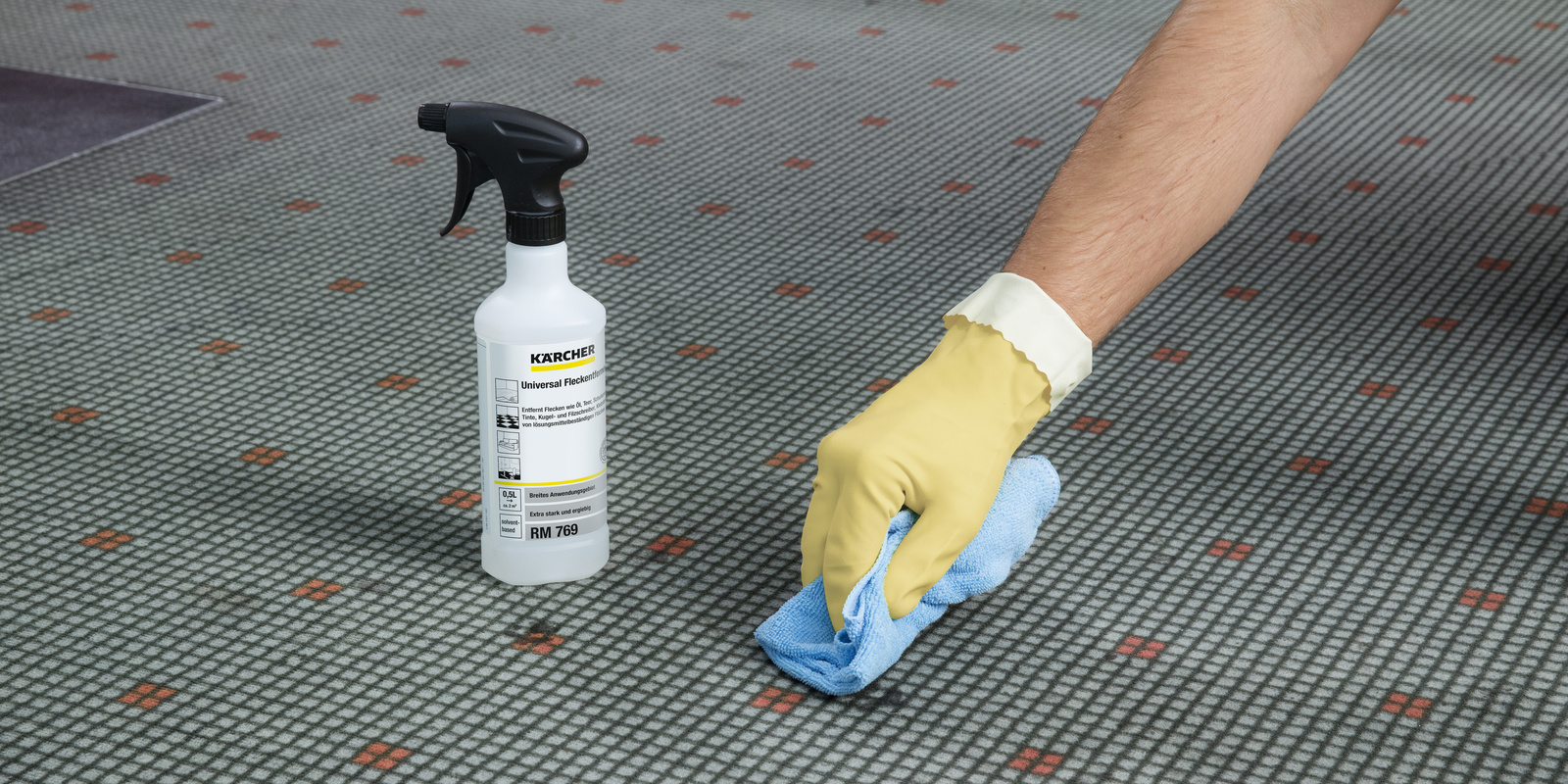
Water-soluble and water-insoluble stains can be removed via stain removal during maintenance cleaning. Use the dab or dab-and-rinse method. If the stain is of unknown origin, test its solubility with a white cloth and lukewarm water. If it is water-soluble, you can remove it from the fiber with light, twisting movements from bottom to top. If it is not soluble in water, spray a suitable detergent on the cloth and dab the stain until it is removed. Then remove dirt and chemical residues with a spray extraction cleaner.
Tip – Dissolving Stains
90 percent of all stains can be removed with water.
Tip – Accelerate Drying
Drying can be accelerated with a dry cloth.