
Cleaning and Caring for Engineered Stone Floors
Engineered stone floors are available in countless variations, so the specific type can be selected for its material properties to match the environment and the loads it will be subject to. Regular maintenance cleaning is essential to preserve the look and value of the flooring and also delays the need for the next deep clean. In any case, the right technology, the right detergent, and, if necessary, a good care product simplify the cleaning process.
Well-Kept Appearance for a Long Service Life
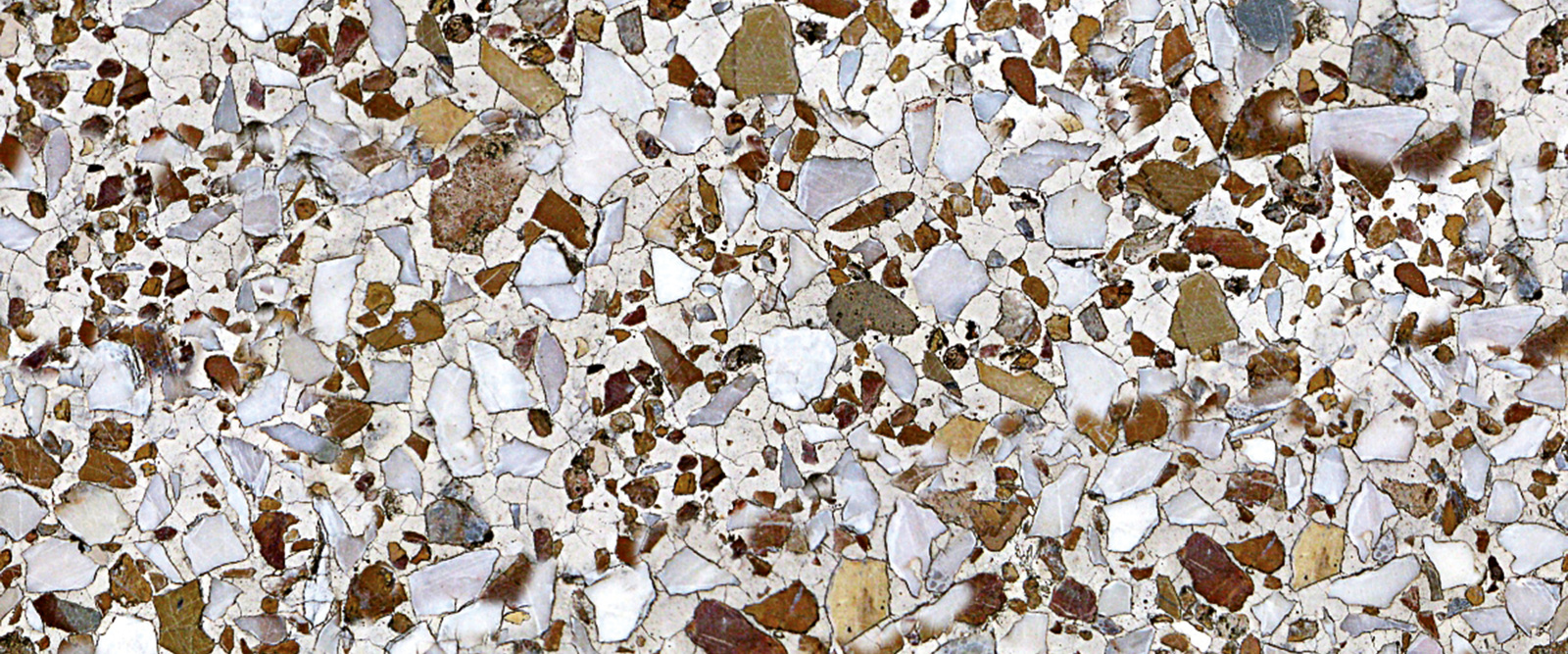
Engineered stone floors, also often referred as artificial stone floors, come in different forms: seamless variants like screed or terrazzo, or as slabs, such as ceramic or concrete-bound. In addition, the many variants from cast stone to porcelain have different properties—including anti-slip design and studs for commercial kitchens and more.
Engineered Stone Floors (Almost) Everywhere: A Floor Covering with Countless Variations
Mineral floor coverings can be split into two main groups: Natural Stone, such as marble or granite on the one hand, and Engineered Stone on the other—which covers all man-made varieties. It is almost impossible to compile a comprehensive list of engineered stone floors, but the following materials are frequently used:
- Cast stone is available in different colors and shapes. It is robust and can often be found in stairwells, supermarkets, or shopping centers.
- Screed, alternatively, is laid without joints for an accessible floor covering; it is extremely resilient and is therefore often used in industrial and logistics settings. To enhance the look and the chemical resistance of the floors, a polyurethane (PU) coating is applied increasingly often.
- Clinker bricks are very resilient and popular for workshop floors, for example. They are available glazed or unglazed. Their red/yellow coloring gives them a characteristic look.
- Stoneware is denser than earthenware and therefore quite a bit harder and more resilient. The material is very chemically resistant and is often used as a floor tile.
- Porcelain is a highly durable material that is even more stable than stoneware and suitable for industrial environments. The unglazed version with a textured surface and studs is often laid in commercial kitchens or swimming pools to minimize the risk of slipping.
- Terracotta, which is often laid indoors, is warm in color and has a rough texture. With the right composition and a high firing temperature, terracotta is also suitable for patios.
Cleaning Cement Screed
Cement screed is the most commonly used type of screed. This floor covering requires special attention when it comes to cleaning and care because it not only has to withstand a considerable amount of strain, but it also needs to meet occupational safety standards at the same time. For deep, maintenance, and intermediate cleaning, it is therefore essential to select the right equipment.
Cleaning Porcelain Tiles
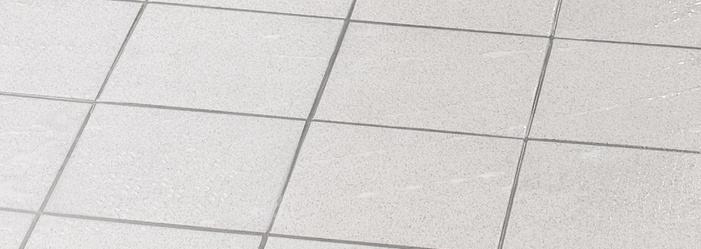
Porcelain tiles are a very popular, attractive floor covering that stands out thanks to its robust and slip-resistant qualities, as well as its very low moisture absorption rate. A modern and safe design material, it is impossible to imagine floor coverings without porcelain today.
Safety Factors: Anti-Slip and Studs
In the commercial sector in the United States, there are certain national safety standards that floor tiles must fulfill. The anti-slip value, or coefficient of friction, indicates how good the anti-slip properties of a surface are. While the European R-class rating (R9–R13) is a common metric, in the U.S., the Dynamic Coefficient of Friction (DCOF) is the key standard. However, this property is not always achieved by means of a rough texture; fine-pored surfaces can also provide adequate anti-slip qualities. In areas that are often regularly wet and where people walk barefoot, floor coverings from the corresponding European assessment groups A, B, or C must also be used, depending on the area of use.
There are also rules regarding the space created between studs (V4-V10), a European standard that indicates the volume of liquid displacement. In environments with a heightened risk of slipping, R and V ratings must be high—the highest value is R13/V10. The higher the two values are, the more easily dirt can collect in the tiles, which in turn makes cleaning more labor-intensive.
Maintenance Cleaning of Engineered Stone
Regular maintenance cleaning is essential to preserve the value and the well-kept appearance of engineered stone floors. Cleaning is carried out with dry and/or wet methods, depending on the level of soiling.
Removing Loose Dirt: Whether in Tight Spaces or Expansive Halls
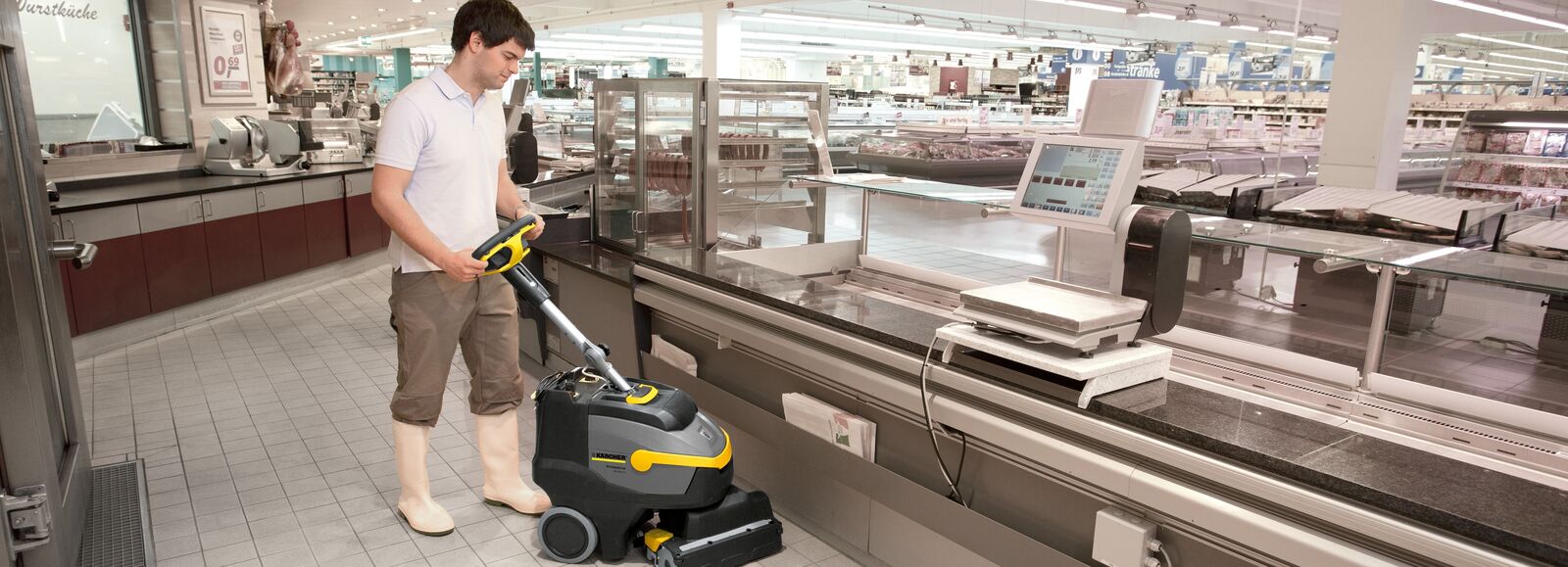
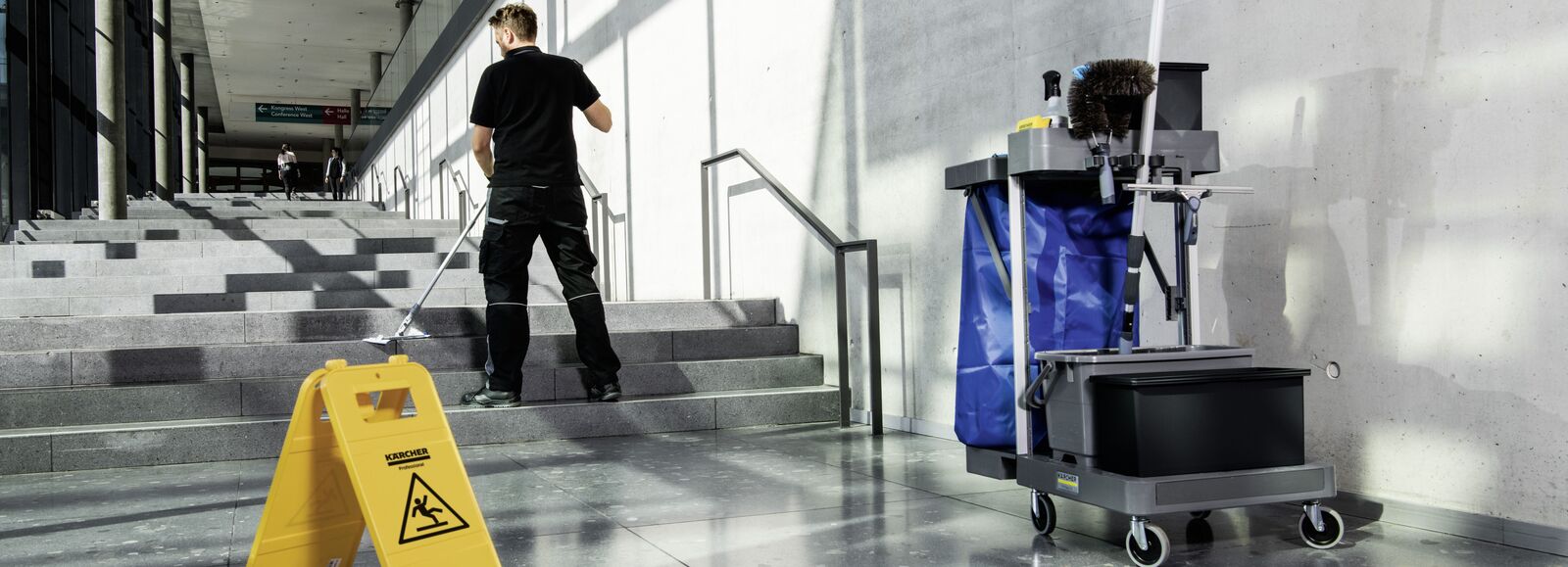
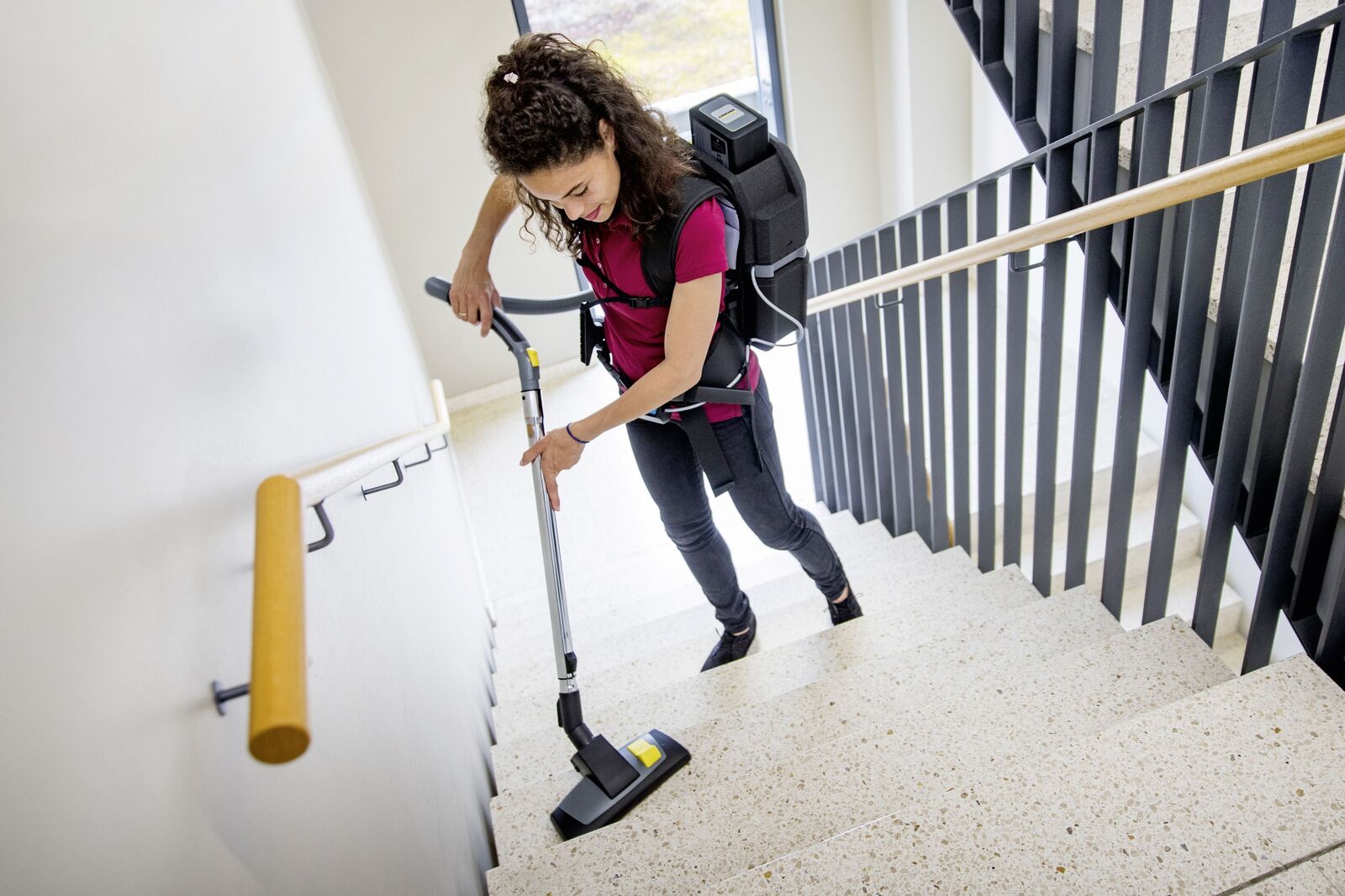
Loose dirt in small spaces, such as elevators or stairwells, can be removed with a battery-powered backpack vacuum cleaner, a compact floor sweeper, or by dust-binding mopping with a microfiber textile that uses electrostatic charge to pick up dirt. If larger areas need to be cleaned, it is worth investing in a walk-behind floor sweeper. The right type of sweeper roller should be used for this—in most cases, the standard roller is sufficient, and soft rollers are suitable for very fine dust. Depending on the space to be cleaned, a walk-behind sweeper or a ride-on machine may be suitable.
Wet Cleaning with Floor Scrubbers: The Right Choice for All Surfaces
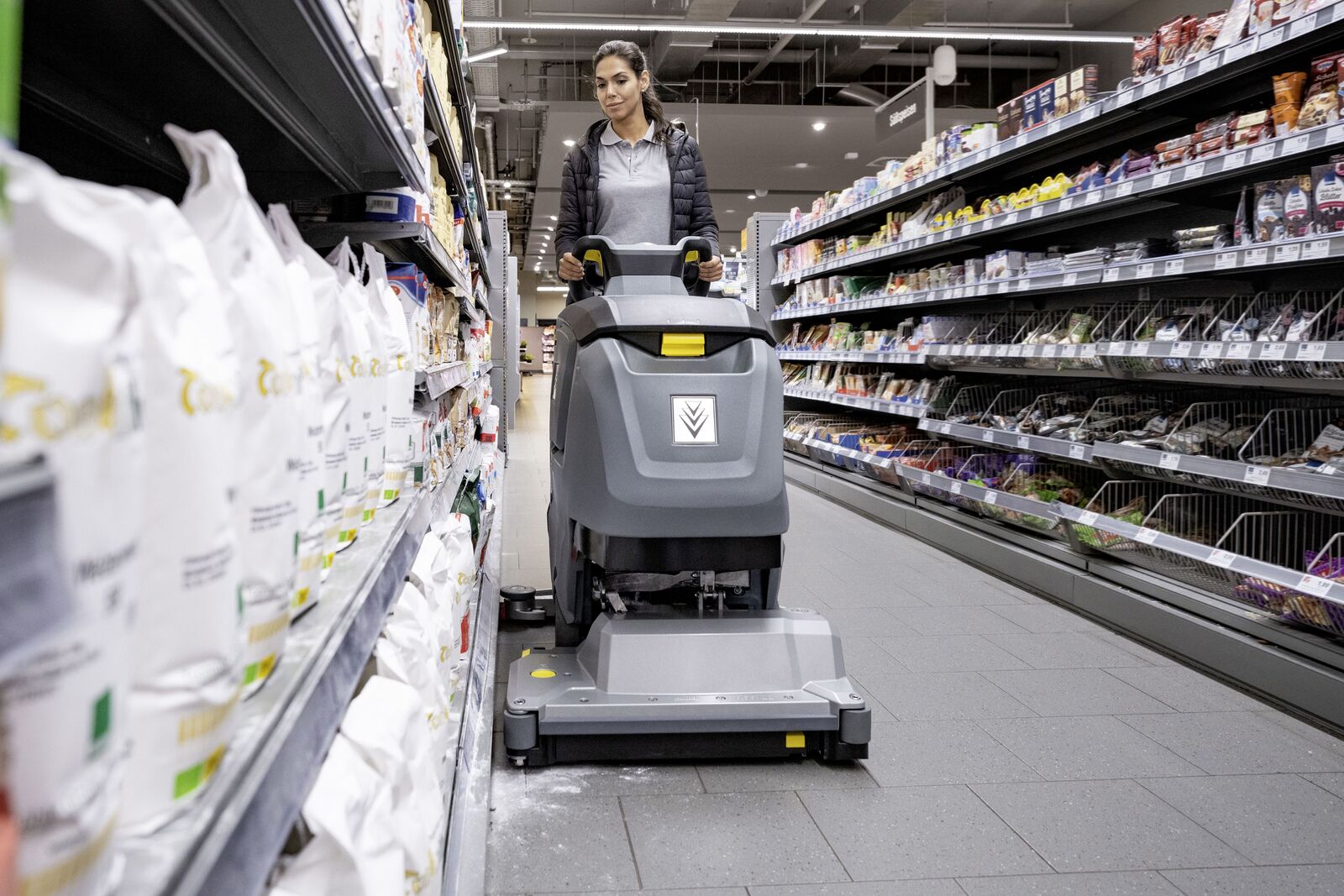
It is impossible to imagine cleaning engineered stone floors without floor scrubbers, especially as the wide range of models available incorporates both compact models for smaller or awkward areas and larger machines for expansive areas. To achieve the desired cleaning result, choosing the right brushes or pads for the machines is key. Coarse-textured tiles can be cleaned particularly efficiently with high-low roller brushes. Ground and polished floors are easy to clean with disc pads, whereas microfiber rollers produce impressive results on finely textured tiles such as porcelain.
Tip – The Sweeper Drawer Advantage
An additional advantage of floor scrubbers with roller heads is that they have a sweeper drawer. This means that even coarser dirt is cleared, removing the need to pick up such debris beforehand.
Tip – Polishing with a Diamond Pad
To give floors a lasting shine through maintenance cleaning, a green diamond pad can be attached to the floor scrubber, which will polish the floor. This is particularly recommended for cast stone and screed.
The right squeegees should also be fitted to vacuum the dirty water. They come in a choice of two materials. Squeegees with a natural rubber content are the right choice for standard types of soiling and achieve good suction results. For oily dirt, such as lubricants or separating agents, squeegees made from polyurethane (PU) are recommended.
Tip – Spot Cleaning with Damp Mopping
If just spot cleaning is necessary, damp mopping is normally the answer, using a mop holder, microfiber mop cover, and a suitable detergent.
Tip – Detergents for Moderate Soiling
When the level of soiling is moderate, pH-neutral or mild alkaline detergents are often sufficient for maintenance cleaning.
Deep Cleaning Engineered Stone
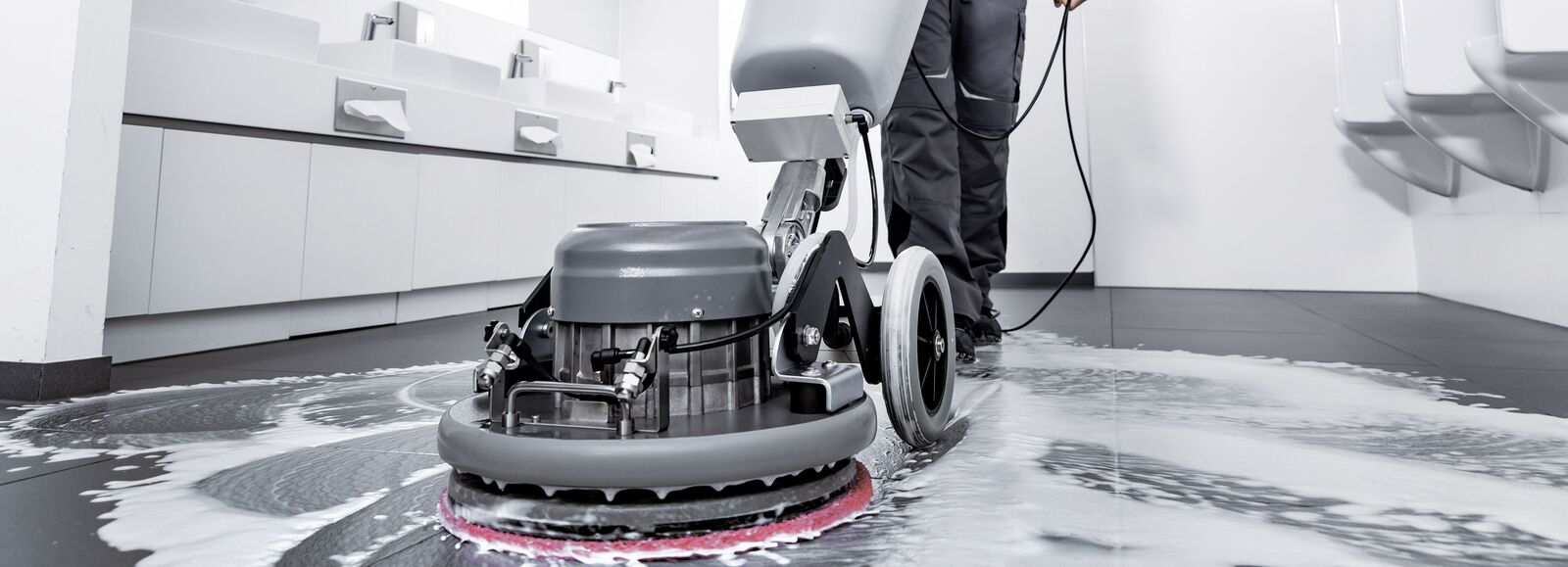
When it comes to deep cleaning smaller engineered stone floor coverings, single-disc machines used with a wide range of accessories and a deep cleaner produce excellent results. They effectively loosen the dirt, then the resultant dirty water is picked up by a wet/dry vacuum cleaner. The floor is then rinsed with clean water, which is also then vacuumed up.
Tip – Single-Disc Machines with Orbital Technology
Single-disc machines with orbital technology are particularly effective, as the pad not only rotates, but also oscillates at a high frequency. This loosens the dirt from every angle.
A floor scrubber is the right choice for large areas, either as a walk-behind or a ride-on model, depending on the size of the area to be cleaned and the time frame available for cleaning. Depending on the level of soiling, the surface can be cleaned using either the two-step method (scrub first, then vacuum) or the single-step method (scrub and vacuum at the same time).
Tip – Melamine Resin Pads for a Graying Effect
The use of melamine resin pads is recommended for removing any graying effect from porcelain or cast stone. These often produce excellent results even without detergent. However, a maintenance detergent can be added to the cleaning water to trap the dirt even more effectively.
Deep Cleaning with Pressure Washing and a Cup Foam Lance
For floor surfaces that have floor drains, for instance, those found in restroom facilities or spa areas, pressure washers combined with cup foam lances are the right choice. The advantage of these is that they can be used to clean the wall surfaces at the same time. With the aid of the foam cleaning agent and air, which is added at the nozzle, they generate foam with the high-pressure jet. Best of all, it is easy to see where the detergent has been applied, and the foam adheres longer than a standard detergent, which in turn increases the contact time.
Tip – Protect Your Grout
To prevent damage, never point the pressure washer jet directly at the grout.
Surface Cleaners for Stubborn Dirt: Patios or Outdoor Areas
If the dirt is already deeply ingrained in the surface, a surface cleaner can be a good solution, provided the surrounding area can withstand large volumes of water and the surface itself is not sensitive to water. For example, patios or outdoor areas in general are well suited to this method.
The surface cleaner should have a rotating nozzle bar with slightly offset power nozzles attached. These apply water to the surface at high pressure and loosen the dirt very effectively and evenly. Furthermore, unlike conventional high-pressure cleaning, the operator and the surrounding area do not get splashed. Plus, a higher area performance can be achieved this way.

Detergents for Deep Cleaning: Formulated for the Floor Covering
Many engineered stone floors can be cleaned with either acidic or alkaline detergents. Acidic detergents help tackle mineral dirt such as limescale, urine deposits, or rust; alkaline detergents are ideal for removing organic dirt such as grease, protein, or oils.
However, it should be noted that lime-bound materials such as cast stone are not compatible with acid, since the acid dissolves the lime. At the same time, the detergent must not be too alkaline, otherwise the surface of polished floors may end up looking dull.
In engineered stone tiles such as terracotta, however, the color tone is created by metal oxide. Therefore, when using acidic detergents, care must be taken to ensure they do not contain phosphoric or hydrochloric acid, since the rust-removing effect of these may lead to changes in color.
Tip – Protecting Grout from Acidic Detergents
If the detergent used is acidic, any cement-based grout lines must be rinsed with water before use to prevent them from absorbing acid, which could otherwise cause damage.
Caring for Engineered Stone
Some engineered stone floors can be treated with a care product to make them more hard-wearing against mechanical stresses, to protect pores from water penetration, or to alter their individual appearance.
Tiles with High Levels of Water Absorption: Protect and Embellish
Terracotta and unglazed clinker tiles are examples of floor coverings that can absorb a lot of water. If such floors are oiled, the oil penetrates into the pores and protects the ceramic tiles from moisture. For a more rustic look with terracotta, what is known as buffalo stain, a wax-oil mixture that contains carbon black, can be applied. The carbon black settles in the texture, creating a pre-loved appearance.
Tip – Increasing Shine
Depending on the type of tile, a wipe care product based on water-soluble polymers can be applied to increase the level of shine.
Tip – Applying Care Agents
The care agent should not be applied directly to the tiles, but should be applied to the cleaning textile to ensure even distribution.
Tiles with Low Water Absorption: Protector (Usually) Unnecessary
Floor coverings such as porcelain have a low level of water absorption, rendering protective treatments generally unnecessary. Since moisture cannot penetrate, the protector remains on the surface and runs off. If a coating has been applied to porcelain in an earlier cleaning process, it should be removed with a universal deep cleaner to prevent a film from forming.