Cleaning in the Transportation Industry
Cleaning in the transportation industry poses two major challenges: the lack of time and, in most cases, lack of space puts cleaning staff and customer service teams under great pressure. To avoid delays and loss of sales, maintenance cleaning in public transport vehicles needs to be a well-oiled machine in itself. The time frame available for deep cleaning is narrow and must be scheduled in advance. Achieving cleaning goals under these severe time constraints requires careful scheduling, the right methods and high-performance technology.
Efficient and Space-Saving Cleaning in Public Transportation
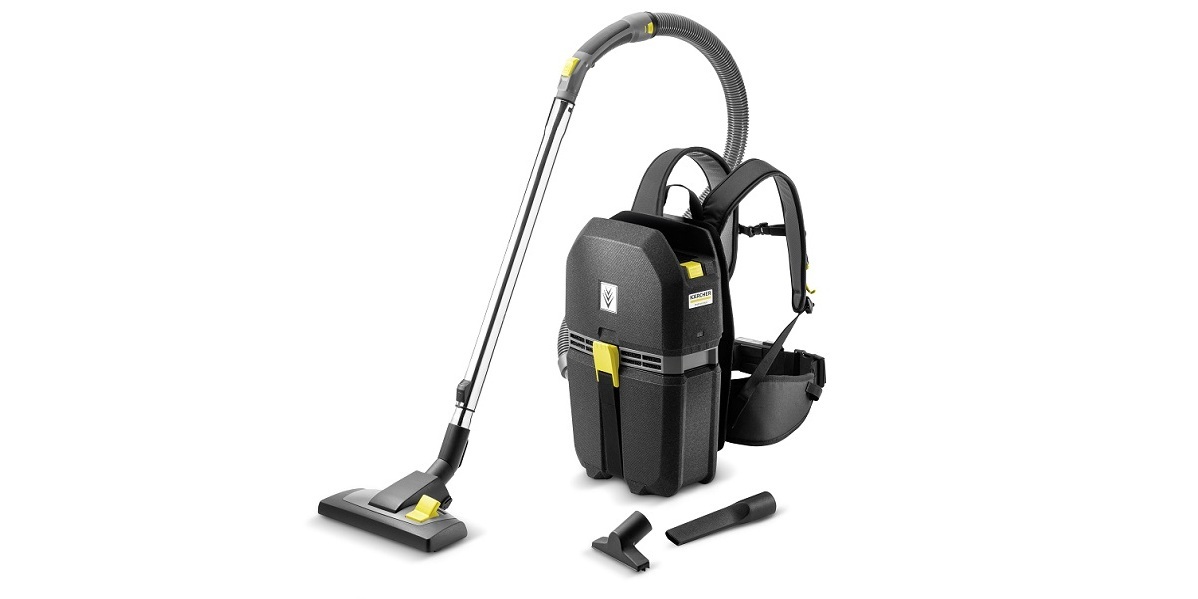
Public transportation runs on tight schedules, is heavily used, and often gets very dirty. Commuter trains, subways, and buses can be cleaned quickly, even in confined spaces, using backpack vacuums, commercial floor scrubbers, and commercial extractors.
Commuter Trains and Subways: Cleaning During Operation
Commuter trains and subways are in almost constant use, keeping the pulse of urban infrastructure going. During service hours, the easiest way to effectively remove loose dirt is with a battery-powered backpack vacuum cleaner, while more stubborn contamination can be tackled with a compact battery-powered floor scrubber. When performing wet cleaning of floors in commuter and subway trains, it is especially important that the surfaces are dry afterward so that the hard floors with quartz particles can provide sufficient slip resistance.
Tip – Hot Water Pressure Washers:
Graffiti is a common problem on the outer walls and windows of commuter trains and subways. The best way to tackle this is with hot water pressure washers.
Pulling Out All the Stops for Cleanliness: Cleaning Buses
When they are not in service, buses and coaches can be cleaned efficiently and in a user-friendly manner with compact floor scrubbers. These are slightly larger than a mop but achieve a much better result, specifically because all the loosened dirt is picked up by the built-in suction. For angled surfaces that cannot be reached with the floor scrubber, microfiber mop covers with suitable holders can be used instead.
Commercial extractors are a good choice for cleaning the upholstery of seating. Even stubborn, dried-on drink stains and food spills don't stand a chance against these. The procedure for using them is simple: first, water mixed with detergent is sprayed onto the upholstery, then it is simply vacuumed back up.
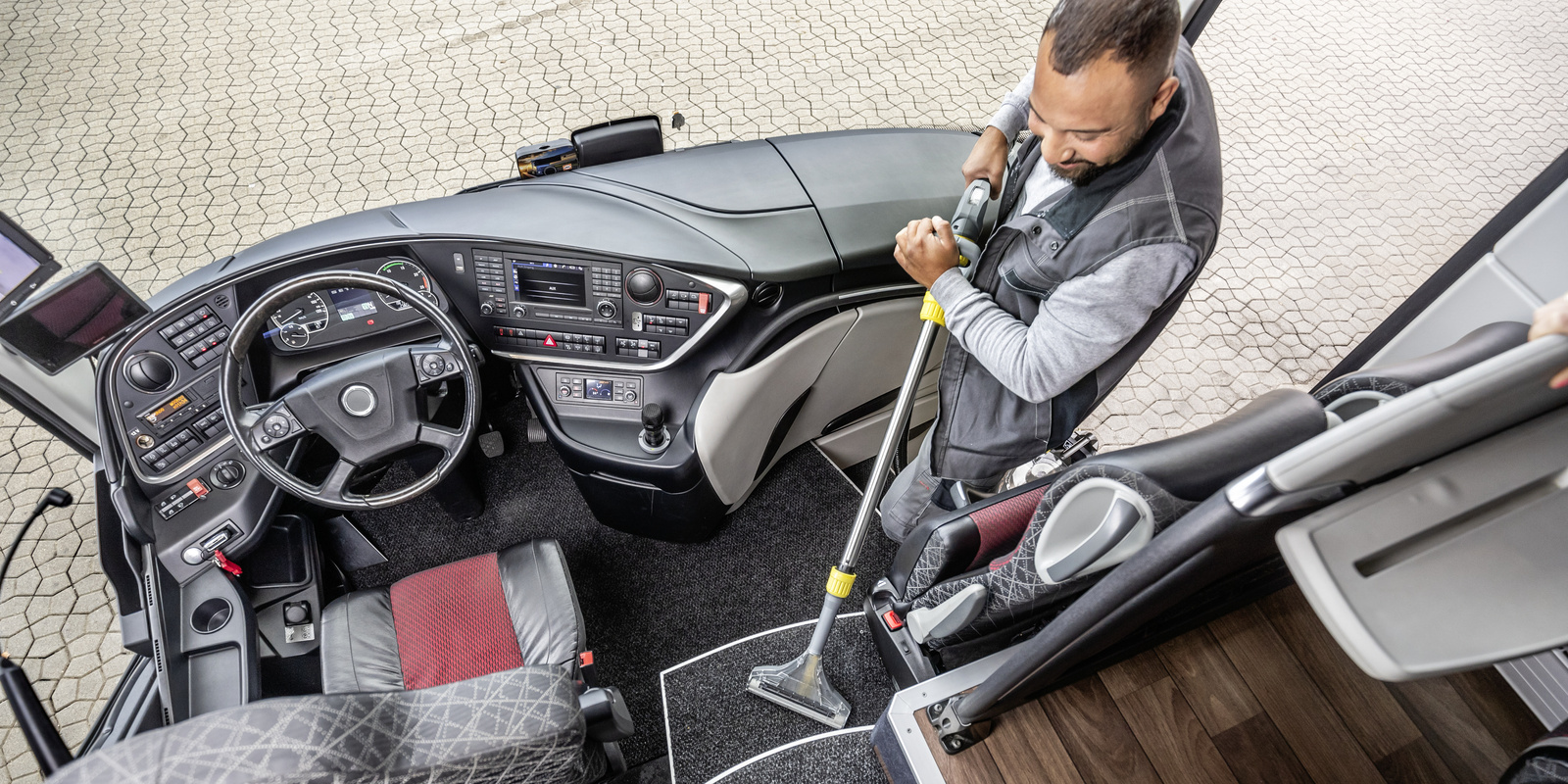
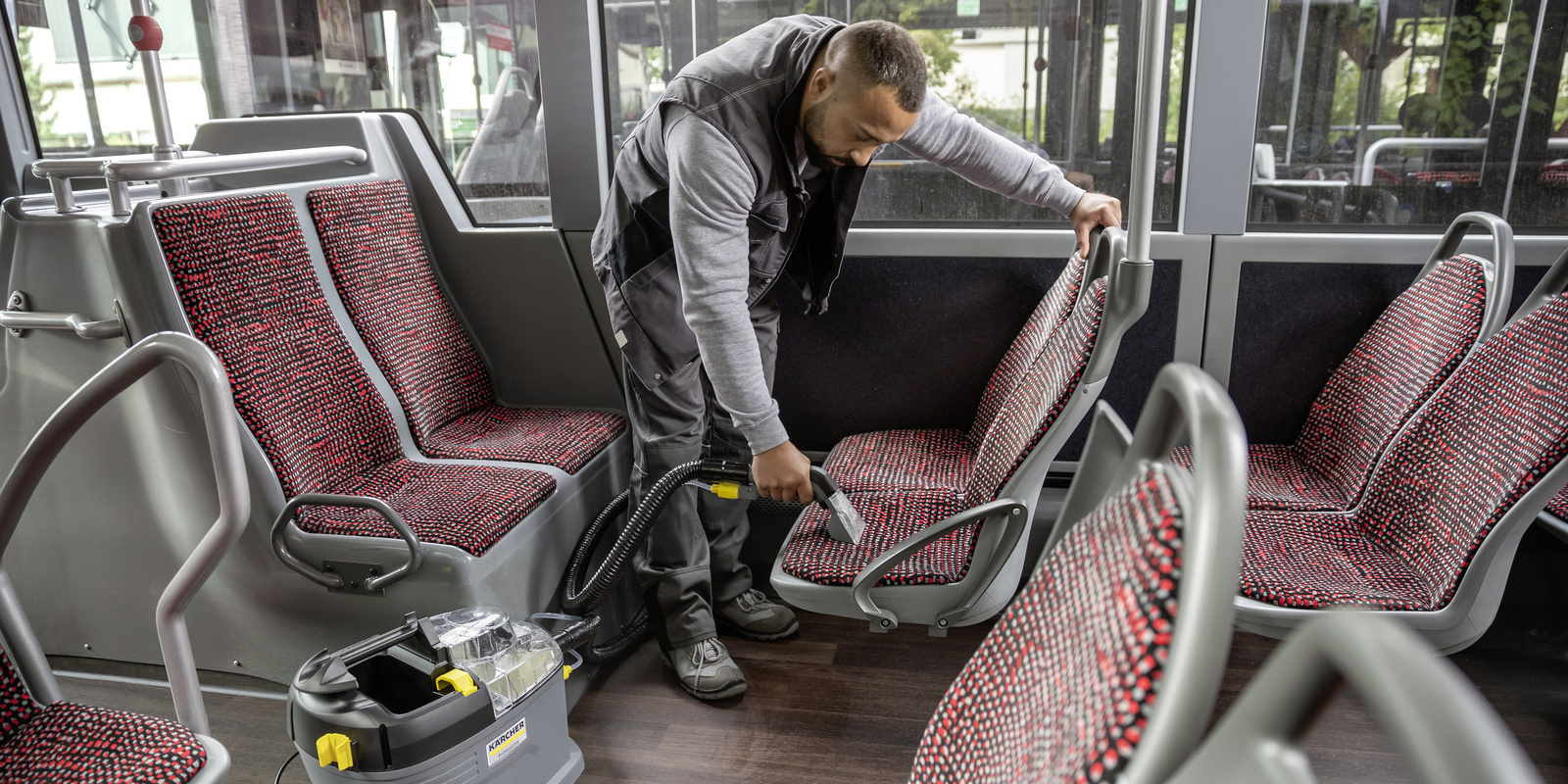
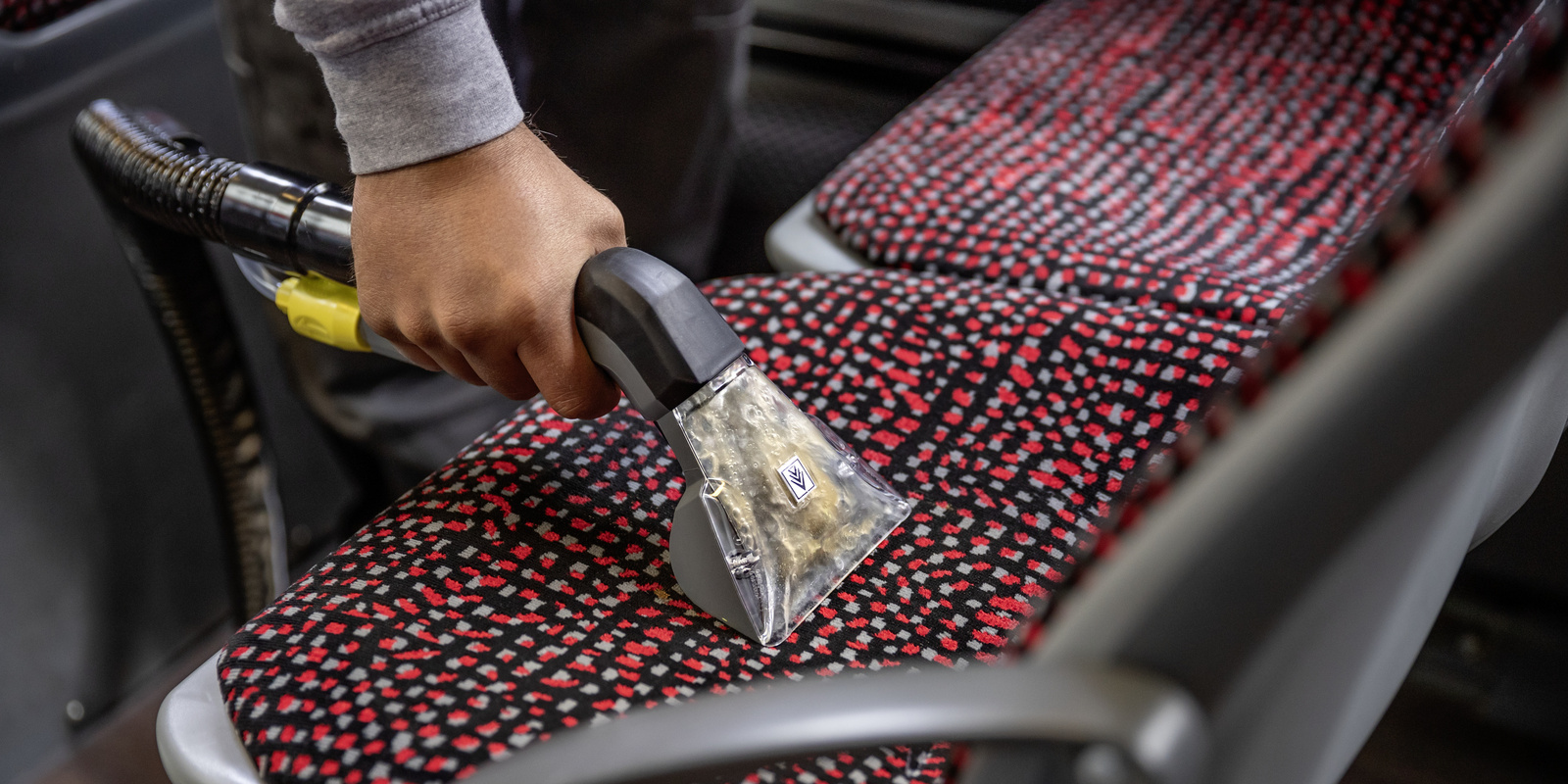
Tip – Stain Removers:
Depending on how dirty the surface is, the process can be repeated several times to remove moisture and dirt with each pass. A stain remover can also be used to spot clean stubborn stains.
Keep Cleaning Operations On Track: Cleaning Trains
A procedure known as Japanese cleaning can be used to efficiently clean trains while they are in service. When surface cleaning is required, using the right method will effectively eliminate germs. Carpets and upholstery can be vacuumed during breaks in service and fully deep cleaned during extended periods of non-operational time.
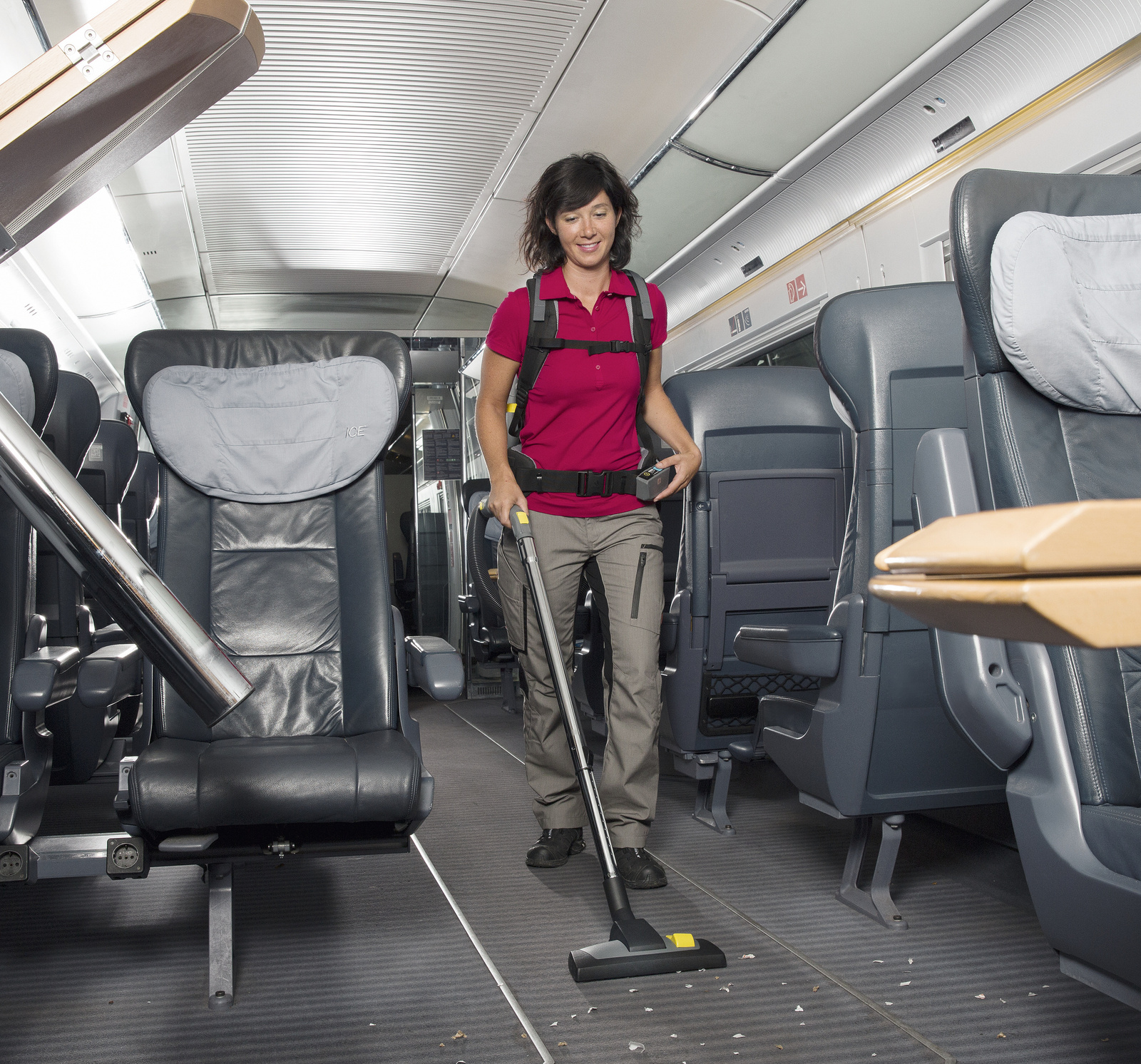
Japanese Cleaning: Matching the Rhythm of Rail Traffic
To allow for daily cleaning of visible dirt while trains are in service, a special method known as Japanese cleaning is sometimes used multiple times a day. For this process, one employee waits at each door of an arriving train, gets in when it stops, cleans their section up to the next door, and then exits the train. This enables coarse dirt to be collected and carpets to be cleaned with battery-powered sweepers or upright vacuum cleaners.
Surface Cleaning: The End of the Line for Germs
The pretreatment or spraying method is recommended for surface cleaning, and for two good reasons: first, it prevents the spread of germs, since the cloths aren't soaked in the same cleaning solution repeatedly. Second, there's no need to carry a bucket in the narrow compartments. For this process, cleaning staff use twice-folded cloths that have been presoaked with the right amount of detergent. Alternatively, a foam dispenser can be used to apply the cleaning solution directly to the prepared cleaning cloth. After the first surface has been cleaned with the first side of the cloth, it's unfolded for each subsequent surface until all sides have been used. The cloth is then discarded, and a new one is used.
Tip – Cleaning Without Drips or Slips:
Battery-powered window and surface vacuum cleaners are perfect for cleaning windows, as they immediately vacuum up dirty water so it doesn't drip onto the floor. This significantly minimizes the risk of slipping.
Orbital Machines and Spray Extraction for Carpets and Upholstery
Intensive cleaning of carpets is usually scheduled for nighttime hours or other breaks in operation. The aisles are cleaned using oscillating orbital machines along with a microfiber pad and surfactant-free detergent. This achieves excellent cleaning results. In between cleanings, upholstery can be vacuumed, or drink stains, food spills, etc., can be easily removed with spray extraction machines. The more often this intermediate cleaning is performed, the less often an extensive, time-consuming, and costly deep cleaning procedure will be required, since stains don't have the chance to set in.
Deep Cleaning: Ensuring the Entire Surface is Clean
Seats are often removed for the cleaning of stubborn stains, as well as for full-surface, fiber-deep cleaning. Dry ice blasting delivers very good results without damaging the material. A model is available on the market that can produce the required amount of dry ice itself—ready for whenever cleaning is required. This machine can also be used effortlessly in demanding conditions with low pressure or limited air supply. Additionally, it's intuitive to operate and requires no special training.
Cleaning Airplanes and Cruise Ships
Time is money—especially in air travel. Teamwork is essential to ensure a plane can be cleaned between two flights in the shortest possible time. Cruise ships pose very different challenges: high demands from travelers and a wide range of cleaning tasks. Nevertheless, with the right technology and expertise, cleaners don't need to feel adrift in a sea of work.
Aircraft Cleaning at Record Speed
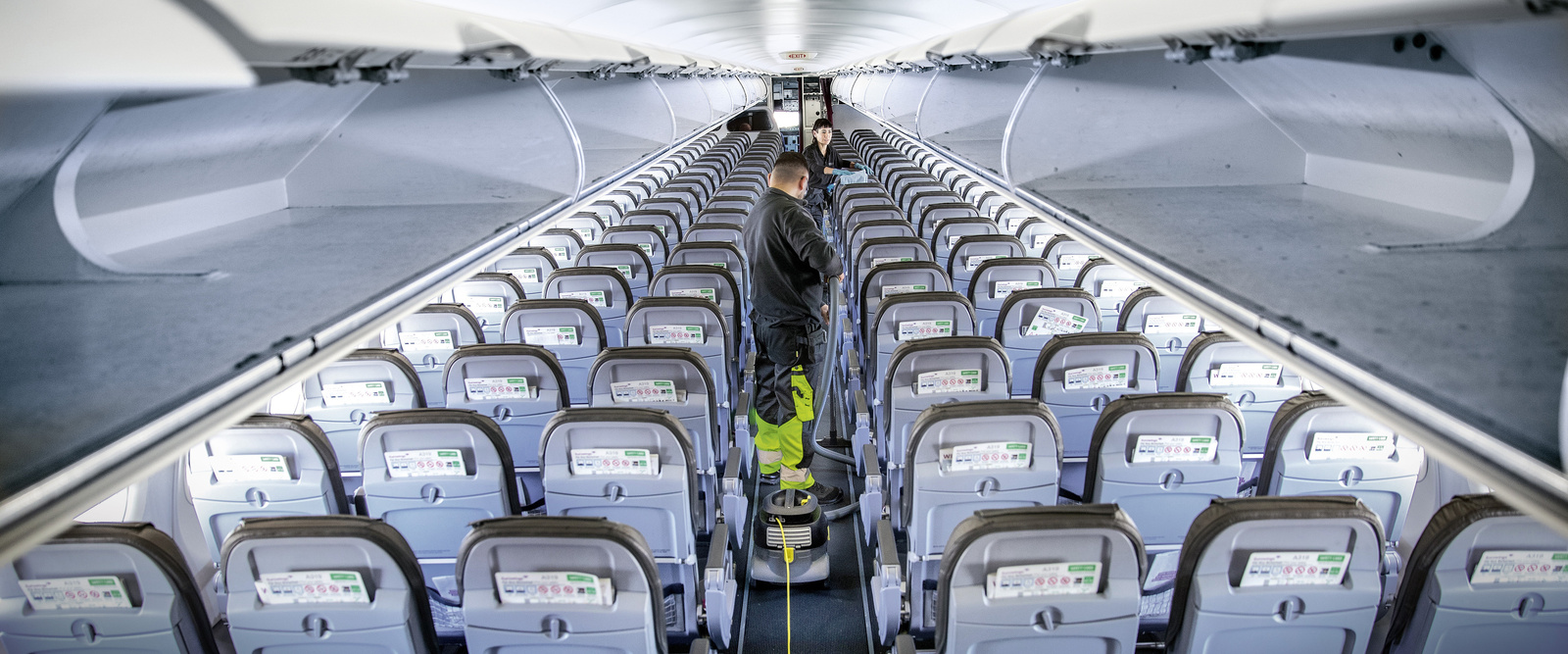
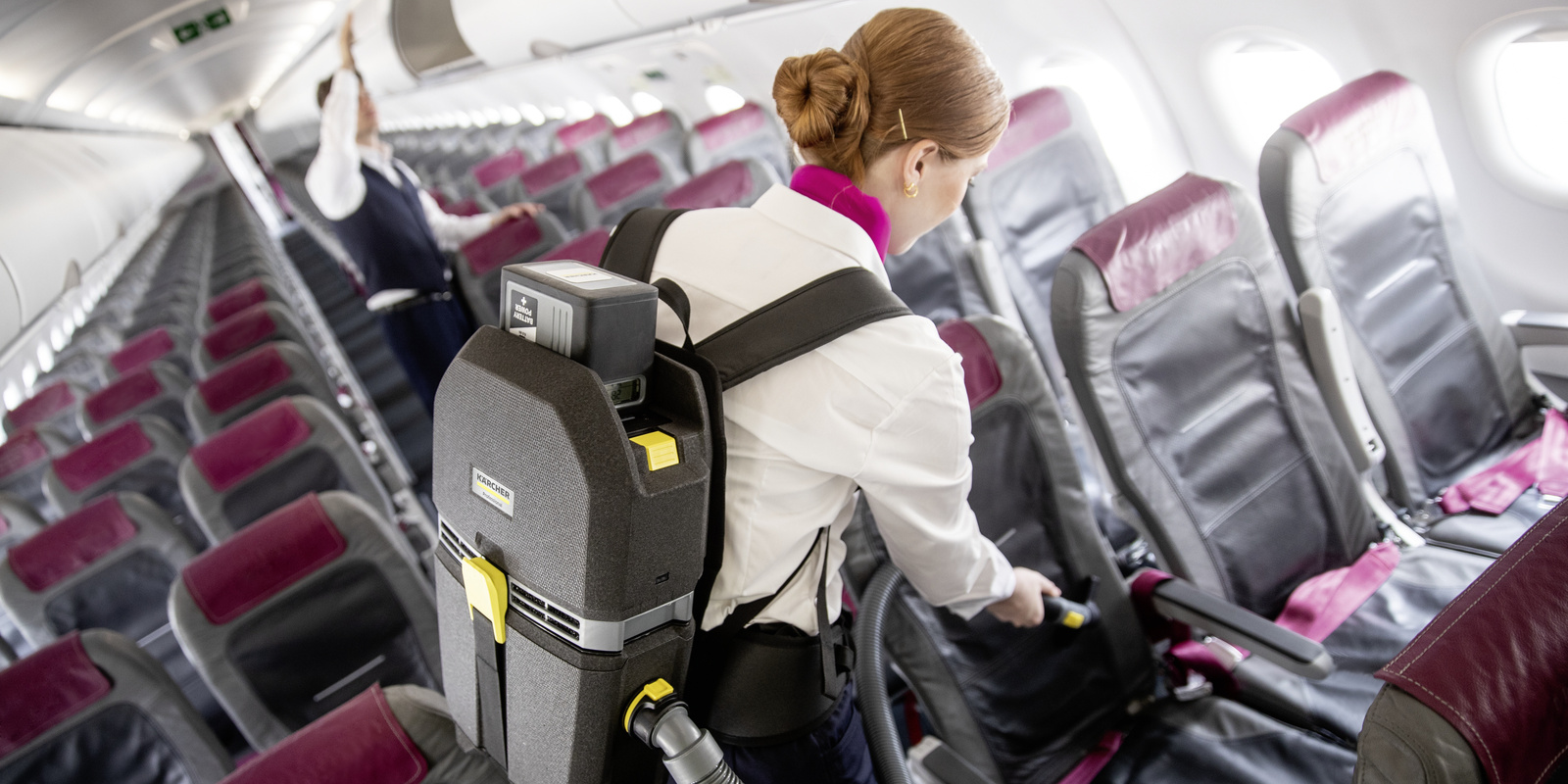
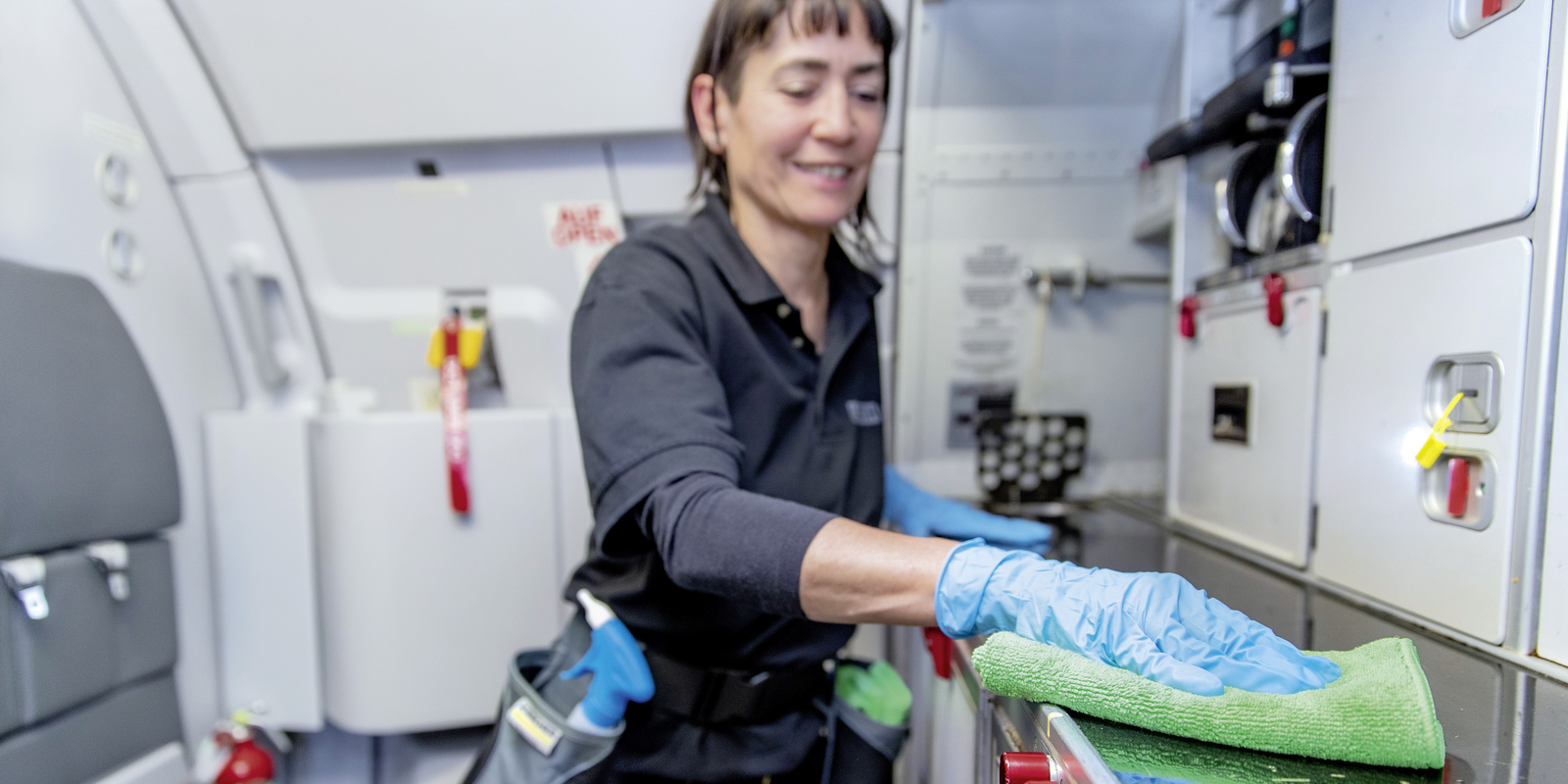
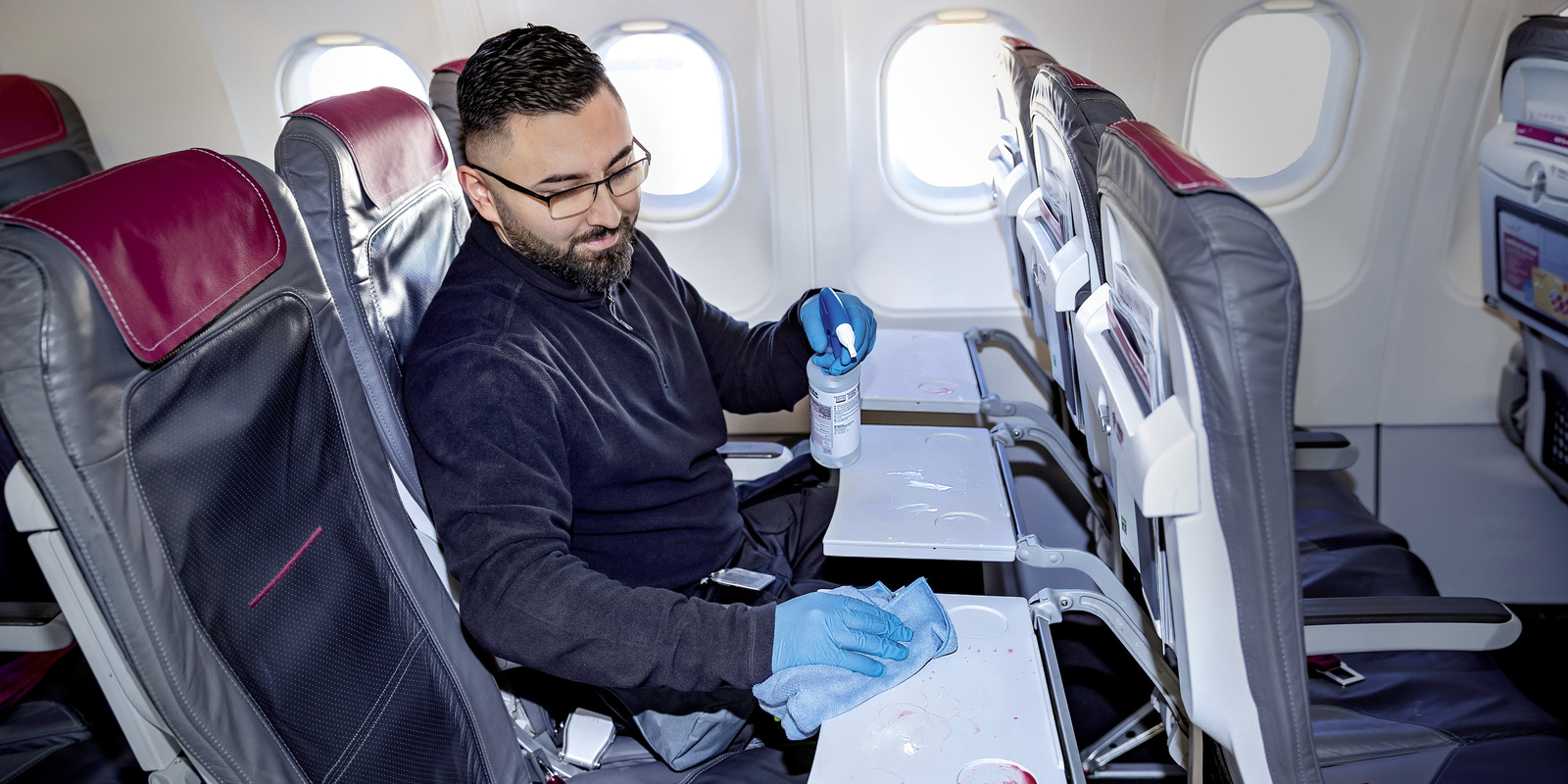
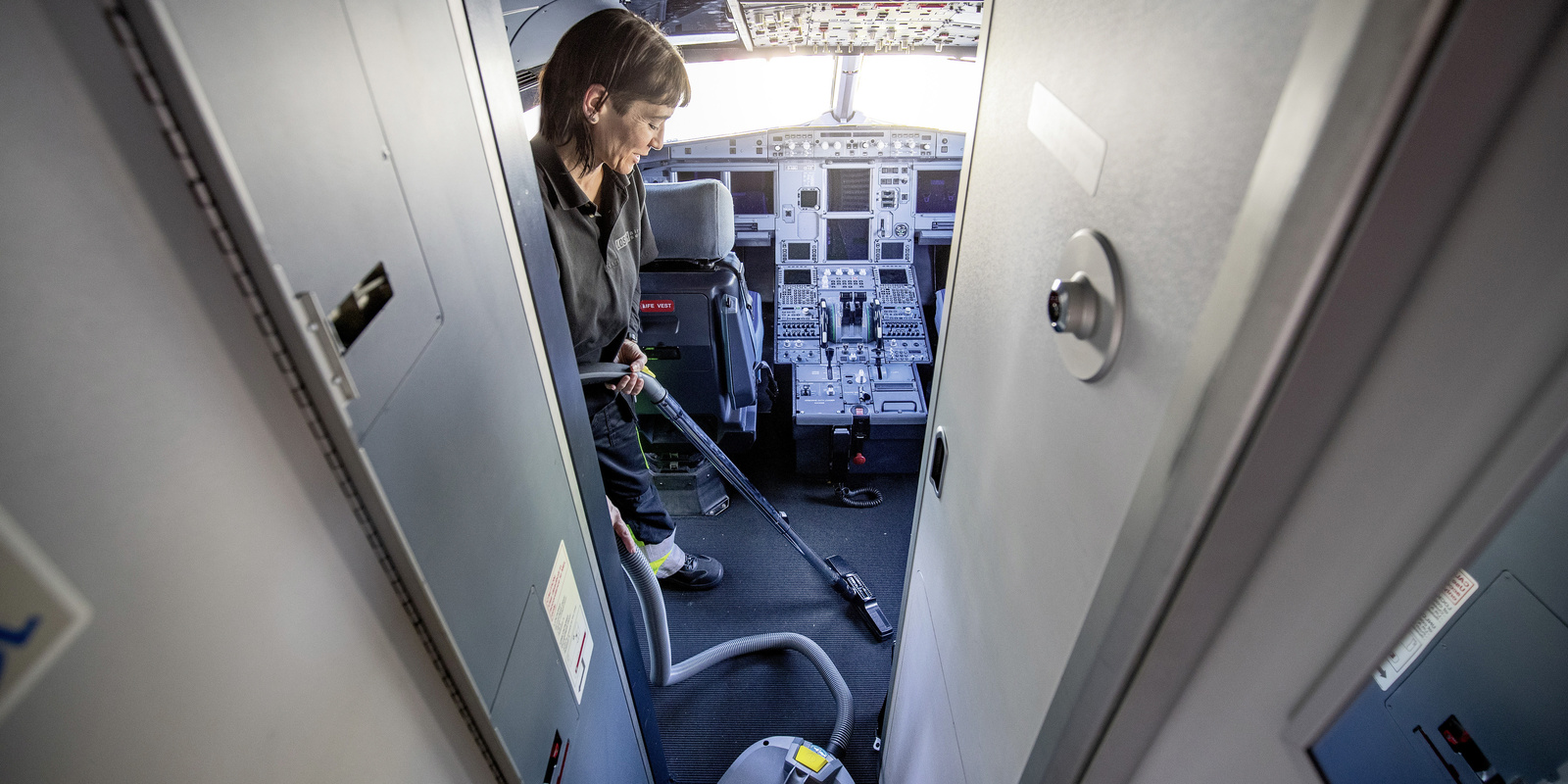
Once an aircraft is ready for cleaning, the cleaning staff spring into action. Everything has to go hand in hand so that the aircraft is ready for boarding again as quickly as possible. On an Airbus 320, for example, six employees will board via the rear entrance. Four of them gather the trash in the passenger cabin so it's ready for collection, and they place the seatbelts on the seats. In the meantime, another worker cleans the kitchen area, and another cleans the rear restrooms. Once these tasks are done, one worker collects the trash, two cleaners wipe down the tables, one cleaner goes around with a battery-powered vacuum cleaner, and another cleans the restrooms at the front.
Everything happens quickly because all cleaning tasks must be completed within 15 minutes—sometimes even at the same time as work being undertaken by the crew or the catering team. That's not all, either. Additional tasks, such as replenishing materials in the restrooms or placing airline magazines in the seat pockets, must also be carried out during this same short timeframe.
Tip – Lightweight Battery-Powered Backpack Vacuums:
Particularly lightweight battery-powered backpack vacuums are ideal for working in the cramped interior of an aircraft.
Fully On Course: Cleaning Cruise Ships
To meet the high expectations of passengers on these floating hotels, it's important to use the right cleaning solution in each area. When it comes to floor cleaning alone, there are waves upon waves of tasks and materials to deal with: inside, huge areas of carpeting must be kept clean, while outside, there are weather-resistant floor surfaces made of molded plastic, often with a wood-grain finish. You'll also find tiled and wood surfaces in the wellness areas, and various stone floors in restaurants and catering spaces.
To keep the extensive carpeted areas clean, battery-powered upright vacuum cleaners or carpet cleaning machines are much more efficient than many small vacuum cleaners. These machines reduce the workload for staff and produce excellent results in less time.
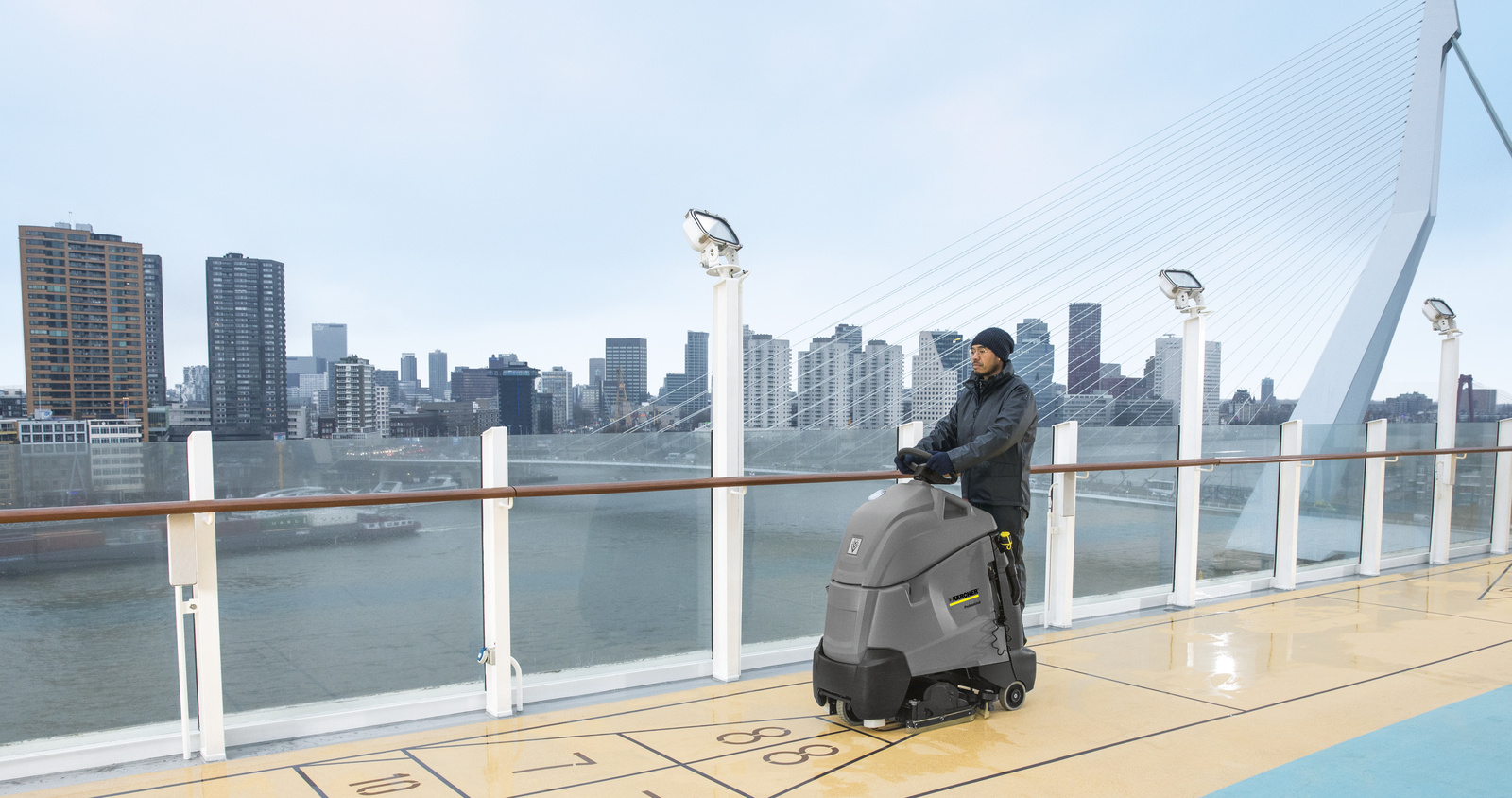
For restaurants and the deck of the cruise ship itself, compact stand-on floor scrubbers with disc or roller scrubbing heads are an excellent choice. Roller technology is ideal for textured surfaces like porcelain tiles, whereas the rotating disc brush is best for cleaning and polishing smooth floor coverings.
Tip 1 – Effective Carpet Cleaning:
For intensive cleaning of carpets, detergent can first be sprayed on and then worked into the carpet with roller brushes. In a second step, the carpet is rinsed, and the cleaning water is vacuumed back up.
Tip 2 – Short Drying Time:
Alternatively, encapsulation technology can be used. In this process, the detergent is sprayed over the floor covering and worked in with brushes. Due to the small amount of water used, the detergent crystallizes and encapsulates the dirt, which can then simply be picked up in the next vacuum pass during maintenance cleaning. As the drying time is very short, the surfaces can soon be walked on again as normal.
Tip 3 – Useful Equipment:
Particularly useful pieces of equipment include steam cleaners for saunas and spray extraction machines for the spot cleaning of carpets and upholstery.
Cleaning Hotels
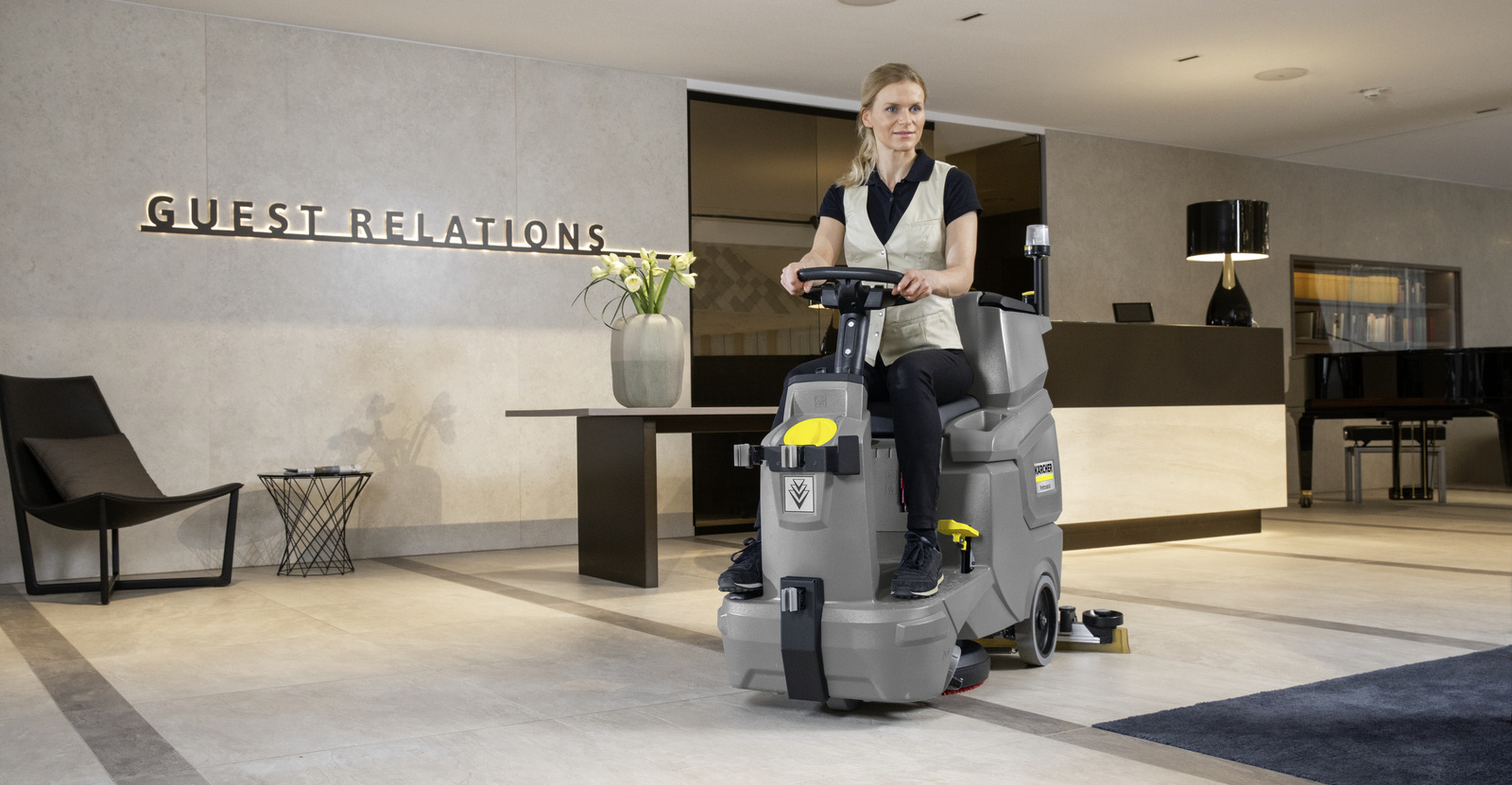
Cleanliness is fundamental to ensuring hotel guests are satisfied and happy to return. General awareness surrounding hygiene in hotels has increased in recent years, and the expected standards of cleanliness and hygiene in hotels have risen significantly. Parallel to this, the hotel industry is struggling with a shortage of skilled labor combined with time and cost pressures. Cleaning a hotel is a mammoth task: from the outside areas to the front desk and all the way to the floor in the spa area, every inch has to be cleaned. Carefully considered cleaning methods and suitable technology are required to make work as efficient as possible and to reduce the strain on staff. Which concepts further reduce the cleaning workload, and what role can cleaning robots play?
Cleaning Restaurants
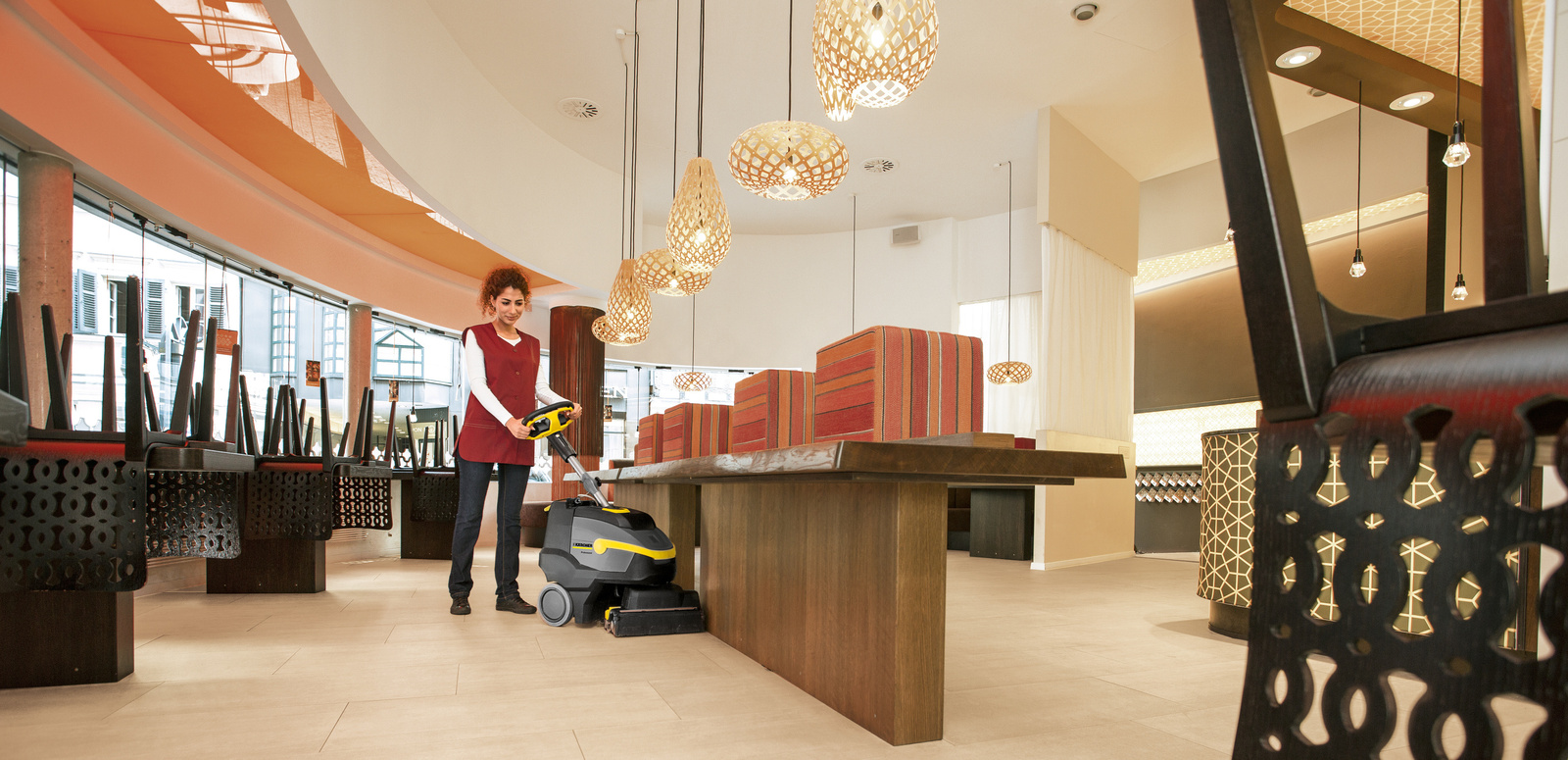
Everyday working life in the hospitality industry is often hectic, with high cost pressures and a shortage of staff. Yet guests' expectations are still high. To keep customers satisfied, it's not just good food that matters, but also the ambiance. Cleanliness both front of house and back of house is essential to create the right atmosphere. Having the right technology and methods in place can help to complete the varied cleaning tasks efficiently and reduce the pressure on staff.

Cleaning Floor Coverings
Whether carpeting in a hotel corridor, concrete screed in a production hall, or wood flooring in a school building, there are countless floor coverings suitable for different loads and designed for safety with properties like anti-slip surfaces or studs. Cleaning floor coverings is important in some areas to ensure hygiene, while in other areas the focus is on appearance. In any case, well-maintained floor coverings have a longer service life and therefore need to be replaced less frequently. Through regular maintenance cleaning, even the need for labor-intensive deep cleans can be delayed.
A Particular Challenge: Cleaning Restrooms on Public Transport
Whether on a train, coach, or airplane, restroom facilities on public transportation are extremely cramped and often very dirty. Using the right method helps to work efficiently under these limited space conditions and avoids the spread of germs. Although the cleaning procedures are largely similar across the different means of transport, there are a few special considerations to be aware of in each case.
Keeping Restrooms Clean in Coaches, Airplanes, and Trains
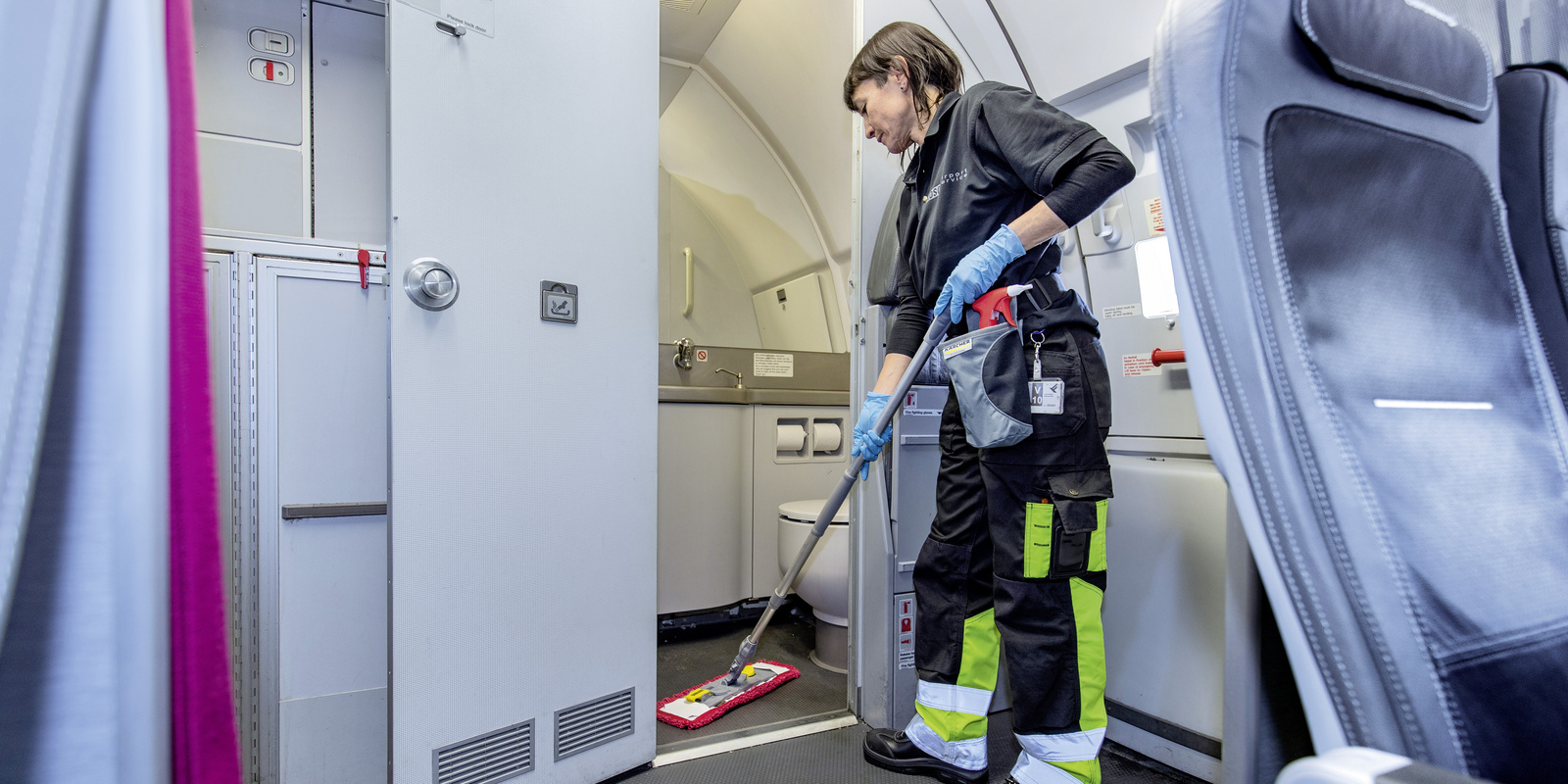
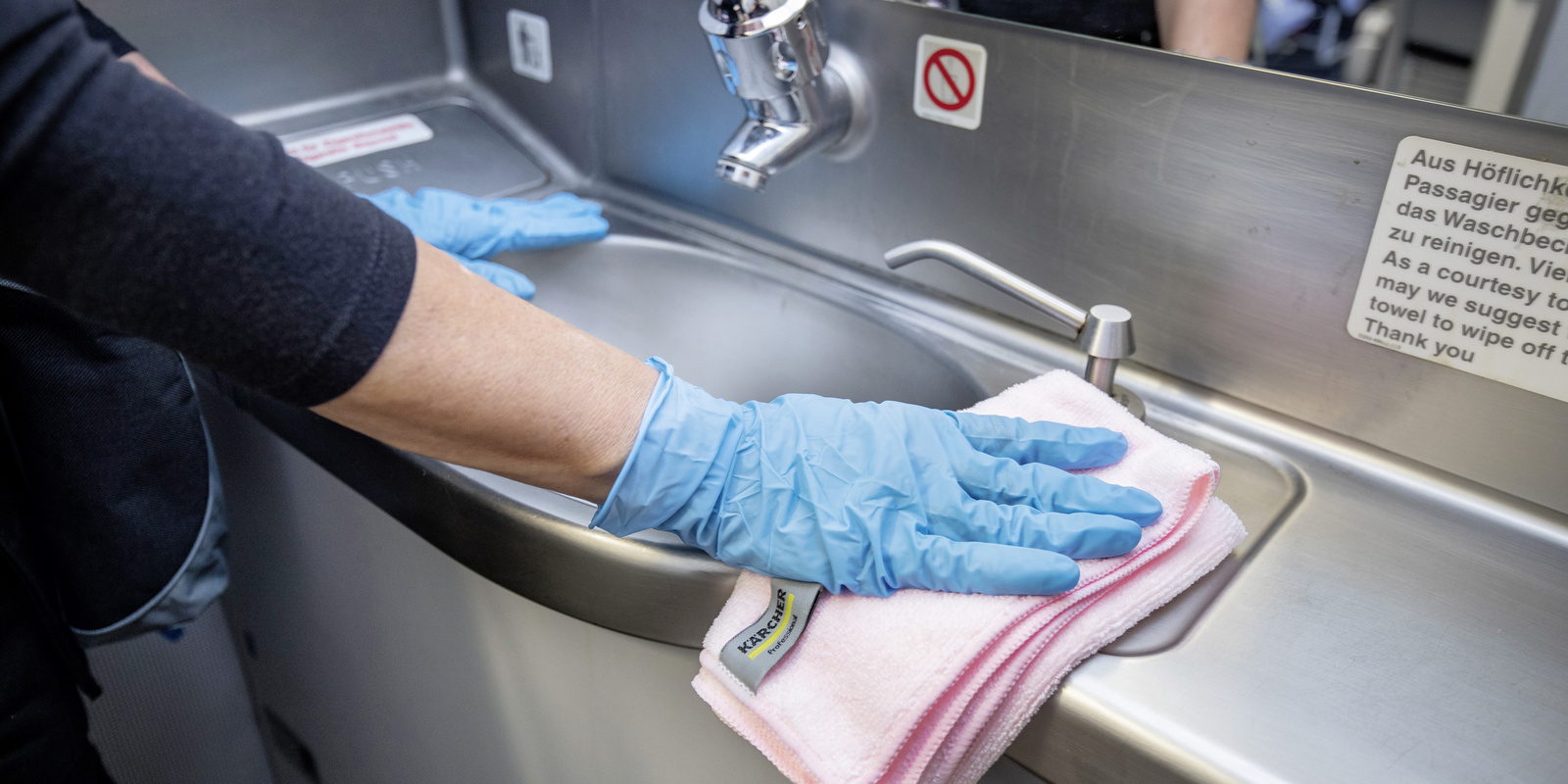
The procedure for cleaning restroom facilities across different modes of transportation is largely the same. First, any coarse dirt needs to be swept up and disposed of. A good result can be achieved quickly and efficiently with a powerful, acidic sanitary cleaner that works fast. Pretreated cleaning cloths and mop covers are not only practical because they eliminate the need for a bucket, but they're also much more hygienic, as no germs are spread by carrying around dirty water.
The color-coding method can also be applied to cleaning utensils. In this method, different-colored cleaning textiles are used for different areas. The signal color red is reserved for toilets, urinals, and splash areas. Yellow cleaning textiles are used for all other areas of the facilities.
To prevent streaks from forming when cleaning mirrors, we recommend using suitable microfiber cloths along with a ready-to-use glass cleaner.
In airplanes, trains, and coaches alike, consumables such as toilet paper, soap, and disinfectant will always need to be replenished once cleaning is complete.
Although there are many similarities in terms of the methodology and equipment used across different modes of transport, the exact processes vary depending on the type of vehicle. In coaches, the driver is often responsible for the cleanliness of the restroom facilities during the journey. For airplanes, a suitably equipped cleaning cart is usually on standby in the passenger boarding bridge so that the work can be completed within the allocated timeframe between two flights.
Tip 1 – Protective Equipment:
When handling microfiber cleaning textiles or detergents and disinfectants, it is essential to wear gloves and, if necessary, additional personal protective equipment.
Tip 2 – Efficient Deep Cleaning:
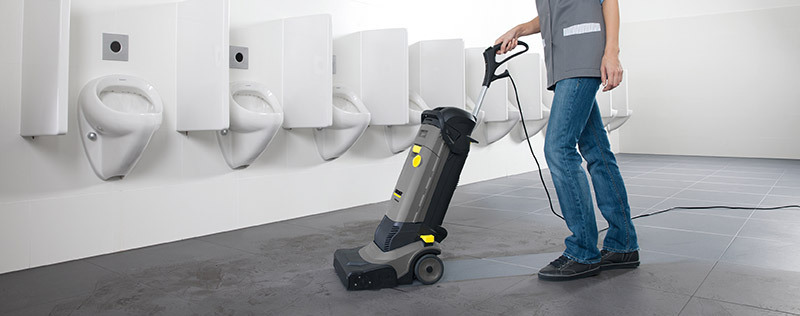
A compact walk-behind floor scrubber is well suited for cleaning restroom floors as quickly as possible in limited spaces during deep cleaning.
Cleaning Restroom and Changing Rooms
There are many reasons why careful cleaning is required in restroom facilities and washrooms: depending on the setting, toilets, showers, and changing rooms in office buildings, production facilities, hotels, restaurants, gyms, sports arenas, or shopping centers are used by many people. This inevitably leads to people's skin coming into contact with various surfaces that have been touched by practically all users of the facilities—including door handles, faucets, or toilet flush buttons. Consequently, microorganisms can pass from one person to the next. This must be prevented by means of defined cleaning sequences.
Cleaning the Infrastructure: Cleaning Airports
Cleaning the means of transport itself is by no means the end of the story—airports with parking lots and outdoor areas, check-in counters, waiting areas, and more also need to be well-maintained in order to offer visitors a pleasant experience on their travels. Floor cleaning alone is a mammoth task that can still be accomplished amidst foot traffic with the aid of suitable equipment and robotic solutions.
Clean Landing: Outside Areas and Parking Lots
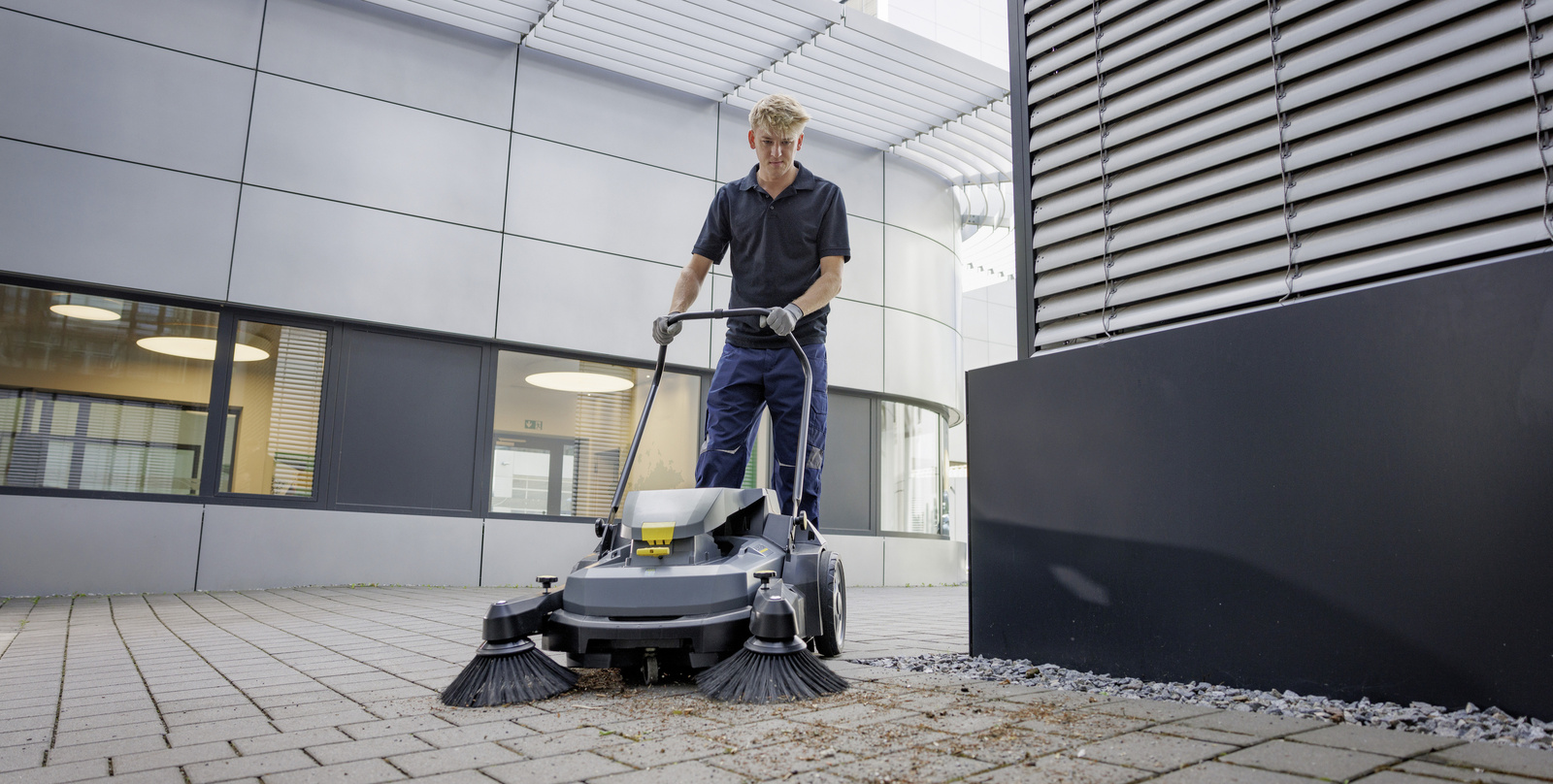
To give passengers and visitors a good impression as soon as they arrive at the airport and reduce the amount of dirt that gets into the building, a well-maintained outside area is key. Depending on the weather conditions, different technical equipment is available to make the work more efficient. When the weather is warm and dry, parking lots, access roads, ramps, and sidewalks can be cleaned using commercial floor sweepers. Walk-behind floor sweepers or ride-on models are ideal for picking up loose dirt from paths, multi-story parking garages, parking lots, or entrances.
Tip 1 – Keep Roads Clean and Free of Dust:
Vacuum sweepers have one key advantage: they suck up any particles that are whirled into the air right away, preventing excess dust from settling on parked cars.
Tip 2 – Practical Solution:
Sweepers with an easy-to-open coarse dirt flap are particularly practical for removing trash and coarse dirt from outdoor surfaces.
Tip 3 – Ergonomic Handheld Machines:
Handheld machines with carrying straps reduce the physical strain involved in work.*
*This is for informational purposes only. For medical advice or diagnosis, consult a professional.
Cleaning Outside Spaces
Cleaning outdoor spaces is an important pillar of building cleaning services. Roads, paths, and parking lots need to be kept tidy, glass surfaces need to be cleaned, and smaller details—from cigarette receptacles to handrails on external stairs—must not be overlooked. Plus, the entrance area and dirt trap zone must be cleaned regularly. It's well worth the effort: a positive first impression is created, the property value is preserved, and the amount of cleaning work required indoors is reduced. A good cleaning concept and the right equipment help you to achieve your goal efficiently.
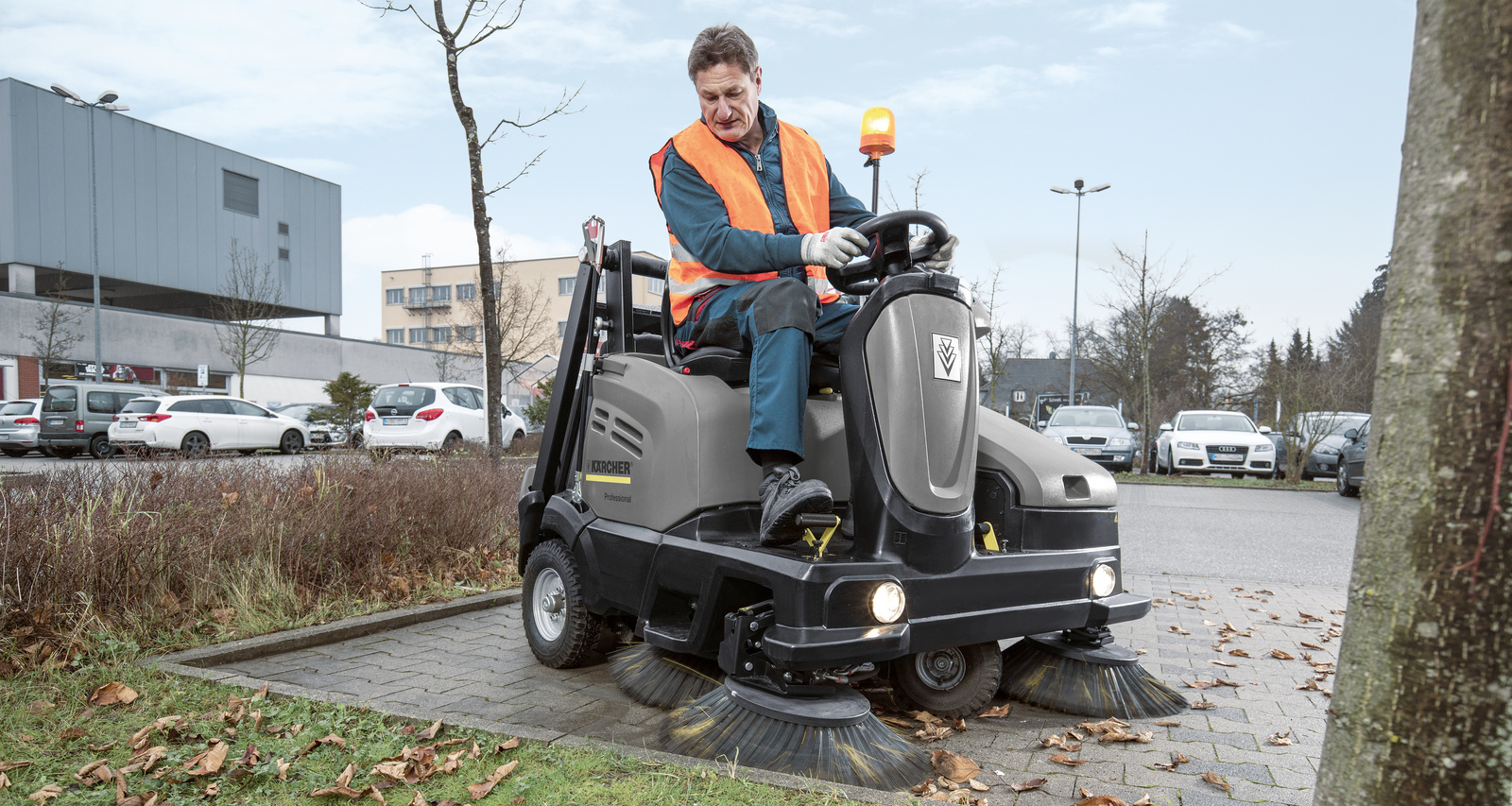
Cleaning Parking Lots and Outside Areas
Whether dining in a restaurant, shopping in a supermarket, furniture store, or shopping mall, or visiting a doctor's office or a museum—often the first thing guests do upon arrival is to park their car and make a short walk to the building. There are a number of cleaning methods that can be used to make a positive impression right from the start, to prevent the risk of accidents, and to stop dirt from being brought in from outside.
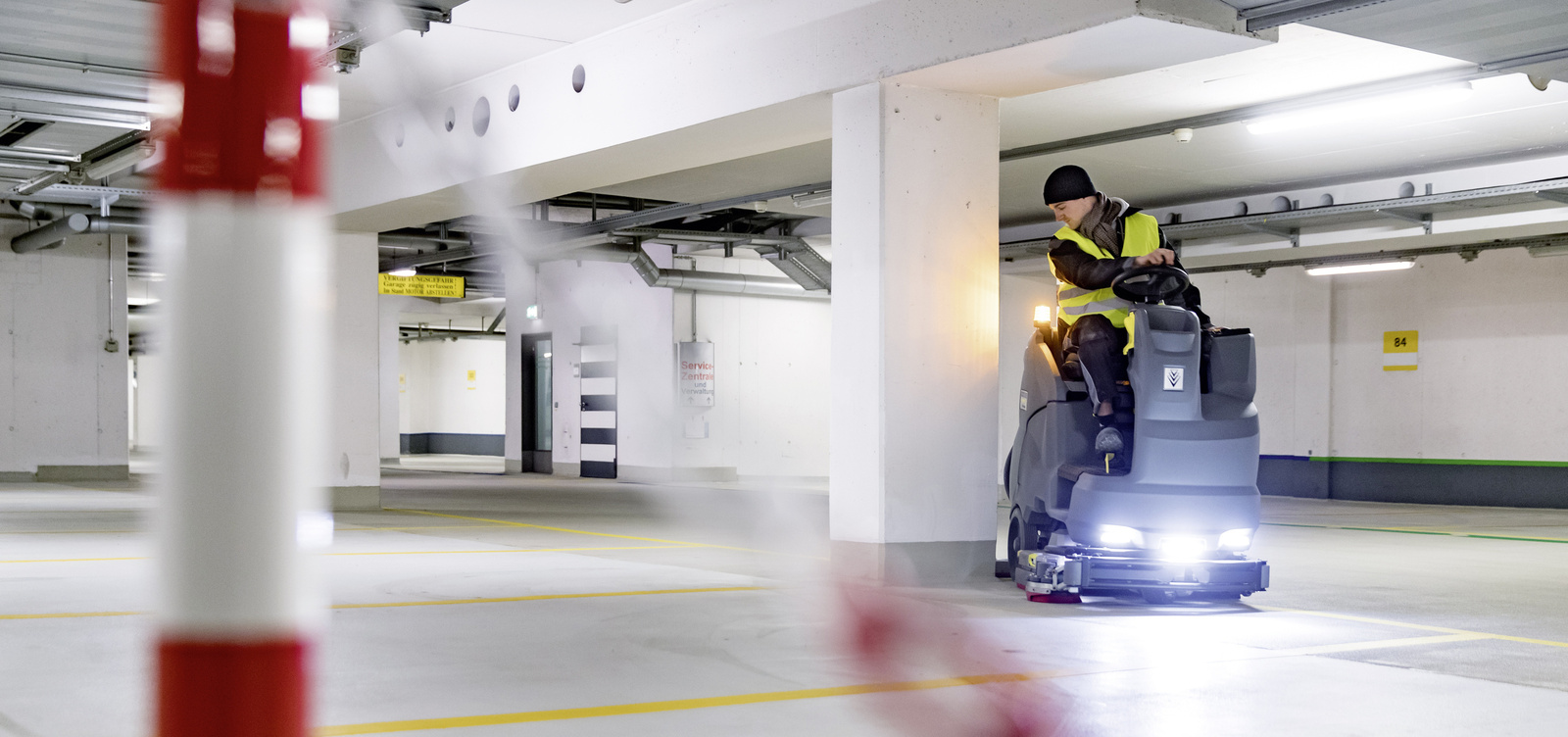
Cleaning Parking Garages
Whether hotel parking garages, underground parking lots at airports and shopping centers, or public parking facilities, guests, passengers, and customers get a first impression the moment they park their vehicle. Cleanliness plays an important role here, because a well-maintained space is not only visually appealing, but also gives people a sense of reassurance. A structured approach to cleaning is therefore very important, with efficient cleaning technology taking the strain off staff and ensuring good results.
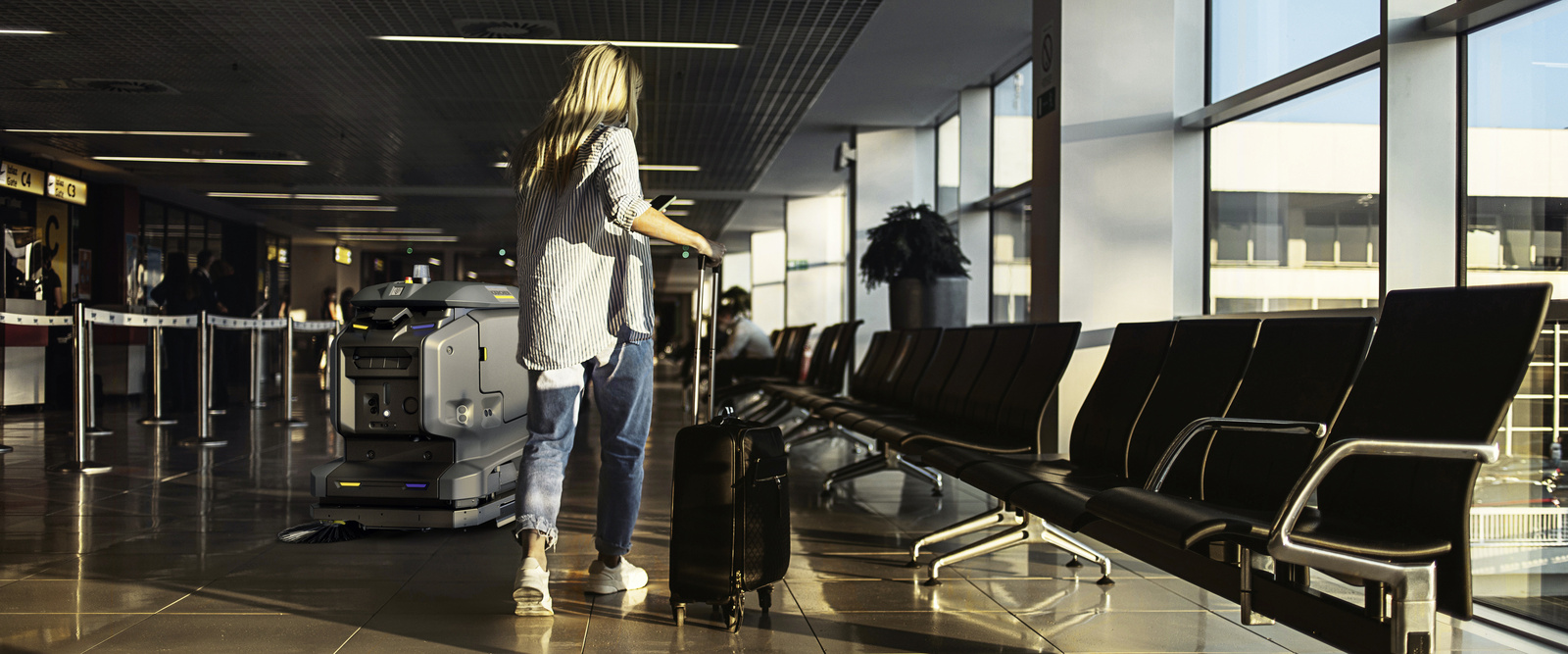
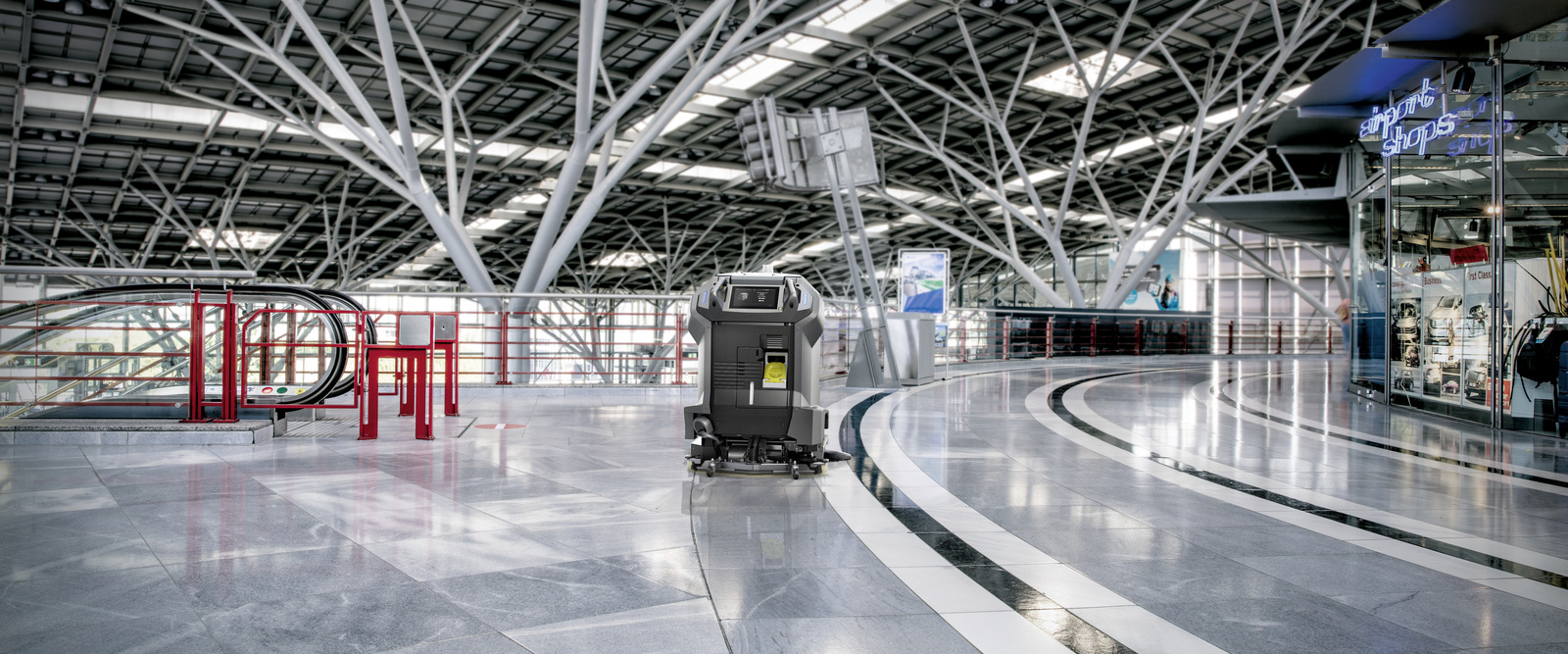
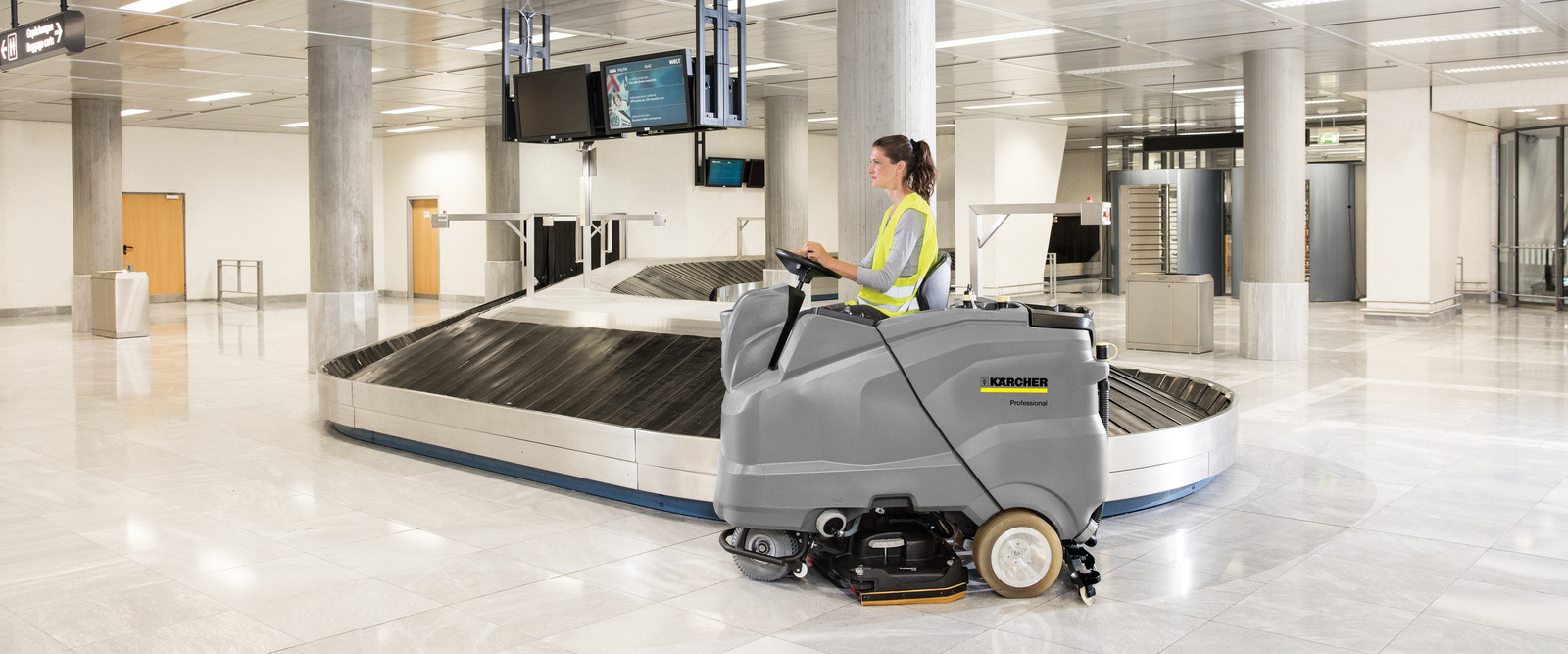
Endless Expanses: Floor Areas and Check-in Halls
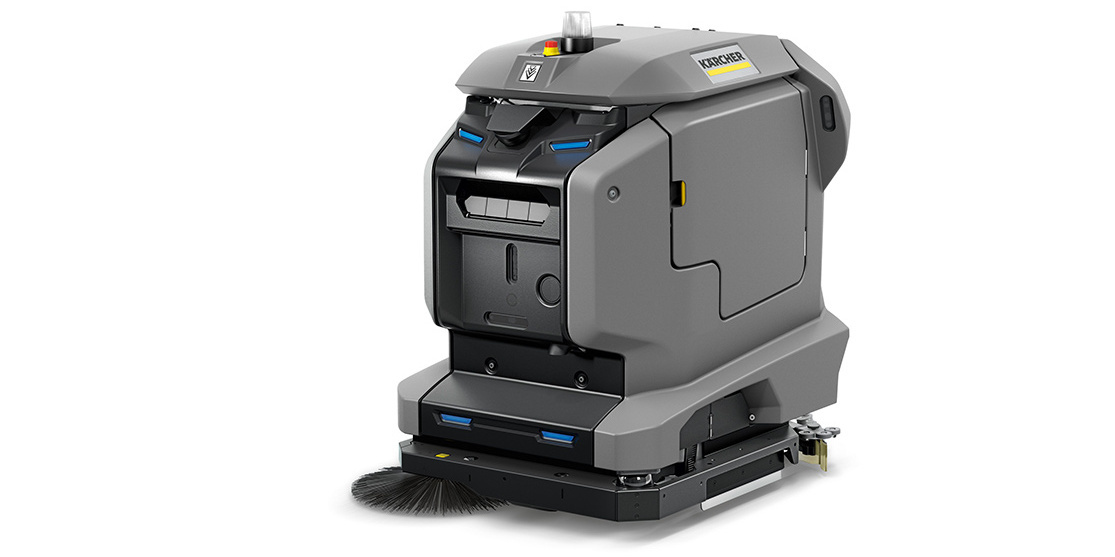
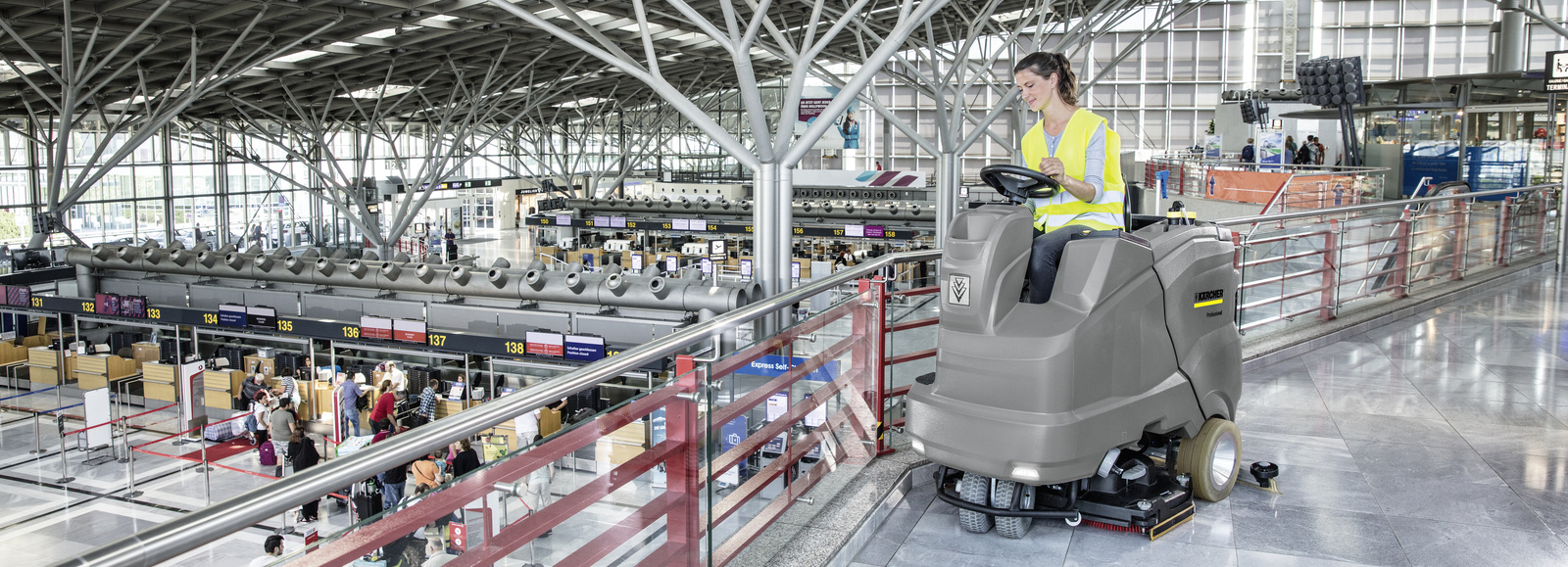
Cleaning the huge floor areas of airports is a major challenge, often saved for nighttime hours due to the significant reduction in foot traffic. Floor scrubbers are used for the hard floors in check-in lobbies and waiting areas. For carpets, upright vacuum cleaners or robotic solutions are available that can also be used during the day. In addition, daytime cleaning staff conduct regular inspections and can remove any significant dirt as needed.
Check-in counter areas are cleaned at night or during closing times. Surface cleaning is performed using the pretreatment or spraying method. If necessary, high-touch surfaces should then be disinfected to prevent the spread of germs.
For Peace and Quiet: Waiting Areas and Prayer Rooms
After hours, loose dirt under the chairs in waiting areas and prayer rooms can be easily removed with a dust mop. Depending on the type of dirt collected (fine or coarse), it can either be disposed of in trash bags or picked up with a floor scrubber. Depending on the infrastructure, a battery-powered or corded vacuum cleaner can also be used.
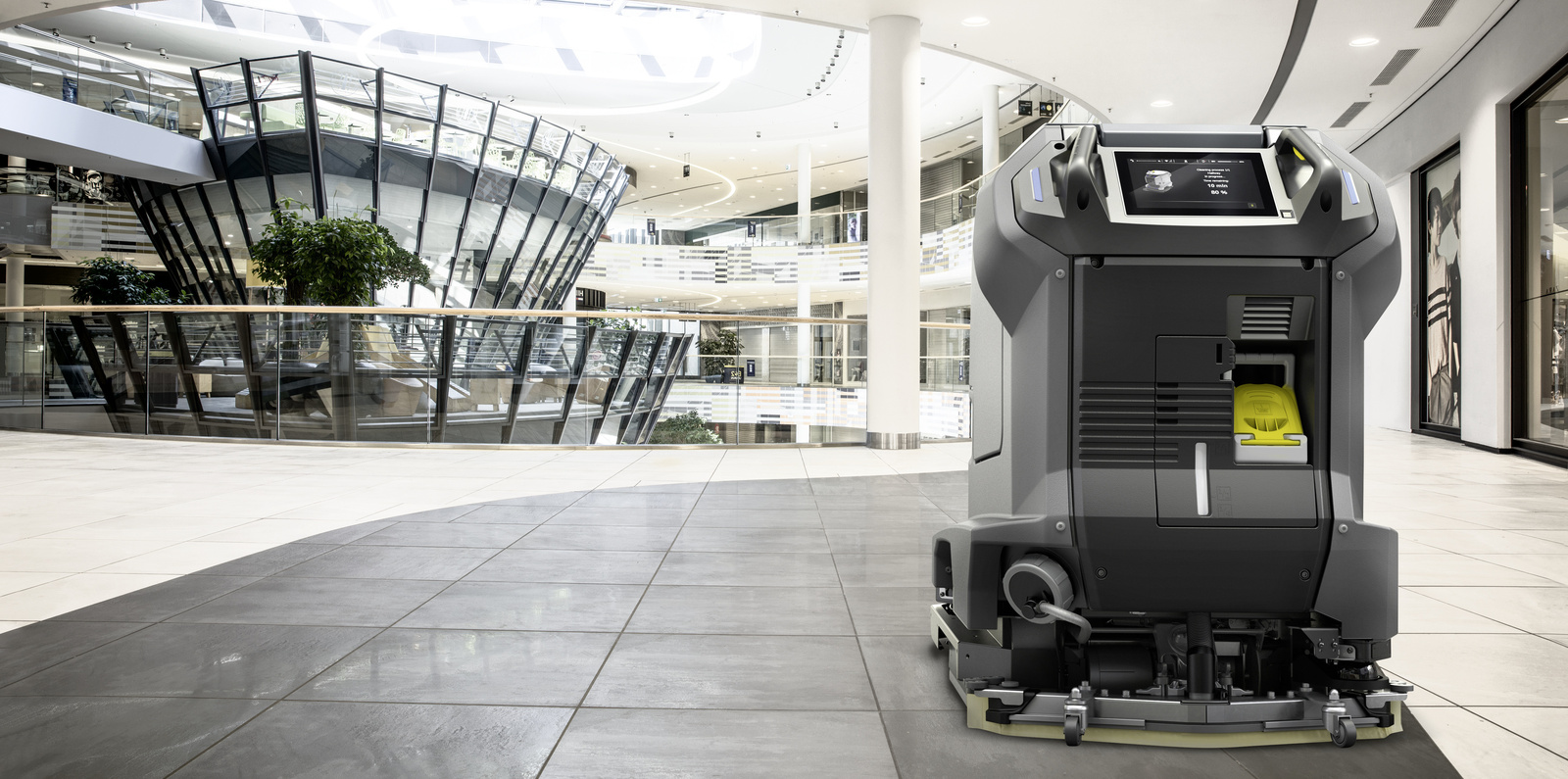
Robotics
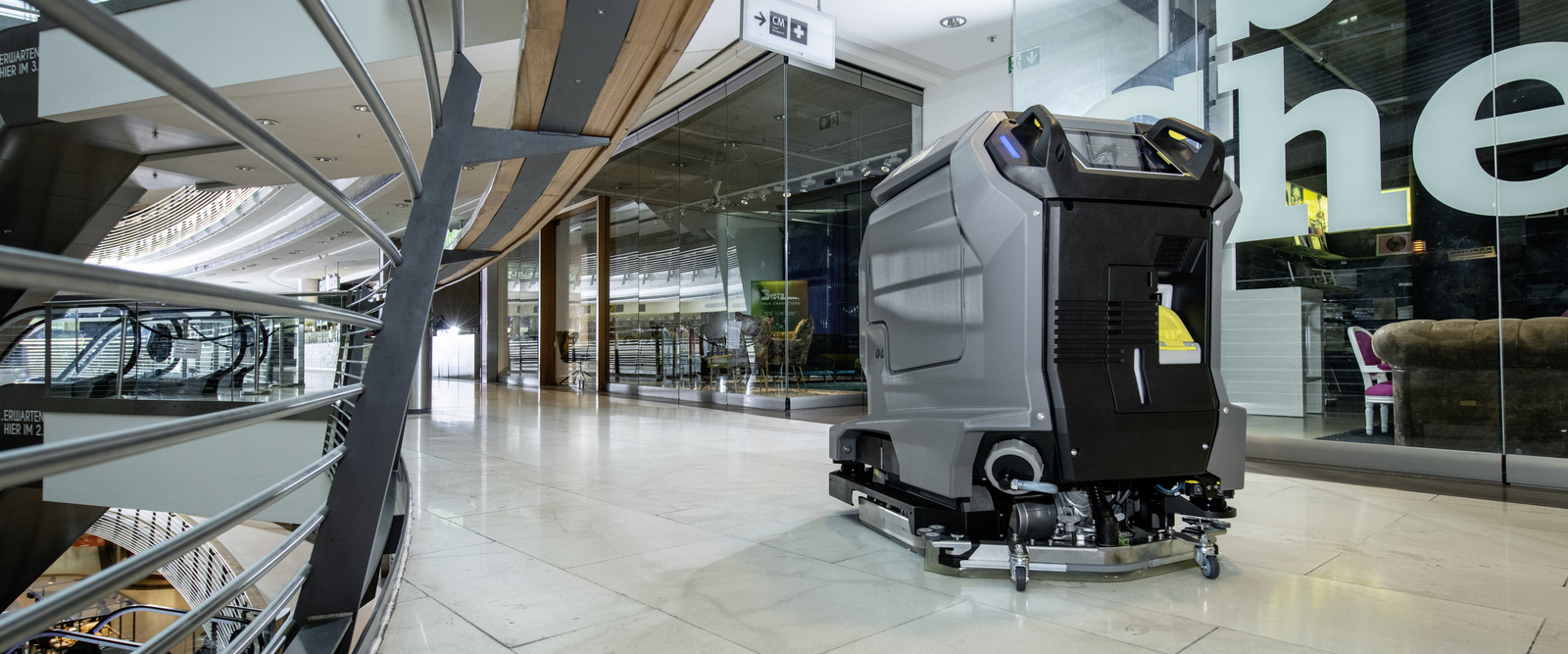
While human cleaners are indispensable for many tasks in building cleaning, the growing shortage of skilled labor in many countries makes it crucial to reduce time-consuming activities and improve efficiency. The use of robotics in building cleaning services isn't new, but some models now operate so autonomously that they significantly reduce the workload for certain applications. Their ease of operation and high safety standards for working among the general public also mean they can be implemented in a wide range of scenarios, from supermarkets and hospitals to airports.
Tip – Optimized Inspection Runs:
When doing inspection runs with a ride-on floor scrubber, it's a good idea to bring along a dry mop and trash bag. The floor scrubber should offer suitable storage space for these items. This ensures your tools are always within easy reach when you need them: coarse dirt can be effortlessly picked up with the mop and then immediately disposed of.
Cleaning the Infrastructure: Cleaning Train Stations
Passengers, weather, and train traffic all lead to the build-up of stubborn dirt, dust, and trash at train stations. To make cleaning as efficient as possible in all areas—including platforms, escalators, waiting lobbies, and shopping centers—solutions that save time and energy should be prioritized.
Cleanliness on Arrival: Platforms and Escalators
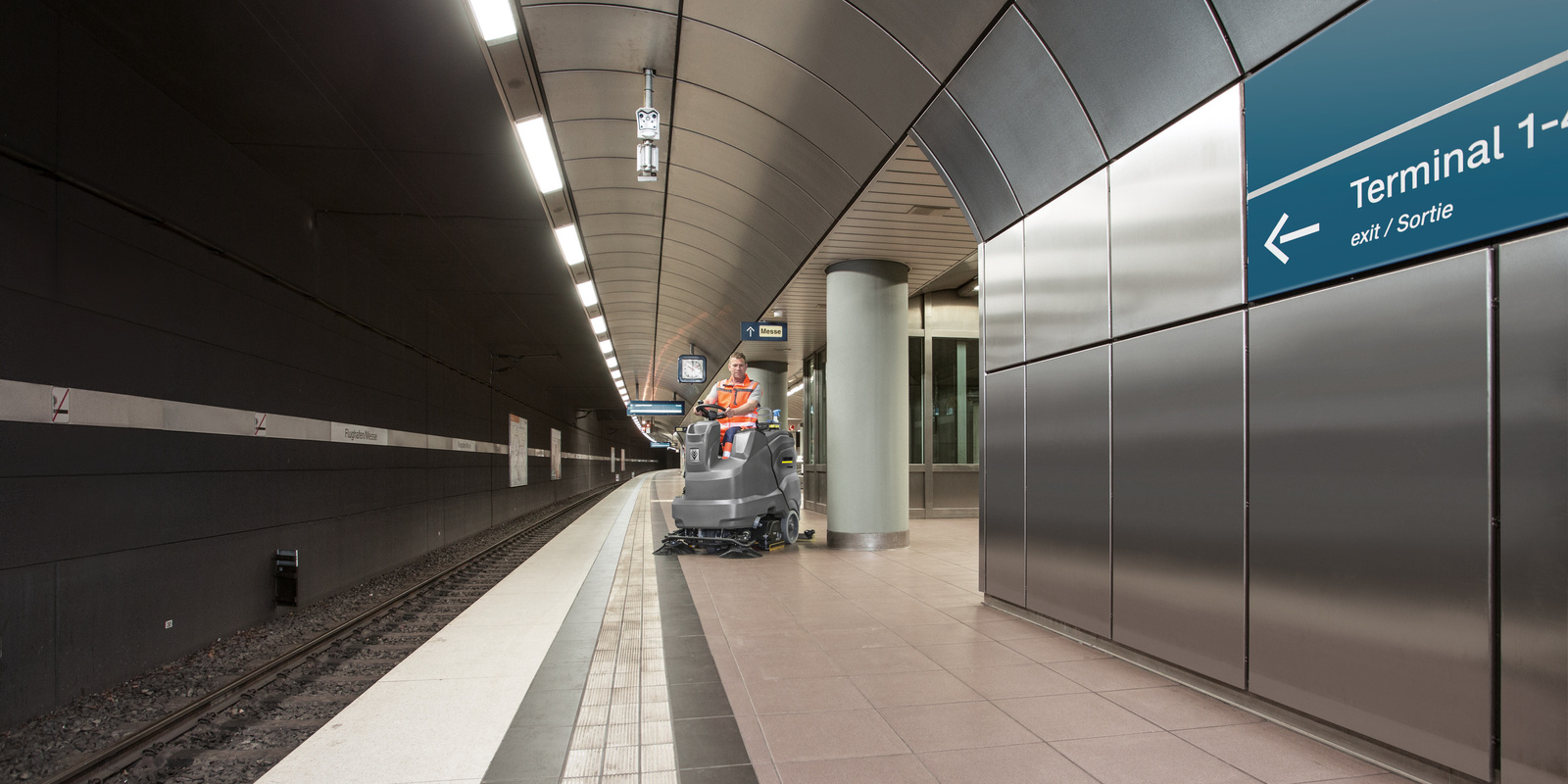
A train station is the entry point to a city and plays a decisive role in making visitors feel welcome from the very first moment they arrive. Coarse dirt on platforms can be gathered with a pre-sweeping unit or dust mop before it's collected. Depending on the size of the area, different sweeping solutions are available. A manual sweeper is enough for small spaces, while a ride-on sweeper is better for larger areas. Floor scrubbers are a time- and energy-saving solution for removing dirt from the large floor areas of heavily used platforms—provided the platforms are accessible via an elevator. In addition, daily cleaning staff conduct inspections in the stations, for example, to empty the trash cans. They often travel from station to station on the train with a cart.
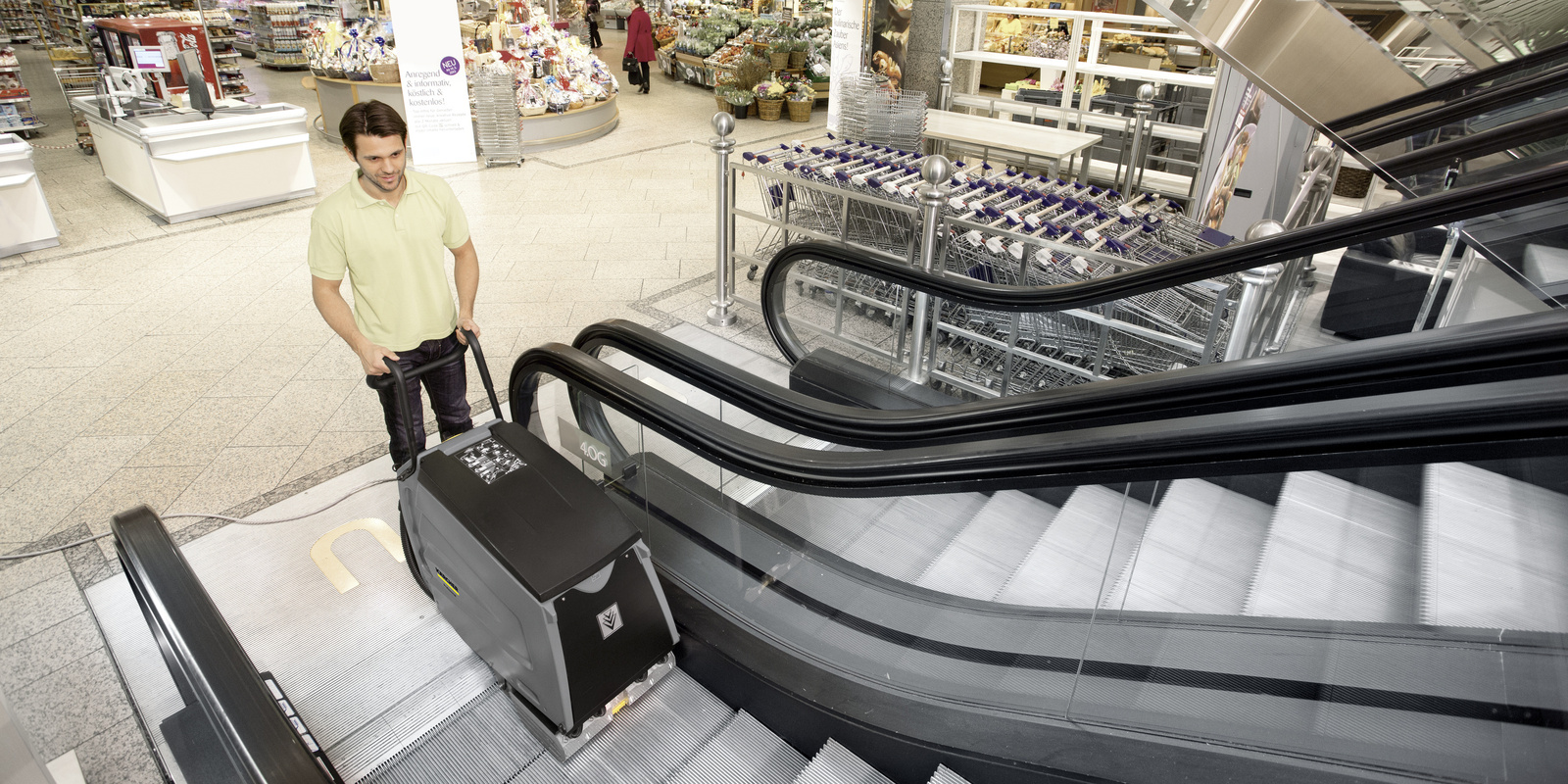
Escalator cleaners are a practical solution for keeping escalators and moving walkways looking like new and minimizing manual work. The machines work on the grooves with brushes, while the inlet combs ensure the grooves are sealed as well as possible. The vacuum created by the turbine ensures that the water doesn't run off, but instead can be completely suctioned out.

Tip – Dry Ice Blasting:
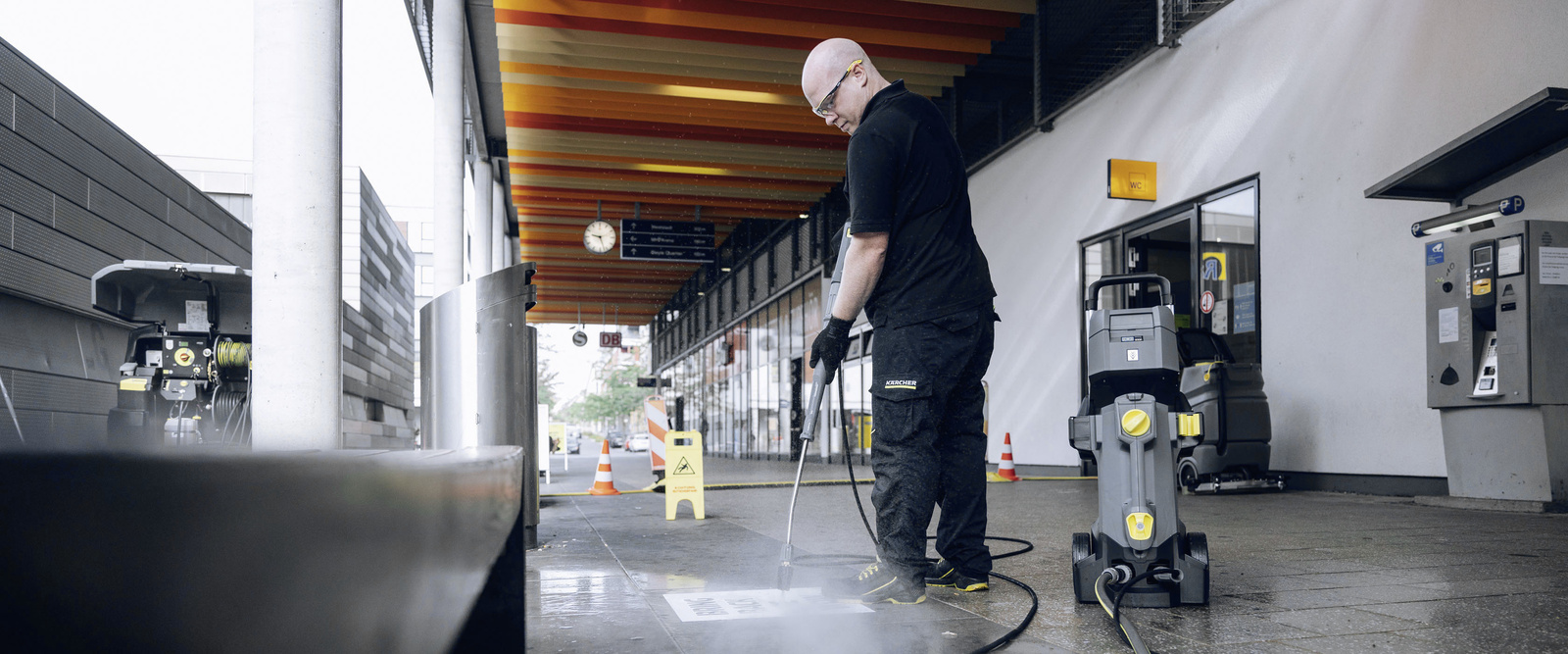
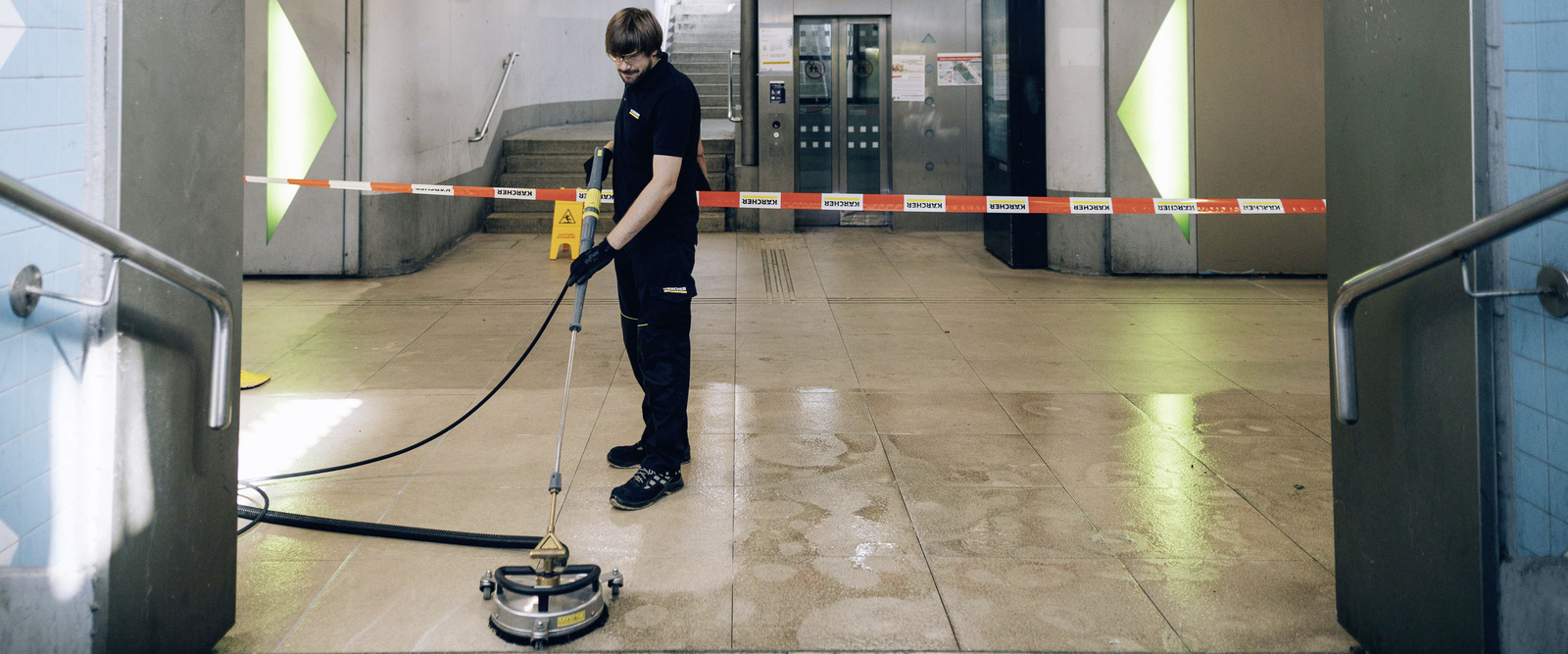
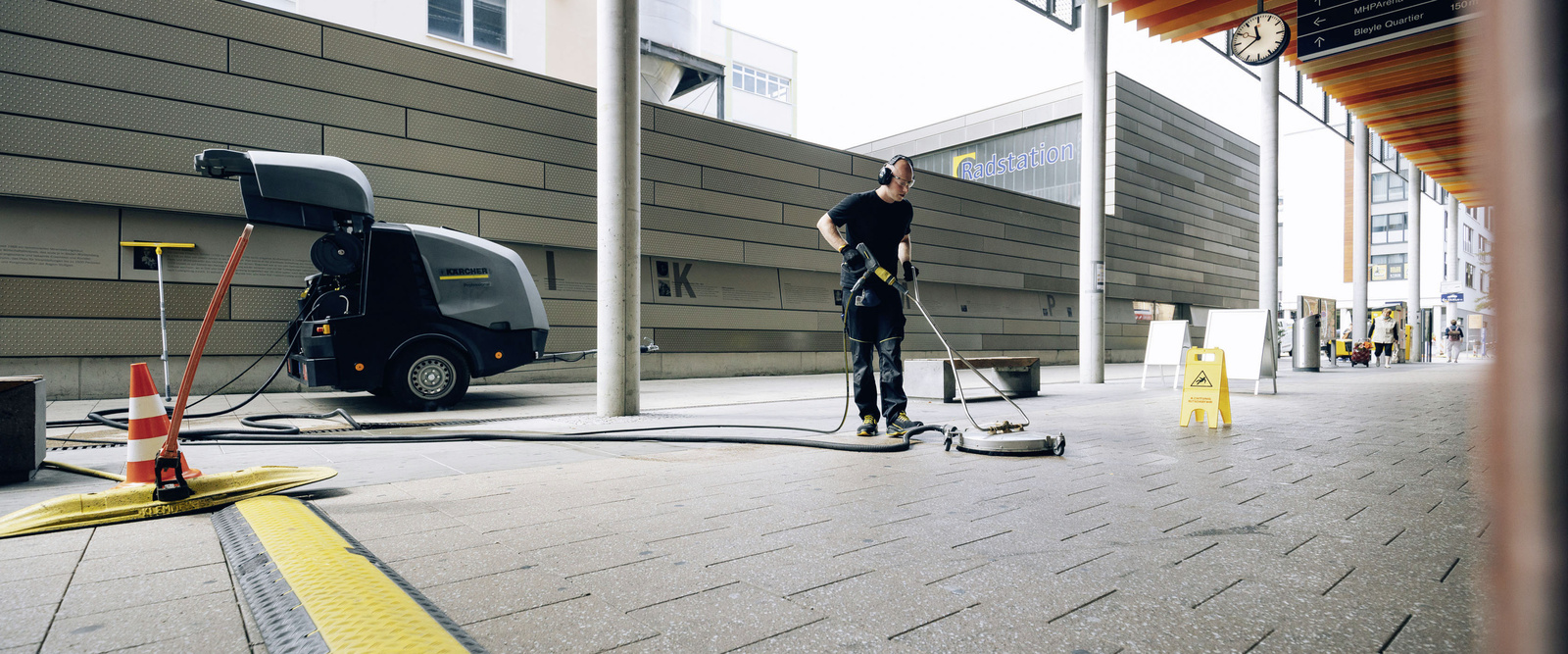
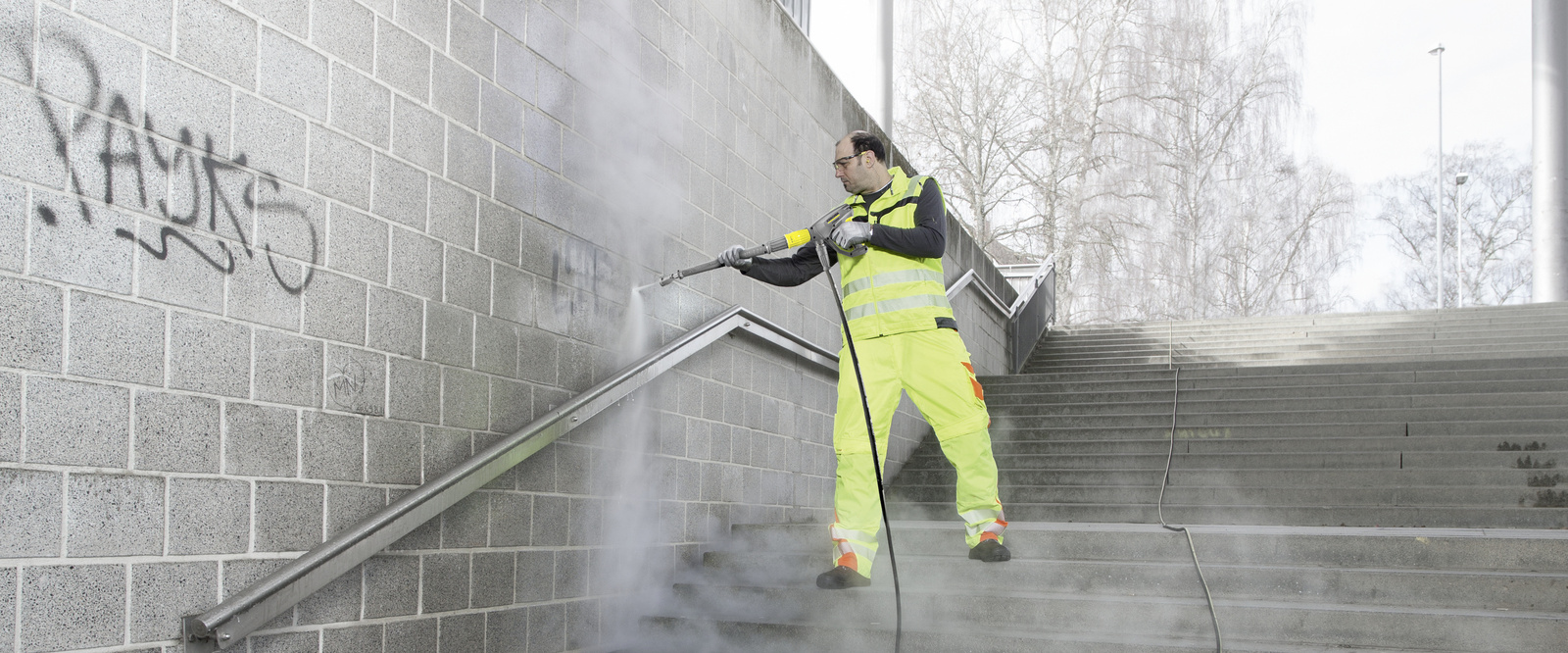
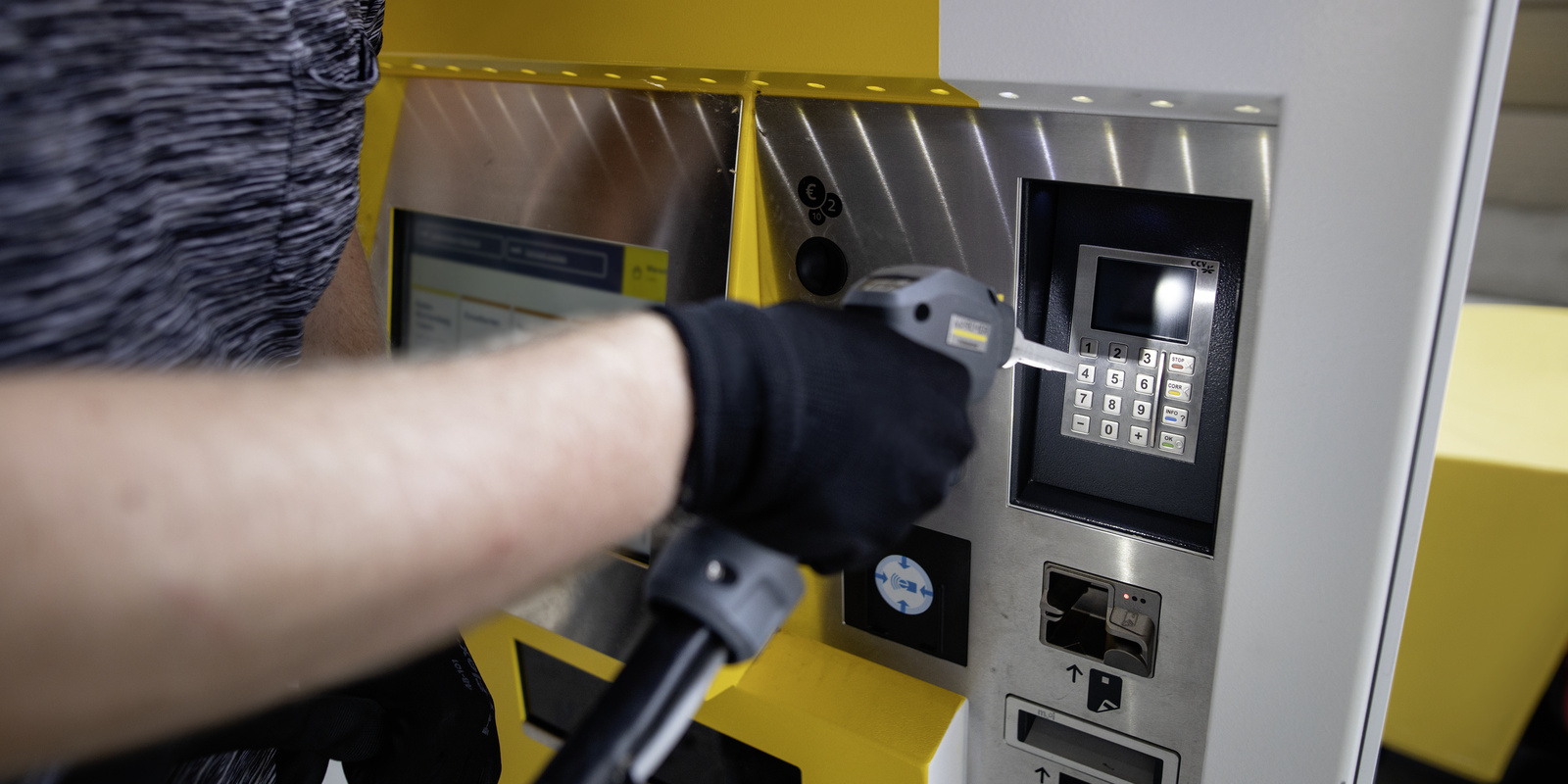
If deep cleaning is required, dry ice blasting is a very good option for cleaning ticket machines and other machines or surfaces that could be damaged by the use of water. Cold or hot water pressure washers are effective against graffiti and chewing gum. In combination with a surface cleaner, the surrounding area is protected from spray mist, and the water is drained away in a targeted manner.
Tip – Cleaning Escalators:
Escalators and moving walkways must be cleaned at off-peak times. Before starting work, the area should be cordoned off with barrier tape or signs.
Cleaning Escalators and Moving Walkways
Escalators and moving walkways are a common sight in shopping centers, airports, train stations, and other public buildings. The task of cleaning these is often put on the back burner, but over time, stubborn dirt builds up, some of which leaves sticky residues. To keep escalators and moving walkways looking as good as new and to give visitors a pleasant impression, they need to be cleaned regularly. Escalator cleaners are a practical solution that minimizes the need for manual work.
Waiting Lobbies, Shopping Centers, and Supermarkets: Quick and Safe Cleaning
To ensure a clean and appealing environment in busy waiting lobbies, floors can be efficiently cleaned with floor scrubbers. These machines allow large floor areas to be cleaned quickly yet thoroughly. The simultaneous vacuuming of the dirty water ensures that floors can be walked on immediately afterward, minimizing the risk of slipping—a key advantage for safety. Displays, timetable boards, and advertising signs can be cleaned with pretreated wipes and surface cleaners.
Larger train stations often include shopping centers and supermarkets, which means a lot more areas and cleaning tasks. To give customers a great shopping experience, all areas—including parking lots, stairwells, and elevators—need to look well-maintained. Battery-powered backpack vacuums allow for quick and flexible cleaning. The large floor areas in shopping centers can be cleaned very efficiently with vacuum sweepers or floor scrubbers. Cleaning robots are also available to ease the burden on staff.
Tip 1 – Hygienic Cleaning:
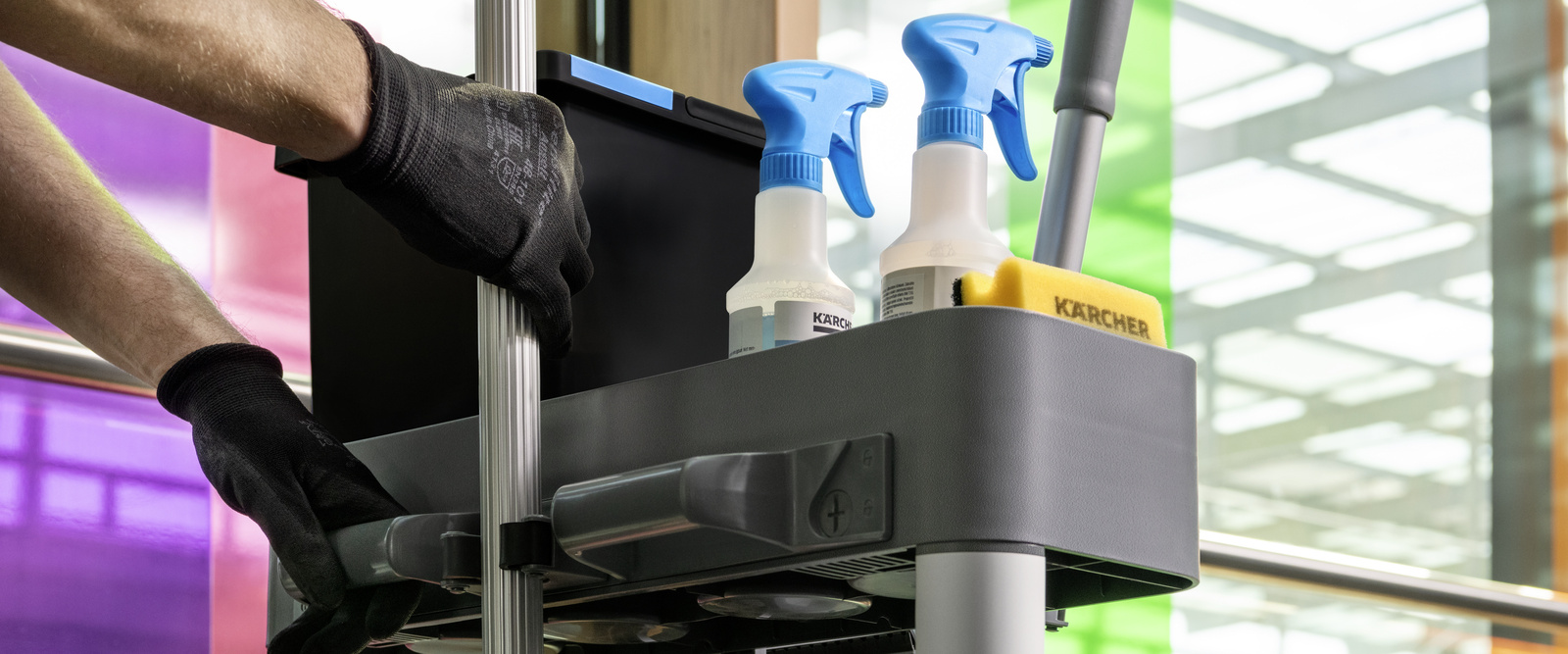
Plastic panes at the checkouts or glass surfaces of counters can be hygienically cleaned with a steam cleaner—as can doors or changing tables in the customer restrooms, or other areas that are hard to reach.
Tip 2 – Disinfect Thoroughly:
Surfaces that come into direct contact with food, such as fresh food counters in supermarkets, must also be disinfected after cleaning. After the disinfectant has been left to take effect for the prescribed amount of time, it's important that the residues are rinsed off thoroughly with clean water.
Cleaning Convenience Stores
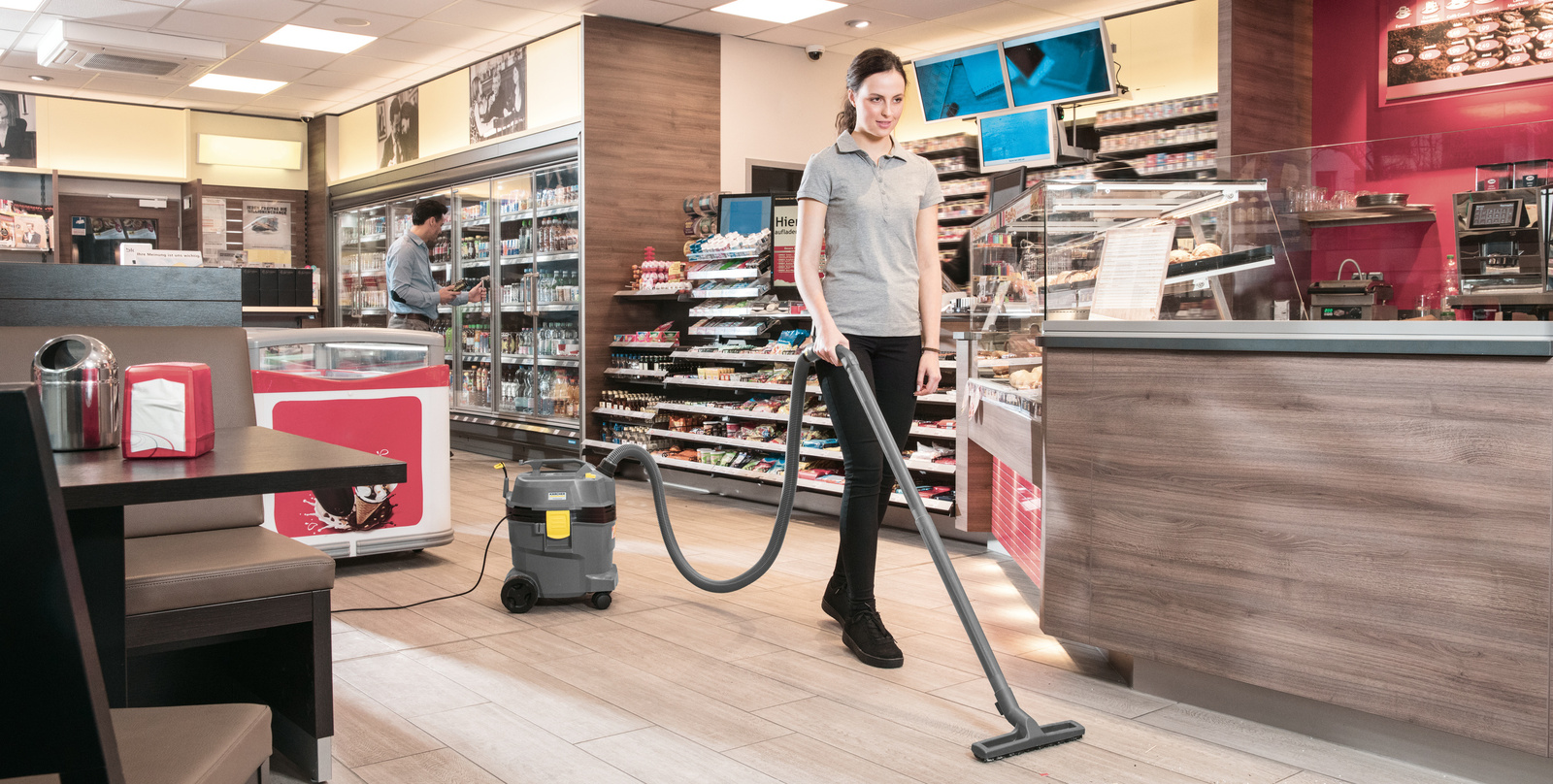
Healthy eating for a healthy life—more and more people are recognizing the importance of what's on their plates. Whether using fresh products from a farm stand to make dinner or grabbing a quick lunchtime snack on the go from a convenience store, one thing is vital: there must be scrupulous hygiene standards. Cleanliness and hygiene in sales rooms are fundamental to this. Thorough cleaning is therefore mandatory.
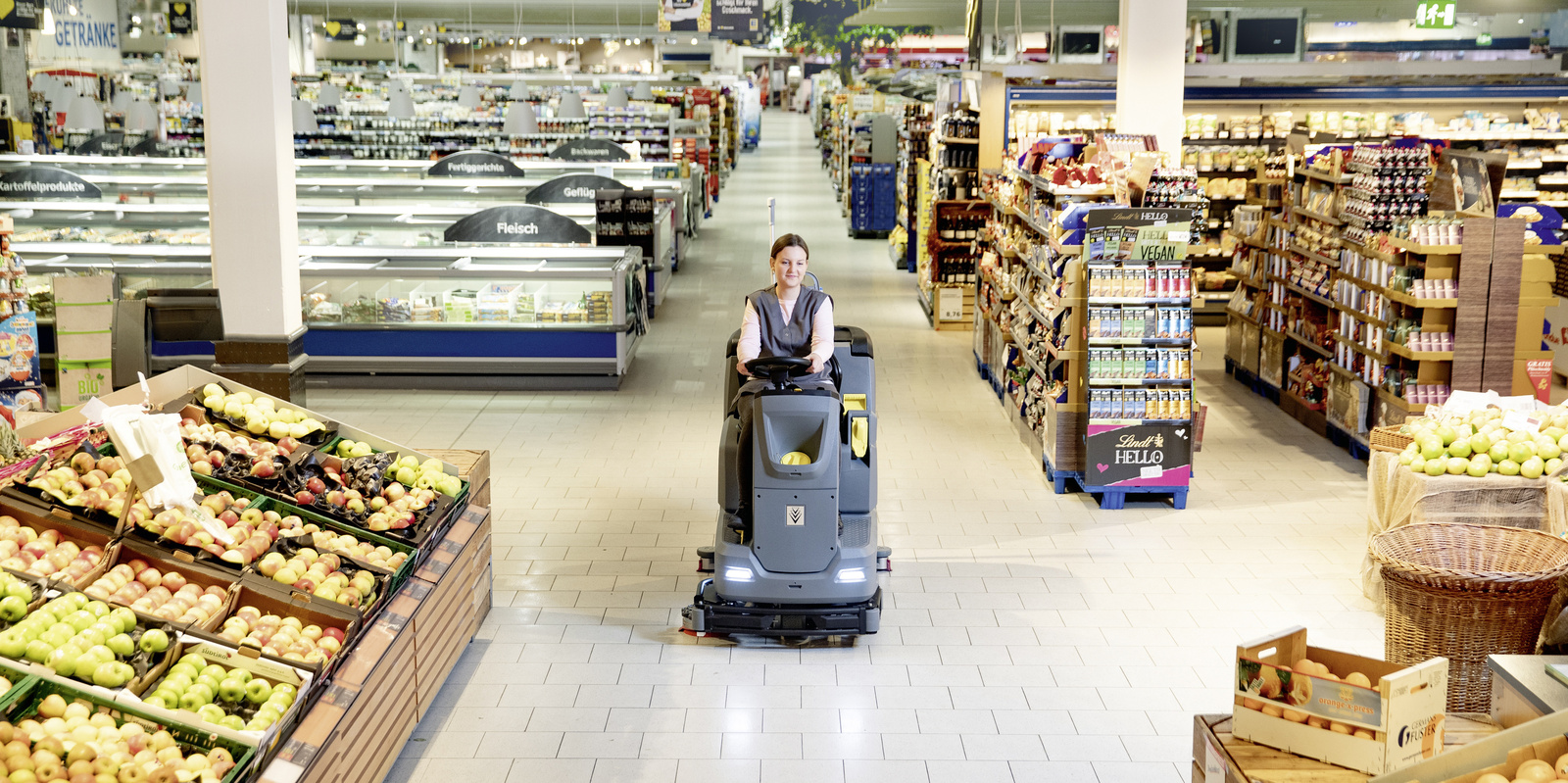
Cleaning Grocery Stores
From the oven of the in-store bakery to the glass surfaces at the deli counter and the freezer cases, cleaning a supermarket is a varied and demanding task. Hygiene is also a key issue on surfaces that come into direct contact with skin and/or food. A consistent cleaning concept is needed to give customers peace of mind and enjoyment when they shop. Choosing the right technology is just as important as keeping an eye on the relevant details.
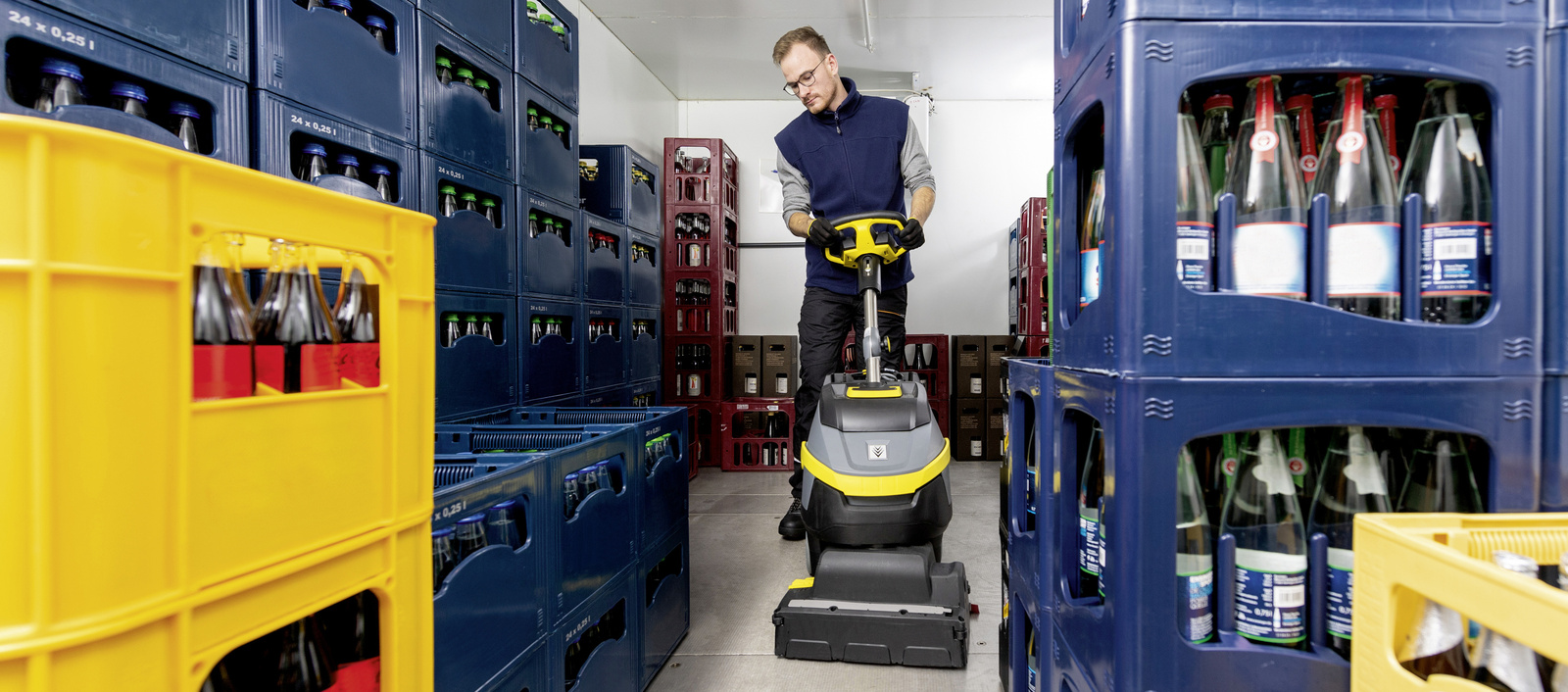
Cleaning Walk-In Coolers
Low temperatures, high importance: walk-in coolers can be found in numerous facilities—and where they are found, they are generally integral to operations. In hotels and restaurants, industrial production plants, or grocery stores, walk-ins provide the correct conditions for storing perishable and temperature-sensitive goods. For the cooler to function perfectly, it requires specialized professional cleaning that reflects these unique conditions.
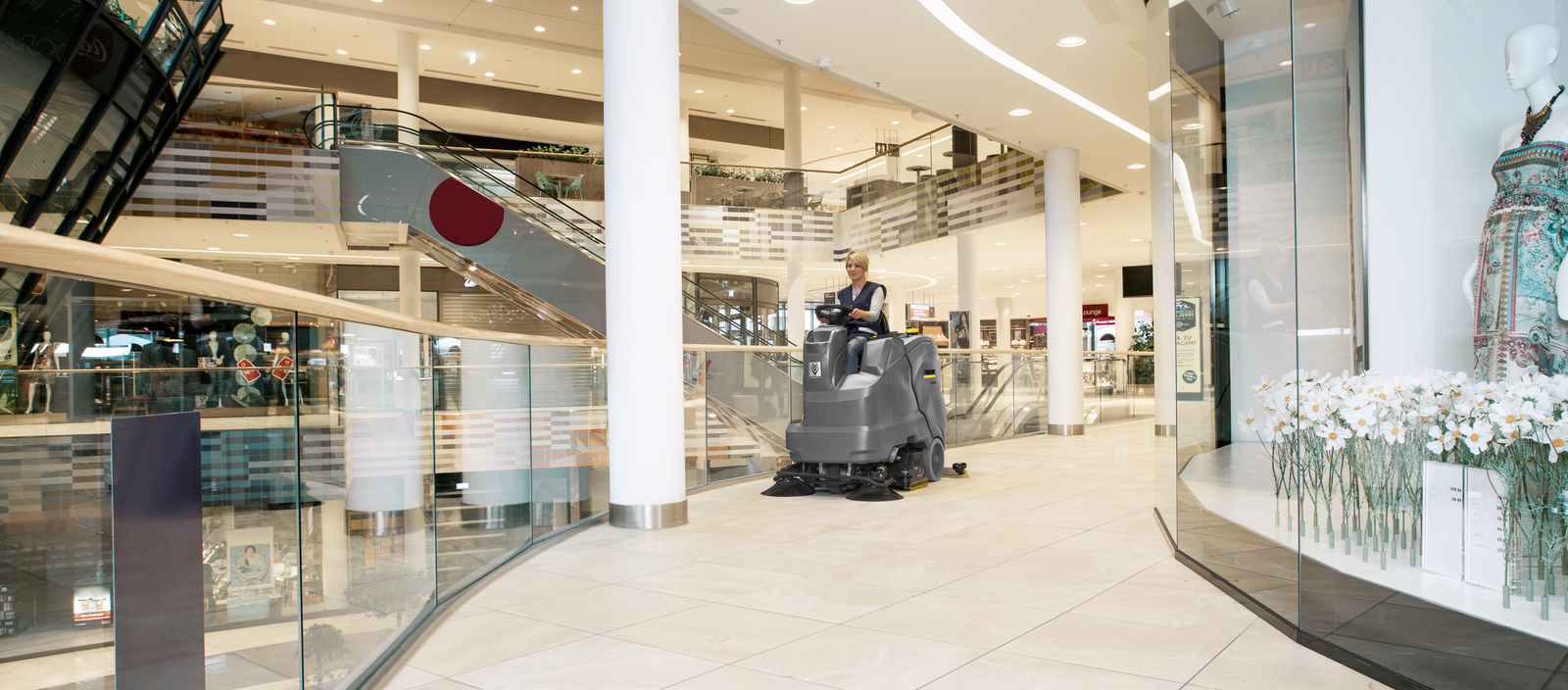
Cleaning Shopping Centers
The range of goods and services offered in shopping centers is as varied as the challenges of cleaning them are complex: large expanses with heavy foot traffic, plus special infrastructure such as escalators, restroom facilities, or food courts—all areas need to be monitored to ensure customers feel comfortable when shopping. To complete all these different tasks efficiently, it's essential to have a carefully considered cleaning concept and the right cleaning technology. Robotics and sensor technology paired with digital systems present an economical solution to this workload. Cleaning also serves to preserve the value of the property.